The google map pack is the most valuable piece of real estate in local search, and most businesses misunderstand what it takes to get there. It’s the block of three local results — with a map, star ratings, and call and directions buttons — that sits above the traditional blue links for any search with local intent. Being in it means a customer can call or navigate to you in one tap without ever visiting a website. Being outside it, even at position four in the local results, means competing for a fraction of the attention. This guide explains exactly what the map pack is, how it differs from broader local rankings, and the concrete path to earning one of those three slots.
What the Map Pack Actually Is
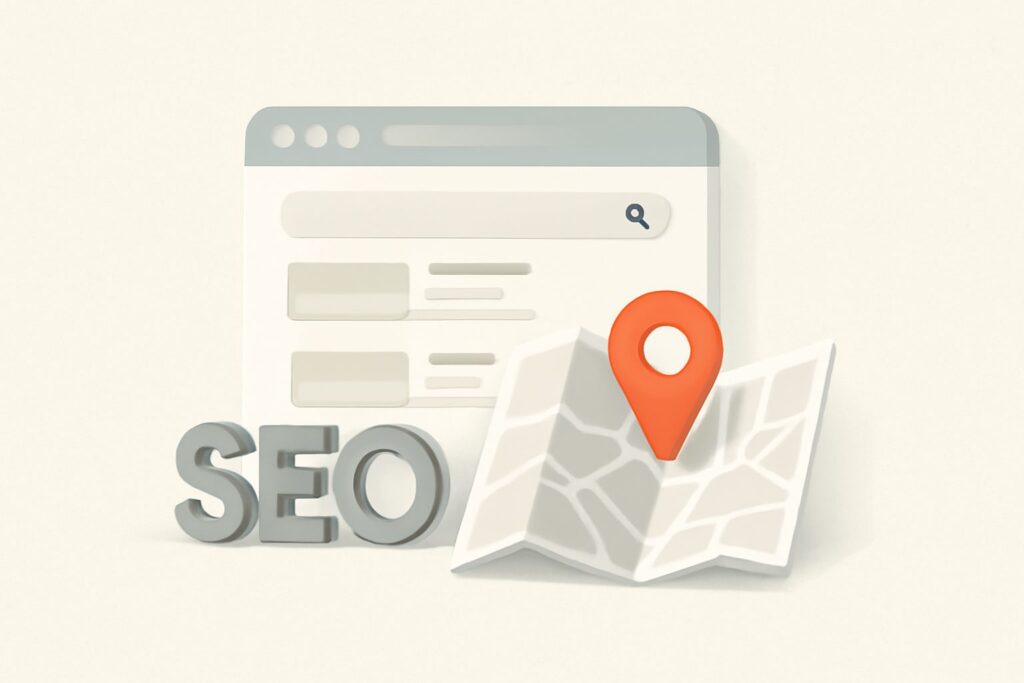
When someone searches something with local intent — “dentist near me,” “best tacos,” “emergency electrician” — Google frequently displays a google map pack: a map with three highlighted business listings beneath it, each showing name, rating, review count, category, and quick-action buttons. This “3-pack” or “local pack” is Google’s answer to “which nearby businesses best match this search.” Below it sit the standard organic results and, if the searcher taps “more places,” the full Maps interface with dozens of listings.
The distinction that matters: the map pack is a curated top-three, not the whole local ranking. You might rank fifth or eighth in the full local results and still be nowhere near the pack. The competition isn’t “rank locally” — it’s “be one of the three Google trusts most for this exact query in this exact place.” That framing changes how you approach it.
Why the 3-Pack Dominates Local Clicks
The map pack’s position — above the fold, above the organic links — means it captures the lion’s share of clicks and calls for local searches. Its action buttons let a customer convert without a website visit, which is exactly what someone searching “plumber near me” at 9pm wants. For mobile searches especially, the pack often fills the first screen entirely, pushing organic results out of immediate view.
This is why 3-pack SEO is worth pursuing even if your website already ranks organically. A page-one organic result below the pack still sits beneath three competitors who got the premium placement. Winning the map pack isn’t a nice-to-have for local businesses — for many trades, it’s where the majority of new-customer contact originates.
The Ranking Factors That Decide Who’s In the Pack
The map pack draws on the same three core signals as broader Maps rankings — relevance, distance, and prominence — but the bar is higher because only three spots exist. The map pack ranking factors that consistently separate the top three from everyone else include:
- A precise primary category that exactly matches the search intent — the strongest relevance signal.
- Review signals — quantity, average rating, recency, velocity, and how you respond — which heavily influence prominence.
- Proximity to the searcher, which you can’t control but which shapes eligibility.
- Citation consistency — identical NAP across the web, reinforcing that you’re a legitimate, verified entity.
- Website relevance and authority, since Google connects your profile to your site’s local content and links.
- Engagement signals — clicks, calls, and direction requests from the listing itself.
No single factor guarantees a slot. The pack goes to businesses that score well across the set, and in a tight race, prominence — especially reviews — often decides it.
Relevance: Matching the Exact Query
Getting into the pack starts with being unmistakably relevant to the search. Your primary category has to match the intent — “Emergency plumber” competes for emergency searches, “Plumber” competes more broadly. Your services should list the specific things people search for, and your website should have content that reinforces those services in your area. Google is choosing three businesses it’s most confident match the query, and a vague or mismatched profile removes you from consideration before prominence even enters the picture.
This is the fastest lever because it’s directly editable. Before chasing reviews or links, make sure your category, services, and profile completeness leave no doubt about what you do and where.
Prominence: Winning the Tiebreaker With Reviews and Authority
Once several businesses are equally relevant and comparably close, prominence decides the three winners — and reviews are the loudest prominence signal in the pack. A steady flow of genuine, recent reviews with a strong average, plus professional responses, signals an active, trusted business. A competitor who earns a few reviews every week and answers each one will, over time, pull ahead of one sitting on a stale pile of old ratings.
Prominence also comes from your citations, your local mentions and links, and your website’s authority. These build over months, which means the map pack rewards consistency, not last-minute effort. The businesses in the 3-pack are usually the ones who’ve been steadily earning trust signals while their competitors optimized once and stopped.
It’s worth noting that the pack itself isn’t static. Google reshuffles it constantly based on the exact query, the searcher’s location, and even the time of day for some categories — an “open now” filter can lift a business into the pack simply because a rival closed at five. That volatility is exactly why a single top-three appearance means little; what matters is holding the pack consistently across the queries and locations that drive your business, which only sustained prominence delivers.
How to Track Whether You’re Actually in the Pack
Here’s the catch that undermines most map-pack efforts: whether you appear in the 3-pack depends entirely on where the searcher is standing. You might be in the pack for people near your storefront and completely absent two neighborhoods over. Checking from your own phone tells you almost nothing about your real coverage.
You need to see your map-pack presence across your whole service area, not from one point. SEO Rocket’s local rank tracking maps your position across a grid of locations, so you can see exactly where you’re in the pack and where you’re falling to the full-results list — turning a vague sense of “we’re doing okay” into a coverage map you can act on. Pair that with its local keyword research on real Ahrefs data to confirm which local searches actually carry volume worth competing for, and you’re chasing the right pack placements instead of vanity ones.
A Realistic Path Into the Map Pack
Breaking into a competitive 3-pack is a months-long project, not a weekend one. Fix relevance first — it’s the fastest win and gets you into the consideration set. Then build prominence deliberately: a consistent review-generation habit, clean citations, local links, and an active profile. Track your coverage by location so you know whether your reach is widening. In softer markets, this can move quickly; in a dense urban category, expect sustained effort before you displace an entrenched top three.
What doesn’t work is the shortcut hunt — fake reviews, keyword-stuffed names, or bought placements. Those either violate guidelines and risk suspension or simply don’t move the pack. The durable route is the unglamorous one, and it’s the same discipline behind a playbook proven across 1,000,000+ ranking pages: do every real factor consistently, measure honestly, and let prominence compound. That’s how the three businesses in the pack got there, and it’s how you replace one of them.
Frequently Asked Questions
What’s the difference between the map pack and Google Maps?
The map pack (or 3-pack) is the curated set of three local results shown on the main search results page for queries with local intent. Google Maps is the full application showing dozens of listings. Being in the top of Maps doesn’t guarantee a map-pack spot — only three businesses make the pack for any given search and location.
How many businesses appear in the Google map pack?
Three. The pack shows exactly three local listings above the organic results, which is why competition for those slots is intense. Searchers can tap “more places” to see the fuller list, but the vast majority of clicks and calls go to the visible three.
Why am I in the map pack sometimes but not always?
Because inclusion depends heavily on the searcher’s location, along with relevance and prominence. You may appear in the pack for people near your business and drop out for those farther away, or vary by the exact query used. Tracking your position across multiple locations shows your real coverage.