
If you’re weighing Rank Math vs SEO Rocket, the first useful thing to know is that they aren’t really the same kind of tool. Rank Math is a WordPress plugin that optimizes the pages you already publish; SEO Rocket is an AI-native platform that researches, writes, and tracks visibility — so Rank Math vs SEO Rocket is less a straight head-to-head and more a question of which part of the job you’re trying to fix.
Because they overlap only at the edges, the honest comparison isn’t “which one wins.” It’s “which one do you actually need, and should you run both.” This piece leads with what Rank Math does better, then makes the case for where an AI-native workflow pulls ahead, and ends with a recommendation by use case.
What each tool actually does
Rank Math lives inside WordPress. It handles the on-page mechanics of SEO — title tags and meta descriptions, XML sitemaps, schema and structured data, redirects, breadcrumbs, and a content-analysis score that nudges you toward better on-page hygiene as you write in the editor. It is, at its core, a technical on-page plugin, and a very good one.
SEO Rocket sits a level above the page. You talk to it in plain language and it runs keyword research, competitor gap analysis, backlink lookups, rank tracking, and site audits on real Ahrefs-grade data — then it drafts the article with Claude and reports whether your brand shows up in AI answers. It doesn’t touch your WordPress theme; it feeds the strategy and the content that a plugin like Rank Math then optimizes on the page.
Put plainly: one tool decides what to publish and whether it’s working, the other makes sure the page you publish is technically clean. That’s why comparing them feature-for-feature can mislead you. A blogger who installs SEO Rocket expecting it to manage redirects will be confused; a marketer who installs Rank Math expecting keyword data will be disappointed. Knowing which layer you’re missing is the whole decision.
Where Rank Math is genuinely stronger
Let’s be fair about this, because it matters. If your problem is on-page WordPress SEO, Rank Math is the better answer, and it isn’t close. It writes clean schema markup automatically, manages your sitemap without you thinking about it, catches missing alt text and thin titles inside the editor, and handles redirects and 404 monitoring from one panel. SEO Rocket does none of that plumbing — it was never meant to.
Rank Math is also cheap in a way a platform can’t match. There’s a capable free tier that covers most of what a single site needs, and the paid tier sits in the low tens of dollars a month band rather than the per-seat SaaS pricing you’d expect from a research suite. For a blogger or a small business running one WordPress site, that combination — deep on-page control at near-zero cost — is hard to argue with.
And it runs where your content lives. There’s no export, no copy-paste, no second login. You write, the score updates, the schema ships. That tight loop inside WordPress is a real advantage for anyone whose whole world is one CMS.
Rank Math vs SEO Rocket at a glance
The quickest way to see the split is side by side. Notice how little the two columns actually compete on — that’s the point.
| Capability | Rank Math | SEO Rocket |
|---|---|---|
| On-page tags & schema | Excellent — core strength | Not its job |
| Lives inside WordPress | Yes | No — separate platform |
| Keyword & backlink data | Limited (via integrations) | Ahrefs-grade, built in |
| Competitor gap analysis | No | Yes |
| AI content writing | Assistive prompts | Full drafts with Claude |
| AI-search visibility | No | Yes — Brand Radar |
| Interface | WordPress panels | Chat-first |
| Rough price band | Free–low $ | Entry-friendly $ / seat |
Where SEO Rocket pulls ahead
The gap opens up the moment your work moves off the page and into strategy and production. Rank Math can tell you a title is too long; it can’t tell you which keywords are winnable, what a competitor ranks for that you don’t, or where the backlink opportunities sit. SEO Rocket runs those lookups on real data and returns the answer in the chat, so the research that used to mean juggling a separate keyword tool happens in one place.
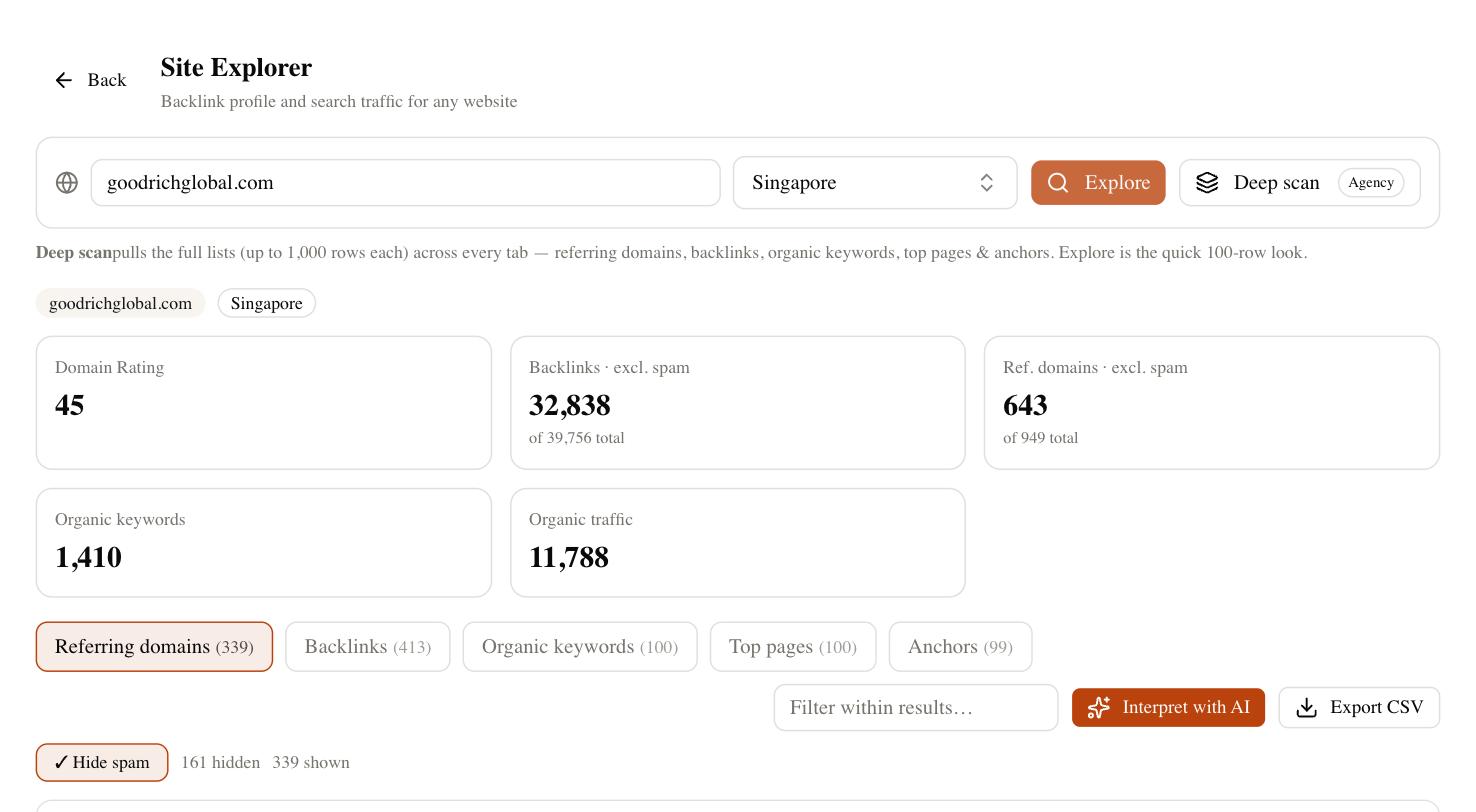
Content is the other divide. Rank Math grades what you’ve already written; SEO Rocket writes the draft. You ask for an article on a target keyword, it pulls the research, structures the piece against what’s ranking, and hands you a draft written by Claude that you edit rather than start from a blank page. For anyone producing content at volume — agencies, consultants, busy in-house teams — that shifts the bottleneck from “writing” to “reviewing,” which is a far cheaper place to be stuck.
Then there’s the consolidation. A common stack is Rank Math for on-page, plus a keyword tool, plus an AI writer, plus a rank tracker, plus client reporting. SEO Rocket folds the last four into one chat-first workflow with read-only client dashboards, so a consultant can hand a client a live report without exporting anything. The saving isn’t just the combined subscription cost — it’s the hour a week you stop spending stitching four tools’ outputs into one story.
The AI-search visibility gap
This is the piece no on-page plugin addresses, and it’s becoming the point. Search is splitting: a growing share of your buyers now ask ChatGPT, Perplexity, or Google’s AI Overviews instead of scrolling ten blue links. A page can rank first and still never get cited in the answer a customer actually reads.
Rank Math optimizes the page for traditional search, which still matters — but it has no view into whether AI engines mention you. SEO Rocket’s Brand Radar tracks whether and where you’re being cited across those AI surfaces, so you’re optimizing for the search that’s happening now, not only the one that happened five years ago. If your audience has started asking AI tools questions in your category, that visibility gap is the single biggest reason to add a platform on top of your plugin.
Which one should you choose
Match the tool to your real constraint. If you run one WordPress site and your need is clean on-page SEO — proper schema, tidy sitemaps, sensible titles — install Rank Math and be happy; the free tier alone will cover most of it, and you don’t need a research platform to do that job. That is the honest recommendation for a solo blogger or a small local business.
If your constraint is research, content production, competitor intelligence, or knowing whether AI engines cite you, SEO Rocket is the tool built for that decade, and Rank Math can’t reach those problems. And if you’re a consultant or agency, the realistic answer in the Rank Math vs SEO Rocket question is often both: keep Rank Math handling on-page inside each client’s WordPress, and use SEO Rocket for the strategy, the drafts, the tracking, and the reporting that sit above it. They’re less rivals than two halves of a modern setup — one perfects the page, the other decides what to publish and proves it’s working.