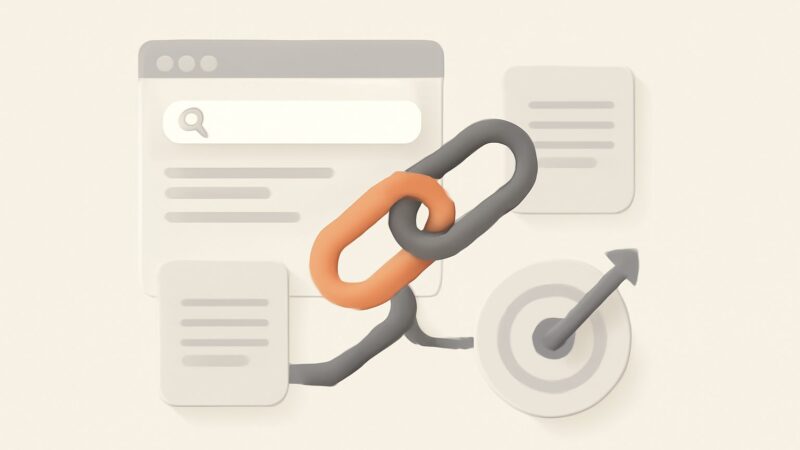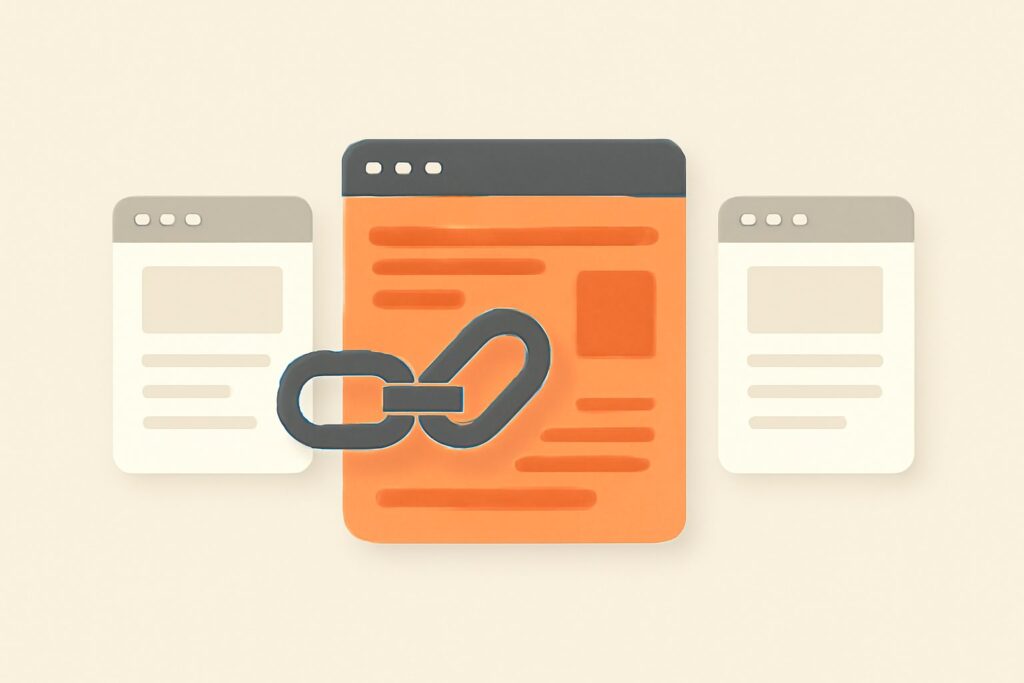
Most link-building advice tells you to chase the biggest domain rating you can afford, and that’s exactly why most link-building budgets get wasted. Relevant backlinks — links from pages that actually cover your topic, aimed at an audience that would plausibly click through — move rankings that a pile of high-DR, off-topic links never will. The reason isn’t ethics or “quality” in the abstract. It’s that topical relevance is something Google can measure from the link graph, and raw authority increasingly isn’t the thing being measured. If you understand the mechanism, you stop overpaying for the wrong links and start earning the ones that compound.
What “Relevant” Actually Means for a Backlink
A relevant backlink is one where the linking page, the surrounding text, and the destination all belong to the same topical neighborhood. A link from a page about container gardening to your article on tomato blight is relevant. A link from a general “top 100 business blogs” roundup to that same article is not — even if the roundup sits on a DR 80 domain. Relevance operates at four levels that stack: the whole domain’s topical focus, the specific section or category the link lives in, the exact page and its surrounding sentences, and whether the real human audience overlaps with yours. Geographic fit is part of this too. A link from a UK cooking site to a US grocery-delivery service carries less weight than the raw metrics suggest, because the audience can’t convert.
The Mechanism: How Google Reads Relevance
Google doesn’t just count links; it interprets them. Three signals do most of the work, and none of them show up in a domain-authority score.
- Surrounding context. The sentence and paragraph wrapping your link tell Google what the link is “about” far more reliably than exact-match anchor text, which has been abused for a decade. A link earned inside a paragraph that already discusses your subject inherits that topical context.
- The linking page’s own footprint. A page that ranks for terms adjacent to yours, links out to other reputable pages in your niche, and is itself linked from topically similar sources sits in a relevant part of the graph. Link equity flowing from that neighborhood is topically “coloured,” not generic.
- Co-citation and co-occurrence. When your brand and a competitor keep appearing on the same kinds of pages, Google learns you belong to the same category. Topically aligned links reinforce that association; irrelevant ones dilute it.
This is why a single link from a mid-sized, laser-focused industry blog can outperform ten links from unrelated high-DR directories. The focused link lands in the right neighborhood; the directory links land in a graph region Google has learned to discount.
The Authority Trap
Domain Rating, Domain Authority, and their cousins are modeled estimates built from crawled link graphs — useful for triage, but not numbers Google actually uses. Treating them as the goal creates a predictable failure: you buy a DR 70 link from a “multi-niche” site that publishes casino, CBD, and SaaS content side by side, and it does nothing, because the domain has no topical identity for equity to inherit. The two-minute test beats the score every time: open two recent articles on the prospect site and ask whether a real reader interested in your topic would ever land there. If the site reads like a link farm dressed up with a high metric, the metric is lying to you.
A Worked Example: Two Links, Same DR, Different Value
Say you run a project-management SaaS and land two links, both from DR 55 domains. Link A comes from a general “productivity hacks” listicle that also links to blenders, standing desks, and a crypto exchange in the same post. Link B comes from an agency-operations blog, inside a 1,800-word article about resource planning, in a sentence that reads “tools like [yours] handle capacity forecasting.” Same domain metric, wildly different outcomes. Link B sits among topically coherent outbound links, carries relevant surrounding text, and reaches readers who buy project-management software. Over three to six months, Link B lifts your rankings for capacity-planning terms; Link A mostly pads a spreadsheet. If you’d only sorted your prospect list by DR, you’d have valued them identically — and that’s the mistake.
Finding Relevant Backlinks Through Competitor Gaps
The most efficient prospecting method isn’t cold-guessing which sites might link to you — it’s finding the sites already linking to your competitors. If three or four rivals all earned a link from the same niche publication, that publication demonstrably links to businesses like yours, which makes it a warm, pre-qualified target. This is where competitor backlink analysis earns its keep. SEO Rocket’s content-gap and backlink analysis runs across up to five rivals on real Ahrefs index data, surfacing the domains that link to several competitors but not to you — the intersection is your highest-probability list of relevant backlinks to pursue. You’re not inventing prospects; you’re harvesting proof.
Rank the resulting list by relevance first and estimated authority second. A domain that links to two direct competitors and covers your exact subcategory beats a bigger domain that linked to one rival once, in an unrelated context.
Five Ways to Earn Niche-Related Backlinks
Relevant links are earned by giving the linking site’s audience something worth pointing to. Five approaches consistently work:
- Original data. A small survey, a benchmark, or an analysis of your own aggregated numbers gives writers in your niche something citable. Data links are relevant by construction, because only people covering your topic reference them.
- Free tools and calculators. A genuinely useful utility earns links from every “resources” page in your space for years.
- Expert commentary. Responding to journalist and blogger requests in your field produces links inside articles that already discuss your subject.
- Fixing dead resources. Find broken links on niche pages, build the better replacement, and tell the site owner. The relevance is guaranteed — you’re literally filling a topical hole they already had.
- Existing relationships. Partners, suppliers, customers, and communities you’re already part of are the warmest, most relevant sources most people ignore.
Vetting a Prospect in Two Minutes
Before you spend outreach effort, run every prospect through a fast filter. Does the site rank for terms near your topic (not just have a high metric)? Do its recent posts read like they were written for humans in your niche? Are the outbound links a coherent set, or a random grab-bag? Is there real traffic behind the domain, or just links pointing at it? And would a reader of that specific page have any reason to click your link? Three clear “yes” answers is a go; two or more “no” answers means the DR score is masking a weak link. This filter is where most wasted spend gets caught — before the money leaves.
Velocity, Timing, and Patterns That Trip Filters
Relevance protects you from a risk most guides skip: unnatural link velocity. A brand-new page that suddenly acquires forty links in a week, all with the same commercial anchor, looks engineered — because it is. Earned relevant backlinks arrive at an irregular, roughly organic pace as content spreads, which is exactly the pattern Google’s spam systems expect. You don’t need to throttle deliberately; you need to build links people actually choose to give, which naturally staggers them. Diversify anchors toward branded and natural-phrase variants rather than stacking exact-match keywords, and let velocity be a byproduct of real interest instead of a schedule.
When Irrelevant Links Still Help — the Honest Caveats
Relevance beats raw authority, but “irrelevant links never matter” is too strong, and pretending otherwise costs you credibility. A link from a genuinely huge, general-authority publication — a major newspaper, a top-tier university page — carries trust that partly transcends topical fit; those sources are selective enough that a link from them signals quality regardless of subject. Brand mentions and unlinked citations feed relevance too, even without a hyperlink. And relevance is fuzzy at the edges: adjacent topics (a marketing blog linking to your SEO tool) count as relevant even though they’re not identical. The rule is directional, not absolute — prioritize topical fit, but don’t refuse a New York Times link because it’s not perfectly on-niche.
Toxic Links and When to Disavow
Off-topic spam links usually do nothing — Google ignores most of them algorithmically, so the reflex to disavow every low-quality link is mostly wasted effort and occasionally self-harm. Reserve the disavow file for genuine trouble: an obvious paid-link or PBN footprint you built and want to distance from, or a manual action in Search Console that names unnatural links. If a competitor points spammy links at you, Google’s systems are generally robust enough to discount them without your intervention. When you do disavow, do it at the domain level and document why. For everything else, the better use of your time is earning more of the topically relevant links that dilute the bad ones by simply outweighing them.
Frequently Asked Questions
How many relevant backlinks do I need to rank?
There’s no fixed number — it depends on the keyword’s competition. The realistic benchmark is the weakest page currently ranking on page one for your target term, not the market leader. Match or slightly beat that page’s relevant referring domains, pair it with content that answers the query completely, and you have a genuine shot. A handful of tightly relevant links often outperforms dozens of generic ones.
Are relevant backlinks better than high-DR backlinks?
In most real-world cases, yes. A topically aligned link inherits context Google can measure; a high-DR but off-topic link sits in a graph region that carries little relevant equity. The exception is a small set of massive general-authority sources whose trust partly transcends niche. When you can get both — high authority and topical fit — take it.
How do I find sites that will actually link to my niche?
Start with your competitors’ backlink profiles and look for domains that link to several rivals but not to you. Those sites have already proven they link to businesses like yours. Tools like SEO Rocket surface that overlap directly from real index data, turning guesswork into a ranked, pre-qualified prospect list.
The Bottom Line
Relevant backlinks win because relevance is a signal Google can read — from surrounding text, from the linking page’s neighborhood, from the company your brand keeps in the link graph — while raw domain scores are estimates that increasingly miss the point. Chase topical fit first, authority second. Earn links by giving your niche something worth citing, vet every prospect in two minutes, and let velocity stay organic. This is the same link logic behind a playbook proven across 1,000,000+ ranking pages: not the biggest number you can buy, but the right link in the right neighborhood, built to keep working after the next core update lands.