Most people shopping for SEO/SEM software make the same expensive mistake: they treat “search marketing” as one problem and go looking for one tool that does everything. It doesn’t exist, and the products that claim it do it by being mediocre at both halves. The organic side and the paid side are different disciplines with different economics, different data sources, and different failure modes. Buy them as if they’re the same thing and you’ll overpay for features you never touch while missing the one capability that would actually move your rankings. This guide splits the category the way a practitioner does, so you fund the half that matters first.
What “SEO/SEM software” actually bundles
SEM once meant all search marketing — organic and paid together. In practice the industry now uses SEM as shorthand for paid search (Google Ads, Microsoft Advertising) and SEO for the organic, unpaid side. When a vendor markets “SEO/SEM software,” they’re usually selling one of three things wearing one label: a paid-search bid manager, an organic research suite, or a thin all-in-one that touches both and masters neither. The first job of any buyer is to figure out which of those three is in the box, because the sticker price tells you almost nothing about fit.
What paid-search tooling actually does
Paid tools optimize a live auction. Their real work is bid management, negative-keyword pruning, ad-copy testing, quality-score diagnostics, and shifting budget toward the queries that convert. The uncomfortable truth is that Google Ads and Microsoft Advertising already ship most of this natively, and for spend under roughly $10,000/month the native interface plus a spreadsheet often beats a third-party bid manager. Paid software earns its keep at scale — many campaigns, many accounts, or an agency managing dozens of clients — where a percentage-of-spend fee is cheaper than the analyst hours it replaces. Below that, you’re renting dashboards you could build yourself.
What organic tooling actually does
Organic software solves a problem you cannot solve alone: it maintains a crawled index of the web and the keyword, backlink, and ranking data that sits on top of it. You can’t recreate a billion-page backlink graph in a spreadsheet. This is where the money is genuinely well spent, because the vendor is amortizing infrastructure — crawlers, index storage, clickstream data — that would cost you six figures to build. Good organic tooling covers keyword research with real volume and difficulty, competitor content-gap analysis, backlink intelligence, a technical site audit run by an actual crawler, and rank tracking over time. That’s the load-bearing half of the stack for any business that wants traffic it doesn’t pay for per click.
The overlap most buyers miss: paid data de-risks organic bets
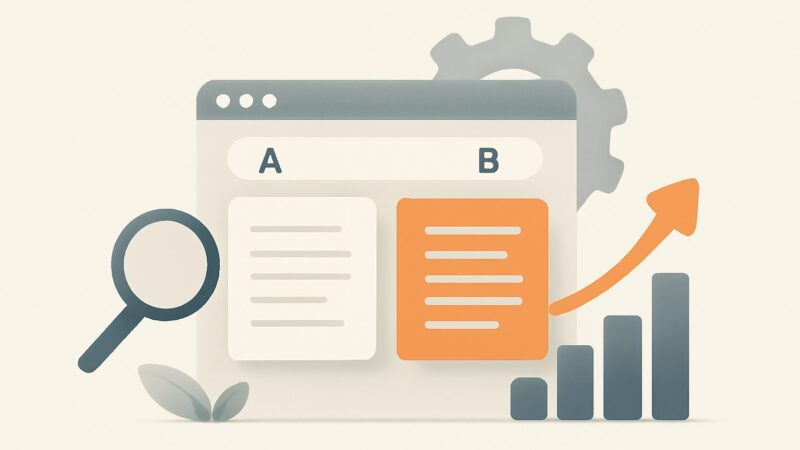
Here is the non-obvious mechanism that connects the two halves. Paid search gives you something organic research can only estimate — conversion data on exact queries, fast. Run a small paid campaign on a cluster of keywords and within two to three weeks you know which terms actually convert, not just which have volume. Then you feed those proven-converting queries into your organic roadmap and build content for them first. You’re using paid as a paid research instrument to remove guesswork from a six-month organic investment. This is the single highest-leverage way to combine SEO/SEM software, and almost nobody sequences it deliberately.
A decision framework: which half to fund first
Don’t average the two. Decide based on your time horizon and cash position with a simple rule:
- Need customers this month, have budget to spend? Fund paid first. It’s the only channel that turns money into traffic on a same-day timeline. Organic can’t be rushed.
- Need durable, compounding traffic and can wait three to six months? Fund organic first. Every page you rank keeps working at a fixed cost while paid customer-acquisition cost climbs almost every year as the auction gets more crowded.
- Have a little of both? Run a small paid test to find converting queries, then pour the organic budget into ranking for exactly those terms. Paid buys the data; organic banks the asset.
The trap is funding a full paid-and-organic stack at once when you can only execute one well. Two half-run channels lose to one channel run properly. Pick the front foot, prove it, then add the second.
A worked micro-example
Say you sell project-management software and have $2,000 to allocate this quarter. The lazy move is to split it — $1,000 of ads, $1,000 on an SEO suite — and run both thinly. The practitioner move: spend $600 on a tightly targeted paid campaign across fifteen keywords for three weeks. You learn that “client onboarding template” converts at three times the rate of the higher-volume “project management tips,” which barely converts at all. Now you know where the money is. You redirect the remaining budget and your writing effort into ranking organically for “client onboarding template” and its long-tail variants — a term you’d have deprioritized on volume alone. Six months later that page pulls qualified traffic at zero marginal cost, and the paid campaign that found it has long since paid for itself in signups. That’s the loop working as designed.
Where SEO Rocket fits in the organic half
On the organic side, the workflow above is exactly what SEO Rocket is built to run. It does AI keyword research against real Ahrefs index data (so volume and difficulty are grounded, not guessed), competitor content-gap analysis across up to five rivals, a real-crawler site audit, and rank tracking with top-100 snapshots rather than single-day spot checks. The AI article writer runs behind validation gates — minimum word counts, title and meta limits, a repair loop that catches thin sections before they reach a draft — so you’re not shipping the mass-produced junk that core updates punish. It leans on a playbook proven across 1,000,000+ ranking pages, and at around $50/month with a free tier, it sits in the “under $100” band while covering the load-bearing organic capabilities most stacks charge three times as much for.
What a sensible stack actually costs
Prices move, so treat these as ranges and check each vendor’s current page. Roughly, organic tooling falls into three bands: entry tools under $100/month that cover keyword research, audits, and rank tracking for a single site; mid-market suites in the low-hundreds per month that add larger index access, more projects, and API pulls; and enterprise platforms well above that, priced for agencies and in-house teams managing many domains. Paid-search third-party tools usually price as a percentage of ad spend or a flat monthly fee that only makes sense once you’re managing serious budget. For most small and mid-size operators, the honest answer is one solid organic tool in the sub-$100 band plus the native ad platforms — not a five-figure annual contract for seats you won’t fill.
Measure each half with its own instruments
Paid and organic fail differently, so you can’t judge them on one dashboard. Paid is measured on cost per acquisition, return on ad spend, and quality score — fast signals you can act on weekly. Organic is measured on ranking trend lines, impressions and clicks in Google Search Console, and assisted conversions in GA4 — slow signals where a single day means nothing and only the trend matters. The most common measurement error is holding organic to a paid timeline and killing a page that was two months from breaking through. Index-based rank estimates from any tool are directional; Search Console and GA4 are your ground truth. Cross-check them.
Honest caveats: where tools stop helping
No SEO/SEM software ranks a page that doesn’t deserve to rank, and none of them make a bad offer convert. Tools surface opportunities and measure movement — they don’t write genuinely useful content, earn links through real relationships, or fix a product nobody wants. AI writers accelerate drafting but still need a human editor who knows the subject; publish unedited output at scale and you’re volunteering for the next helpful-content demotion. And more data is not more clarity: a tool that hands you 5,000 keywords without a way to prioritize by intent and conversion is a liability, not an asset. Buy for the decision you need to make, not the feature count.
Frequently asked questions
Is SEO or SEM software better for a small business?
Neither is universally better — they solve different problems on different timelines. If you need customers this month and have budget, paid (SEM) tooling plus the native ad platforms gets you there fastest. If you want traffic that compounds at a fixed cost, organic (SEO) software is the better long-term investment. Most small businesses should run a small paid test to find what converts, then invest organic effort in ranking for those exact terms.
Can one tool do both SEO and SEM well?
A few suites cover both, but the organic and paid halves are genuinely different disciplines, and all-in-one products tend to be strong on one side and thin on the other. It’s usually better to pair a focused organic tool with the native Google Ads and Microsoft Advertising interfaces than to overpay for a jack-of-all-trades that masters neither.
How much should I spend on SEO/SEM software?
For most small and mid-size operators, a single organic tool in the sub-$100/month band plus free native ad platforms is enough to run a serious program. Move up to mid-market suites only when you’re managing multiple domains or need larger index access. Percentage-of-spend paid tools only make sense at real ad scale.
A starting sequence that works
Put it together in order. First, decide which half fits your cash position and time horizon — same-month customers point to paid, compounding assets point to organic. Second, if you have any paid budget, run a two-to-three-week test to find the queries that actually convert. Third, invest your organic effort in ranking for those proven terms, using a tool like SEO Rocket to research keywords on real index data, close competitor content gaps, and track movement on trend lines rather than daily noise. Fourth, measure each half on its own instruments and cross-check against Search Console and GA4. Do that, and you’ll buy the right SEO/SEM software once — instead of paying for two stacks and running neither well.