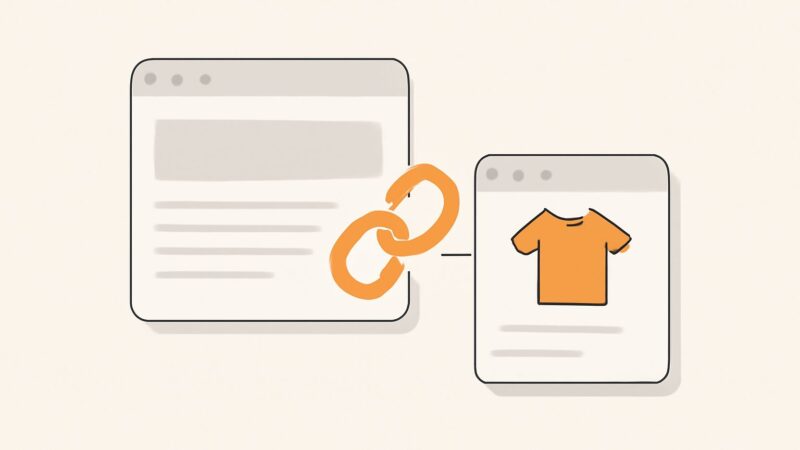
Most stores treat collections as a merchandising afterthought and then wonder why their category-level traffic never grows. A real collection page strategy starts from the opposite premise: on a well-built store, collection pages — not product pages — are the single biggest source of non-branded organic revenue, because they intercept shoppers at the exact moment they’ve decided what type of thing they want but not which specific SKU. Product pages catch the person searching a model number. Collections catch everyone earlier, when the query is still “waterproof vinyl flooring” or “running shoes for flat feet.” Get the collection layer right and you own the commercial-intent middle of the funnel that competitors leave on autopilot.
Collections and Categories Are Not the Same Page
The words get used interchangeably, and that confusion is where most stores lose the plot. Your categories are the taxonomy skeleton — the fixed, hierarchical way your catalog is organized (Flooring > Vinyl > Plank). Ecommerce collections are curated, often overlapping groupings layered on top of that skeleton: “Waterproof Flooring,” “Under $3 a Square Foot,” “Best for Bathrooms,” “Herringbone Look.” A single product can legitimately live in one category and six collections at once.
That distinction matters for SEO because collections can target keyword modifiers that categories structurally cannot. Your category page ranks for the head term. A curated collection ranks for the qualified long-tail — the “for,” the “under,” the “best,” the material, the use case — which is lower volume but higher commercial intent and far less contested. A serious collection page strategy treats each viable modifier as a potential landing page, not as a filter buried three clicks deep.
Map Collections to Search Demand, Not to Your Merchandising Whims
The failure mode is building collections around how your buying team thinks (“New Arrivals,” “Staff Picks,” “Spring Line”) and hoping traffic follows. It won’t — nobody searches “staff picks.” Build the indexable ones around demonstrated demand instead. The workflow is straightforward: pull the modifier keywords real shoppers use around your category, check which ones have volume and buying intent, and create a curated collection for each one that clears the bar.
This is exactly the research SEO Rocket is built to do — it runs keyword research on live Ahrefs data so you can see which collection modifiers (“waterproof,” “commercial-grade,” “under $50,” “for beginners”) actually carry search volume in your market, then its competitor content-gap analysis surfaces the collections your rivals rank for that you haven’t built yet. That gap list is usually the fastest ecommerce win available: pages the demand already exists for, that you simply don’t have.
The Index-Bloat Problem Nobody Warns You About
Here’s the trap that quietly kills collection-page SEO. Platforms like Shopify make collections cheap to spin up — smart collections auto-populate from tags, and merchandisers create dozens for sales, seasons, and campaigns. Left unmanaged, a 400-product store can end up with 300 indexable collection URLs, most of them thin, near-duplicate, or commercially worthless. Google crawls all of them, sees a sea of low-value overlapping pages, and downgrades its overall assessment of the site’s quality.
Not every collection deserves to be in the index. The decision rule: index a collection only if it targets a distinct query with genuine demand and contains enough distinct products to satisfy that query. Everything else — one-off sale pages, near-empty tag collections, internal merchandising groupings — should be noindex or canonicalized, while still being usable by shoppers on-site. Curation for humans and curation for crawlers are two different jobs, and the discipline of separating them is most of a working collection page strategy.
Handle the Duplicate-Content Mechanics Correctly
Collections create two specific duplication problems, and both have concrete fixes. The first is the product-in-many-collections URL. On Shopify, a product reachable through several collections generates paths like /collections/waterproof/products/oak-plank and /collections/bathroom/products/oak-plank — the same product, many URLs. The platform’s default canonical tag points all of them back to the clean /products/oak-plank URL, which is correct; the mistake is overriding that or letting a theme break it.
The second problem is near-duplicate collections themselves — “Blue Rugs” and “Navy Rugs” that share 90% of the same products and boilerplate intro copy. To a quality classifier those read as two thin versions of one page. Either merge them, differentiate them with genuinely distinct curation and copy, or canonicalize the weaker one to the stronger. Thin, overlapping curated collections SEO does more harm than the extra keyword coverage is worth.
Curation Is the Ranking Signal — Copy Is Secondary
The lazy advice is “add 500 words of keyword-rich text to every collection page.” That copy has a role, but it is not the main event, and treating it as such produces the exact bland filler Google’s helpful-content system suppresses. The primary signal a collection page sends is the curation itself: does this page assemble a genuinely relevant, well-ordered set of products that satisfies the query? A “best running shoes for flat feet” collection that actually contains stability shoes, sorted sensibly, outperforms an identical product grid wrapped in three paragraphs of prose.
Where copy earns its place is context the grid can’t convey: a short, specific intro that helps a shopper choose (what to look for, who each option suits), plus a compact buyer’s-FAQ block below the grid. Keep it genuinely useful and unique per collection. Writing that at scale — a distinct, non-boilerplate intro for every indexable collection — is where SEO Rocket’s validation-gated AI writer helps: it drafts unique collection copy and enforces minimum-quality gates so you don’t ship 200 interchangeable paragraphs, which is the thin-content-at-scale problem that sinks large catalogs.
Use Collections as Internal-Linking Hubs
Collections are the most under-used internal-linking asset in ecommerce. Each indexable collection is a topical hub that should link out to related collections and receive links from relevant blog content and buying guides. A “waterproof flooring” buying guide should link to the waterproof collection; the waterproof collection should cross-link to “bathroom flooring” and “basement flooring.” This passes authority to your commercial pages and helps Google understand the relationships between them.
Practically: put a curated set of “related collections” links on each collection page, link from your top-level navigation only to the collections that matter most (don’t dilute equity by linking to all 300), and point your informational content at the relevant collection rather than at individual products. The collection is the page you want to rank; feed it.
Keep Faceted Filters Out of the Index
The line between a curated collection and a faceted filter is where crawl budget goes to die. Filters (color, size, price slider, brand) generate near-infinite URL combinations. A few high-demand filter combinations deserve to become real, indexable curated collections with their own copy and canonical. The rest — the long tail of filter permutations — should be blocked from indexing so crawlers spend their budget on pages that can actually rank.
The rule of thumb: promote a filter to a first-class collection only when it maps to a query people search and you’d invest in ranking for. Everything else stays a filter: useful for shoppers, invisible to the index. On a large catalog, a real-crawler audit is the only reliable way to see which filter and collection URLs Google is actually wasting crawls on — SEO Rocket’s site audit walks the site the way a bot does and flags the thin, duplicate, and orphaned collection pages that manual review always misses.
Manage Seasonal and Temporary Collections
Sale and seasonal collections (“Black Friday,” “Summer Sale”) are a recurring SEO liability because stores either 404 them after the event — destroying any links and ranking they earned — or leave hundreds of dead, empty collections in the index. The durable approach is to treat an evergreen version of the URL as a permanent asset: keep /collections/sale live year-round and re-populate it each season, rather than minting a fresh dated URL every time. For truly one-off pages you don’t want indexed, noindex them from the start. Never let a temporary collection become a permanent thin page.
Schema, Pagination, and the Technical Layer
Get the technical basics right and stop there — collections don’t need heroic markup. Use CollectionPage or ItemList structured data to describe the grid; do not stack full Product/Offer schema for every item on the collection page, as that belongs on the individual product pages. For pagination, ensure each page in a paginated collection is crawlable via real <a href> links (infinite-scroll-only grids hide products from crawlers), and let each paginated URL self-canonicalize rather than pointing them all at page one. Then track the outcome: put your priority collection keywords into rank tracking so you can see which curated collections are gaining, plateauing, or being outranked — and increasingly, whether they’re getting cited in AI answers, which is where a growing share of “best X for Y” research now happens.
Frequently Asked Questions
What is a collection page in ecommerce SEO?
A collection page is a curated grouping of products assembled around a theme, use case, or attribute — like “waterproof flooring” or “gifts under $50.” Unlike a fixed category page, a collection is a flexible, often overlapping landing page designed to rank for a specific modifier-driven query with strong commercial intent.
How many collection pages should I have indexed?
Only as many as target distinct, real search demand and hold enough relevant products to satisfy it. Index the collections that map to queries you’d invest in ranking for; noindex or canonicalize thin, near-duplicate, and merchandising-only collections. Quality of the indexable set beats sheer quantity every time.
Should collection pages have a lot of text?
No. Curation — a relevant, well-ordered product set — is the primary ranking signal. Add a short, genuinely useful intro and a compact buyer’s FAQ for context, but avoid long keyword-stuffed blocks. Boilerplate copy repeated across collections reads as thin content and can hurt more than it helps.
How do collections differ from faceted navigation?
Faceted filters generate near-infinite URL combinations that should stay out of the index. A collection is a deliberately curated, indexable page. Promote a filter to a collection only when it maps to a searched query worth ranking for; keep the rest as shopper-only filters to protect crawl budget.
None of this is exotic — it’s disciplined curation, honest index hygiene, and mapping pages to real demand. That discipline is exactly what compounds: it’s the playbook proven across 1,000,000+ ranking pages, and on a large catalog the store that manages its collection layer deliberately will out-rank the one spinning up thin collections on autopilot, every time.