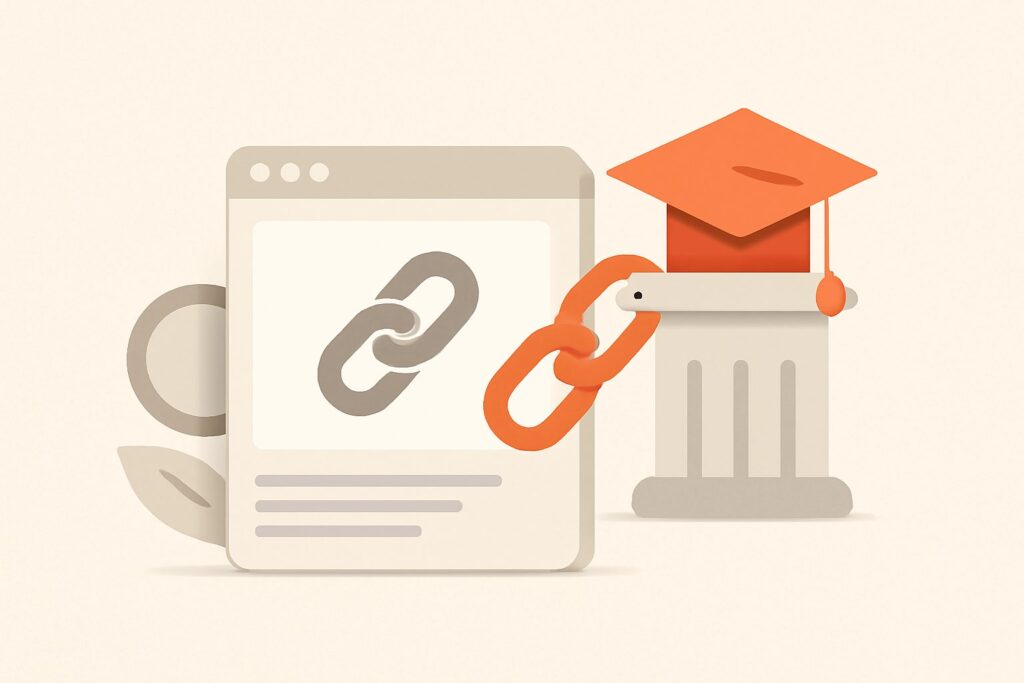
The myth that won’t die is that edu backlinks carry a secret ranking multiplier — that a link from a .edu domain is worth ten links from a normal site because Google trusts universities. It doesn’t work that way. Google has said plainly there’s no ranking bonus attached to a domain’s extension. A .edu link is valuable for the same reasons any link is valuable: the linking page is relevant and authoritative. The reason people still chase them is that many university pages happen to be both — but the extension itself is not the magic.
Why .edu Backlinks Have a Reputation
The reputation isn’t baseless — it’s just misattributed. University sites tend to be old, heavily linked, and rarely spammy, so an individual page on a .edu domain often has real authority to pass. When someone builds a link from a genuinely relevant, well-linked university page, it can move the needle. But that’s the page’s authority working, not a .edu bonus. A forgotten .edu subpage with no inbound links and no relevance passes almost nothing, exactly like any other weak page. Once you internalize that, the whole game changes: you stop hunting for the extension and start hunting for relevant, authoritative pages that happen to be on education domains.
This reframing also kills the worst tactics before you waste time on them. If the extension were magic, spraying comment links across university blogs would work. Since it isn’t, those links do nothing except expose you to spam patterns Google’s link-quality systems already ignore or penalize.
The Tactics That Actually Work
There are a handful of legitimate ways to earn education backlinks, and they all share a trait: the university links to you because you genuinely offer something its students, faculty, or alumni want. Here are the durable ones:
- Scholarship pages — fund a modest annual scholarship and universities list it on their financial-aid resource pages, which are often high-authority and heavily linked.
- Resource-page link building — find department or library pages that curate helpful external resources, and earn a spot by having a resource genuinely worth listing.
- Alumni links — many universities let alumni list their business or blog in a directory or spotlight, a legitimate and underused source.
- Guest lectures, workshops, and sponsorships — real involvement with a department or student club often results in a natural mention and link on an event or partner page.
- Original research or tools students cite — if you publish data or a free tool a professor recommends, it can earn a link from a course page that lasts for years.
None of these are shortcuts. They all require you to offer real value first. That’s precisely why they’re durable — a link earned because you funded a scholarship or built a tool a professor recommends survives every spam update, because it’s exactly the kind of link Google’s systems are designed to reward.
Scholarship Links: Powerful but Overused
Scholarship link building is the most cited tactic for a reason — it works, and universities genuinely appreciate the funding. You create a real scholarship page on your site, offer a real award, and reach out to financial-aid offices whose resource pages list external scholarships. The links come from high-authority, rarely-spammed pages. But the tactic has been abused enough that Google and universities have grown wary. Fake scholarships that never pay out, thin pages built solely for links, and mass identical outreach have all been devalued.
Do it honestly or not at all: fund a real award, actually pay it, and target universities where the scholarship is genuinely relevant to what you do. A cybersecurity firm’s scholarship belongs on computer-science resource pages, not a blanket blast to every .edu financial-aid office in the country. Relevance is what separates a link that lasts from one that gets stripped in the next review — and it’s the difference between a program worth running and link-scheme theater.
Resource-Page Link Building on .edu Domains
University libraries and departments maintain curated resource pages — “Helpful links for marketing students,” “Small-business resources,” “Guides for first-year writers.” These pages exist to point students at useful external material, which means their curators are actively looking for good resources to add. If you’ve built a genuinely useful guide, tool, or data study, you have a legitimate reason to reach out and suggest it. The librarian’s job is literally to find and list resources like yours.
The work is in finding the right pages and confirming they’re worth pursuing. You want resource pages that are relevant to your content, actually maintained, and passing real authority. Rather than manually searching, map where comparable resources already earn these links — SEO Rocket’s competitor gap analysis and site explorer surface the referring domains pointing at rivals, including education domains, so you can see exactly which university pages link to content like yours and pitch the ones with a proven habit of doing so.
What to Avoid Completely
The spam version of edu link building is everywhere, and it’s a waste of money at best and a liability at worst. Skip all of it:
- Comment and forum links on university blogs — nofollowed, ignored, and a spam signal.
- “Buy .edu backlinks” services — usually hacked profile pages or expired subdomains that get cleaned up and can trigger link-scheme scrutiny.
- Fake scholarships built only for links and never awarded.
- Mass-scraped .edu backlinks lists — a public list everyone else is also spamming is a list of already-devalued opportunities.
The through-line is manipulation without value. Google’s link systems have spent years getting better at ignoring exactly these patterns, so the realistic outcome isn’t a penalty — it’s that you spend weeks building links that pass nothing. The opportunity cost of chasing worthless edu links is the real edu link you could have earned instead.
Building Content Worth Linking From a University
Every legitimate edu backlink tactic depends on one thing: you have something genuinely worth a professor or librarian’s link. That means real content — a data study, a definitive guide, a tool — produced to a standard that survives editorial scrutiny. Thin or generic content earns no education backlinks because the whole point of a university resource page is quality curation. This is where a validation-gated writing workflow pays off: SEO Rocket’s AI article writer enforces minimum length, proper structure, and a repair loop that catches weak sections before publish, so the resource you’re pitching actually clears the bar a curator sets.
Pair that with keyword and gap research to build resources around topics students and researchers actually search for, and you produce assets that earn links because they deserve them. The founder’s playbook across 1,000,000+ ranking pages never leaned on the domain extension — it leaned on publishing things authoritative enough that authoritative sites, education domains included, chose to link.
The Honest Take on .edu Backlinks
There’s no .edu multiplier, no magic in the extension, and no shortcut worth buying. What’s real is that many university pages are relevant and authoritative, and a link from one of those pages — earned through a genuine scholarship, a resource worth curating, or real involvement with a department — is a strong, durable link. Chase the relevance and the authority, not the extension. Build something a professor would actually recommend, then go tell the right people it exists. That’s the entire honest strategy for edu backlinks, and it’s the only one that lasts.