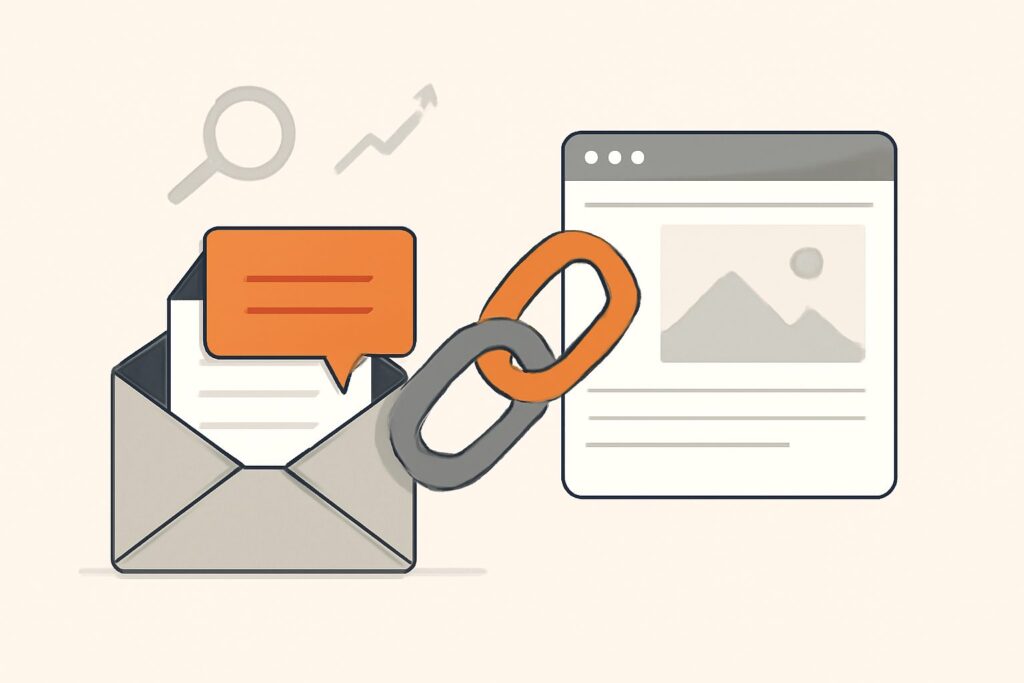
Most advice on email outreach treats it like a volume machine: scrape ten thousand addresses, fire a templated pitch, wait for links to roll in. That model is exactly why the average cold campaign gets ignored. Outreach is not a spam funnel — it’s a low-yield, relationship-driven sales process where the product is a reason for a stranger to edit their page. Reframe it that way and the whole thing changes: you stop optimizing for send volume and start optimizing for the two things that move reply rates, which are prospect relevance and the specific value in your first two sentences.
Why Most Outreach Gets Ignored
Editors, bloggers, and site owners who control links get pitched constantly. A generic “I loved your article, here’s my link” reads as what it is — a mail-merge blast with your name swapped in. Reply rates on cold, untargeted campaigns sit in the low single digits for a reason: there’s no relevance signal and no reason to act. The people who succeed at email outreach aren’t sending more email; they’re sending fewer, sharper messages to prospects who have a genuine, page-specific reason to care. Everything below is built around raising that hit rate rather than the send count.
Set Realistic Expectations First
Before you write a single line, internalize the numbers. Even a well-targeted campaign to a curated list typically converts a small fraction of prospects into links — often in the single-digit-to-low-teens percent range for placements, and lower for cold lists with no prior relationship. Anyone promising guaranteed links, guaranteed rankings, or a fixed reply rate is selling you a fantasy. Outreach is a numbers game layered on top of a quality game: you need enough qualified prospects that a modest conversion rate still produces meaningful links, and you need each message good enough to earn that modest rate in the first place. Plan email outreach as a marathon of small yeses, not one big win.
Build a Prospect List Worth Emailing
The campaign is won or lost at the list stage, before any writing happens. Good prospects share three traits: topical relevance to your page, a real audience, and an editorial reason to link. The highest-yield sources are systematic, not random:
- Competitor backlink gaps — sites that link to two or three of your rivals but not to you. They’ve already demonstrated they link to content like yours, which makes them the warmest cold prospects that exist.
- Resource and “best of” pages in your niche that curate links and are actively maintained.
- Broken-link opportunities — pages pointing to dead resources where your working page is a genuine replacement.
- Unlinked brand or data mentions — sites that already reference you or your research without linking.
- Journalists and writers covering your topic who need sources, data, or expert quotes.
This is where SEO Rocket earns its place in the workflow. Its competitor backlink and link-gap analysis pulls the referring domains linking to your rivals but not to you, on real Ahrefs data, and hands you a named, prioritized prospect list instead of a scraped dump. It won’t send the emails or build the relationship — that human work is the actual moat — but it tells you exactly whose inbox is worth your best message, which is the difference between a 2% and a 12% campaign.
Qualify Every Link Before You Pitch
Not every prospect deserves an email, because not every link is worth having. Google weights relevance, quality, and editorial context far above raw count, so ten links from irrelevant low-quality sites can do less than one from a genuinely relevant page. Qualify on relevance first: does this site’s audience overlap with the readers your page serves? Then look at whether the site publishes real, maintained content or is an obvious link farm. Be skeptical of third-party scores here — “domain authority” is a Moz metric, not a signal Google uses, so treat it as a rough filter, not a target. A relevant, editorially-earned link on a modest site beats a high-“authority” link that’s obviously part of a scheme.
Find the Right Contact and Address
A perfect pitch sent to a generic contact form or the wrong person dies unread. Aim for the individual who actually controls the page — the author, the editor, the site owner — rather than a shared inbox. Look for author bylines, About and Team pages, and personal social profiles. When you guess an address, verify it before sending; a bounced message not only wastes the prospect but hurts your sending domain’s reputation, which quietly degrades deliverability for every future campaign. Warm up a new sending domain gradually and keep volumes human — inbox providers throttle senders who suddenly blast hundreds of near-identical messages.
What a Good Outreach Email Actually Contains
Strip a high-performing outreach email down and it has five parts, in this order: a specific, non-generic subject line; a first sentence that proves you read their page; a clear reason your resource benefits their readers; one unambiguous ask; and an easy exit. The most common failure is leading with what you want. Lead instead with something true and specific about their page — the section you’re referencing, the broken link you found, the stat they cited — because that single line is what separates you from the mail-merge pile. Keep it short. Editors skim; a five-paragraph pitch signals you don’t respect their time.
A Template Structure You Can Adapt
Templates are fine as a skeleton — the danger is sending the skeleton unfilled. Use this structure and rewrite the specifics for every single prospect:
- Subject: reference the specific page or problem, not “link request” — e.g., “the broken tool link on your [topic] guide.”
- Opening line: one concrete, verifiable observation about their content that no mail merge could fake.
- The value: what your resource adds for their audience — original data, a clearer explanation, an updated figure, a working replacement for a dead link.
- The ask: a single, specific request (“would it make sense to add it to that section?”), never a vague “let me know.”
- The exit: a genuine “no worries if not” that makes ignoring you frictionless.
The best link building emails don’t look like templates because the writer did five minutes of homework per prospect. That homework is why targeted lists matter so much: you can only afford real personalization when the list is small and every name is qualified. Personalization at scale is a contradiction — pick relevance, and the scale takes care of itself.
Follow Up Without Being a Pest
A large share of positive replies come from a single, polite follow-up, because the first email simply got buried, not rejected. One follow-up after four to seven days is reasonable; a brief second nudge can be worth it for high-value prospects. Beyond that you’re harassing people and damaging your name. Every follow-up should add a sentence of value or a gentle reminder of the specific benefit — never just “bumping this.” When someone says no, thank them and move on; a graceful no today is a relationship you can revisit next year.
Cold Outreach Links vs. Buying Links
Sooner or later a vendor offers to sell you “guaranteed” placements — niche edits, link insertions, or guest posts at scale. Here’s the honest mechanism: paying for links that pass ranking value is a link scheme under Google’s guidelines, and the exposure is real. Google’s link-spam systems increasingly neutralize bought links algorithmically — meaning your money buys nothing rather than buying a penalty — and egregious patterns can still draw a manual action. The durable alternative is the slower one this guide describes: earned cold outreach links and relationship-built placements that hold because nothing about them depends on Google not noticing. Reciprocal link exchanges and private blog networks fall on the same wrong side of that line for the same reason. If a link only works while it’s undetected, it’s a rented ranking, not an owned one.
Measure Results the Right Way
Track the funnel, not just the finish line, so you can see which stage is leaking. Log prospects contacted, positive replies, and links placed — then watch reply rate and placement rate separately. A low reply rate means your list or your opening line is weak; healthy replies but few placements means your resource or your ask needs work. On the payoff side, watch referring domains grow over time and use rank tracking to see whether the links you earned actually moved the target pages, since a link’s value only shows up in position and traffic over months, not days. SEO Rocket’s backlink analysis and rank tracking close that loop — new referring domains on one screen, ranking movement on another — and its backlink audit helps you spot toxic links pointed at you before they become a cleanup project.
Where a Tool Helps and Where It Can’t
Be clear-eyed about the division of labor. Software finds prospects, qualifies domains, audits your profile, and measures the payoff — that’s the part that scales, and it’s the part a playbook proven across 1,000,000+ ranking pages leans on to avoid guessing. What no tool does is build the relationship: the specific, human, five-minutes-of-homework message that earns the link. SEO Rocket does not do outreach for you and does not sell links; it points you at the right inboxes and shows you whether the work paid off. The email itself is yours to write, and that’s precisely why genuine email outreach still works while spam has stopped.
Frequently Asked Questions
What is a good reply rate for cold outreach?
It varies widely, but a well-targeted, personalized campaign to a qualified list tends to earn far higher replies than a scraped blast — often several times higher. Chase relevance over volume: a small list where every prospect has a real reason to link will beat a huge generic list on both reply rate and links placed. Ignore anyone quoting a guaranteed number.
How many follow-ups should I send?
Usually one, sometimes two for high-value prospects. A single polite follow-up four to seven days after the first email recovers a meaningful share of replies that were simply buried. Past two nudges you’re harming your reputation and deliverability for more return than the link is worth.
Are outreach templates safe to use?
A template is fine as a structural skeleton, but sending it unpersonalized is what kills reply rates. Use outreach templates to remember the parts — subject, specific opener, value, ask, exit — then rewrite the specifics for each prospect. The homework is the message; the template just keeps you from forgetting a section.