Most teams treat GA4 enhanced measurement as a free upgrade you flip on and forget. That’s the mistake. It is a set of seven automatic event listeners that fire whether or not you understand them, and half the analytics messes I get asked to untangle trace back to someone leaving it on default while also rebuilding the same tags by hand. Enhanced measurement is genuinely useful — but only once you know exactly what triggers each event, what it silently misses, and where it double-counts. This guide is the mechanism-level version, not the toggle tour.
What GA4 Enhanced Measurement Actually Does
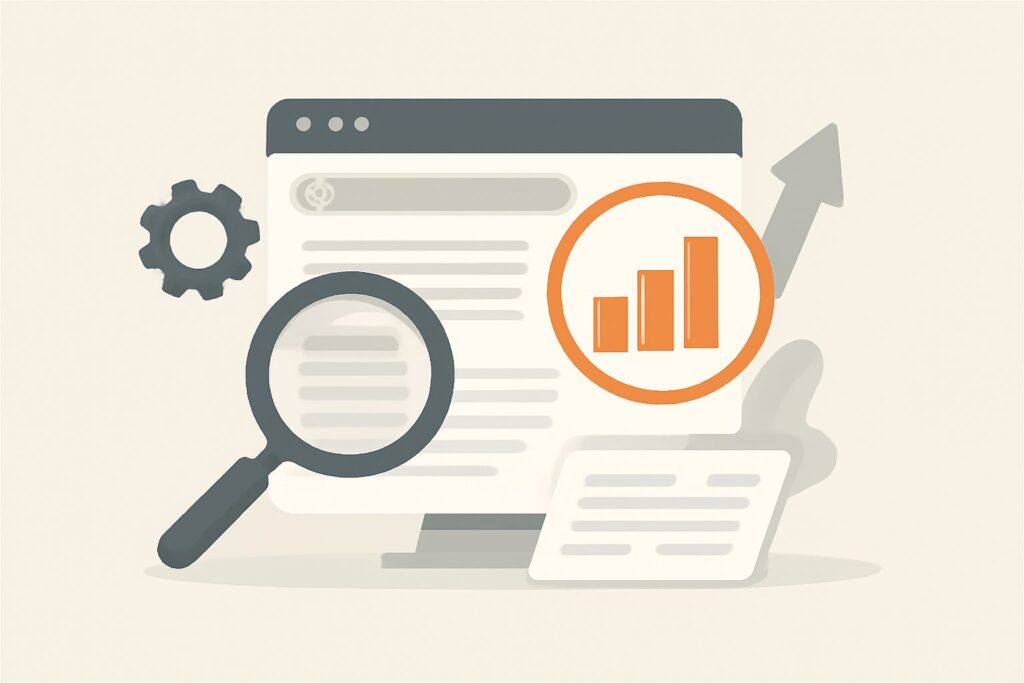
When you create a GA4 web data stream, Google attaches a bundle of client-side listeners to the page alongside the standard page_view. These listeners watch for common interactions and send events automatically, with no tag manager work and no developer time. That’s the whole value proposition: you get scroll depth, outbound clicks, site search, video engagement, downloads, and form activity out of the box. The catch is that “automatic” means “opinionated” — each event fires on Google’s rules, not yours, and those rules are narrower than most people assume.
The Seven Toggles and Exactly What Fires Each One
Under Admin → Data Streams → your stream → Enhanced measurement, there are seven switches. Here is the precise trigger for each, because the defaults hide real behavior:
- Page views — sends
page_viewon load and, critically, on browser History API state changes (pushState / popState). This is how GA4 tracks single-page apps without full reloads. - Scrolls — fires a single
scrollevent the first time a visitor reaches 90% vertical depth. Once per page load, no partial thresholds, and it uses document height at load time. - Outbound clicks — sends
clickwithoutbound: truefor any link pointing to a different domain than your stream. - Site search — sends
view_search_resultswhen the URL contains a query parameter it recognizes. Defaults areq, s, search, query, keyword— if your search uses a different parameter, it captures nothing until you add it. - Video engagement — sends
video_start,video_progress(at 10/25/50/75%), andvideo_completefor embedded YouTube iframes only, and only when the JS API is reachable. - File downloads — sends
file_downloadwhen a clicked link ends in a common extension (pdf, docx, xlsx, zip, mp3, mov, and so on) from a fixed regex. - Form interactions — sends
form_starton first field interaction andform_submiton submit, keyed off native<form>submit events.
Read that list as a contract. Anything outside those exact conditions does not get measured, no matter how obvious the interaction feels to a human.
The Events People Expect but Don’t Get
Two gaps burn people constantly. First, video engagement is YouTube-only. Vimeo, Wistia, self-hosted HTML5 players, and background hero videos produce zero events from enhanced measurement — you need a custom implementation or the vendor’s own GA4 integration. Second, form_submit is unreliable by design. It listens for the browser’s native form submission event, so any form that submits via JavaScript, AJAX, a framework handler, or a third-party embed (HubSpot, Typeform, Calendly, most React forms) frequently never fires a native submit. You’ll see form_start with no matching form_submit, and your conversion counts will quietly under-report. Treat form_submit as a hint, not a source of truth for leads.
The Double-Tracking Trap
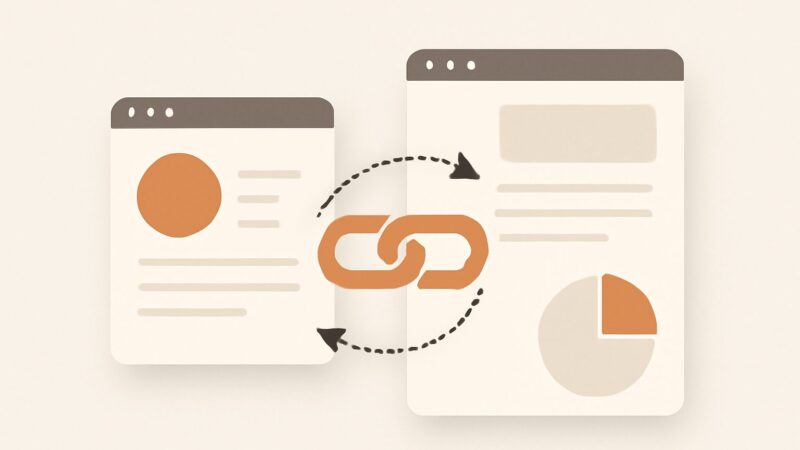
The single most expensive enhanced measurement mistake is counting the same action twice. It almost always happens during a Universal Analytics migration: a team rebuilds their old GTM event tags for downloads, outbound links, or searches, then leaves the matching enhanced measurement toggle on. Now every PDF click sends two events — one from your custom tag, one from GA4 — and every downstream metric inherits the inflation.
Worked example. A B2B SaaS blog migrates to GA4 and rebuilds a GTM tag firing file_download on any link ending in .pdf, because that’s what the old UA setup did. Enhanced measurement’s File downloads toggle is also on. A visitor downloads one whitepaper. In DebugView you now see two file_download events, half a second apart, same URL. The “downloads” metric reads 2x reality, the whitepaper looks like a top performer, and someone reallocates content budget toward a number that was never real. The fix is a one-line decision — keep the native toggle, delete the redundant tag — but only if you know to look.
How to Diagnose Overlap in Ten Minutes
You don’t need a full audit to catch this. Open GA4’s DebugView (enable debug mode via the GA Debugger extension or ?gtm_debug), then run one deliberate session:
- Load a page, scroll to the bottom, click one outbound link, download one file, and if you have a search box, run one query.
- Watch the event stream in real time. You want exactly one event per action.
- Any action that produces two identical events — same name, same parameters, fired within a second — is a double-track. The duplicate is almost always a leftover custom tag.
- Cross-check the reverse: actions that produce no event (a Vimeo play, an AJAX form submit) are your coverage gaps needing custom events.
Ten minutes of DebugView tells you more about your data quality than a week of staring at aggregated reports, because in reports the duplicates are already baked in and invisible.
When to Turn a Toggle Off
Defaults-on is right for most sites, but three toggles deserve a second look. Turn off Scrolls if you need real scroll-depth thresholds (25/50/75%) rather than a single 90% ping — you’ll implement a custom scroll event and the built-in one would just add noise. Reconsider Form interactions if your forms submit via JavaScript, because the partial data (starts without submits) can mislead more than help; a purpose-built event on your actual success callback is more honest. And disable any toggle whose action you’re deliberately tracking with a custom tag, so you never fight the double-count. Everything else — outbound clicks, downloads, site search on standard parameters — is usually worth keeping on. Toggling a switch off only stops future collection; it never deletes historical data you’ve already gathered.
Consent, Privacy, and What It Still Collects
Enhanced measurement is not exempt from consent. Every automatic event flows through the same gtag pipeline as your page_view, which means Google Consent Mode governs it: with analytics_storage denied, GA4 sends cookieless pinged signals rather than full events, and enhanced measurement events are modeled or withheld accordingly. If you operate under GDPR or similar regimes, the automatic events do not give you a free pass on a consent banner — a view_search_results event can carry the raw search term a user typed, which may include personal data. Audit your site-search parameter for PII leakage, and confirm your consent management platform loads before GA4 fires, or you’ll collect events you had no legal basis to collect.
Enhanced Measurement on Single-Page Apps
SPAs are where the automatic model both shines and stumbles. The Page views toggle catches History API changes, so React, Vue, and Next.js route transitions usually generate page_view events without extra code. But the scroll listener measures document height at the moment of load, so on virtualized or infinitely-scrolling layouts the 90% trigger is meaningless. Outbound-click and download listeners are attached via event delegation and generally survive client-side navigation, but components that stop event propagation (custom link wrappers, some UI libraries) can swallow the click before GA4 sees it. On any SPA, the DebugView pass above isn’t optional — it’s the only way to know which automatic events actually survive your framework.
Turning Free Events Into SEO Signal
Clean enhanced measurement data is worth more than the effort implies, because it becomes ground truth for content decisions. scroll and video_progress tell you whether a ranking page actually holds attention or just catches an impression; view_search_results exposes the queries visitors run after they land, which is a raw feed of content gaps in your own words. Outbound clicks show which external references you’re leaking authority to. This only works if the data is trustworthy — which is exactly why measurement hygiene matters before analysis.
In practice I use GA4 as the reconciliation layer against index-based rank data. Rank estimates are directional; GA4 and Search Console are ground truth. That’s the same logic built into SEO Rocket: rank tracking and AI-visibility tracking give you the directional trend, then the client dashboard cross-checks movement against real Search Console and GA4 traffic, so a keyword that “jumped” but sent no clicks gets flagged instead of celebrated. When our AI keyword research surfaces a gap on real Ahrefs data, the site-search events from enhanced measurement often confirm the same demand from a completely different angle — two independent signals pointing at the same missing page. It’s a small piece of a playbook proven across 1,000,000+ ranking pages, but garbage-in analytics quietly corrupts every decision downstream of it.
Frequently Asked Questions
Does GA4 enhanced measurement track form submissions reliably?
Not reliably. The form_submit event listens for the browser’s native form submission, so AJAX forms, framework-handled forms, and most embedded third-party forms (HubSpot, Typeform, and similar) often never trigger it. Use a custom event tied to your actual success callback for anything you count as a conversion, and treat the built-in form events as directional only.
Does enhanced measurement work on single-page applications?
Partly. The Page views toggle captures History API route changes, so SPA navigations usually register. But the scroll listener reads page height at load and misbehaves on infinite scroll, and click-based events can be swallowed by components that stop propagation. Verify each event in DebugView on your actual app rather than assuming coverage.
Does GA4 enhanced measurement respect consent and GDPR?
Yes — its events run through the same gtag pipeline as page views, so Google Consent Mode governs them. Under denied analytics storage, events are modeled or withheld. Note that site-search events can capture personal data typed into a search box, so review that parameter for PII and ensure your consent banner loads before GA4.
Will turning off enhanced measurement delete my data?
No. Disabling a toggle only stops future collection of that event type. All previously collected data remains in your reports subject to your normal data-retention settings. You can turn events off and back on without losing historical records.
The Bottom Line
GA4 enhanced measurement is a genuine time-saver, but it rewards the people who read the fine print. Know the exact trigger behind each of the seven events, delete any custom tag that duplicates one, treat form and non-YouTube video tracking as incomplete, and run one honest DebugView session before you trust a single aggregate number. Do that, and the free events become a reliable foundation for every content and ranking decision you make afterward. Skip it, and you’ll optimize confidently toward metrics that were double-counted, under-reported, or collected without consent.