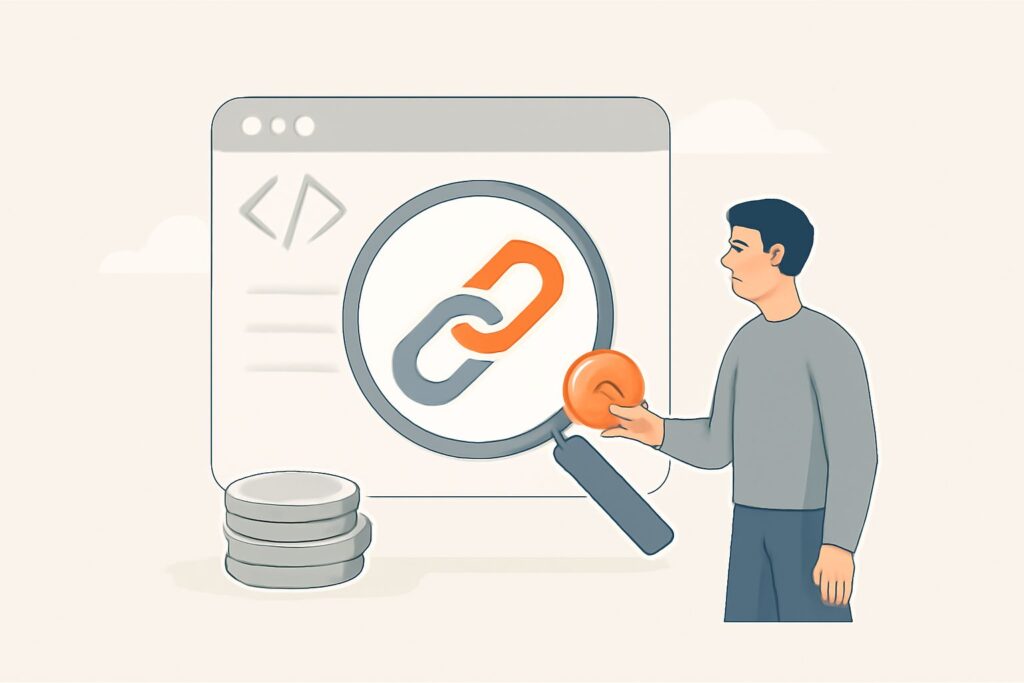
Sooner or later, almost everyone doing SEO gets pitched on paid links — an outreach email offering “guest posts” on “high DA sites,” a marketplace listing links by domain rating, or an agency quietly folding link purchases into a monthly retainer without saying the word “buy” out loud. So is buying backlinks worth it? The honest answer requires actually weighing the cost against the realistic benefit, not just repeating “Google says don’t do it” or, on the other side, “everyone does it anyway.” This article tries to do that math fairly, because both extremes — paid links are always instantly catastrophic, and paid links are a harmless open secret — oversimplify what’s actually a nuanced risk calculation.
Why People Buy Links in the First Place
The core problem paid links try to solve is real: earning backlinks organically is slow, unpredictable, and depends on having genuinely link-worthy content plus enough outreach effort to get it in front of the right people. A new site with zero authority faces a chicken-and-egg problem — it’s hard to rank without links, and hard to earn links without ranking well enough to be seen in the first place. Paid links offer a way to skip that bootstrapping phase: pay for placement on an established domain, get a backlink immediately, and in theory borrow some of that domain’s authority without waiting months for organic link acquisition to compound. For competitive niches where organic link building is genuinely difficult — finance, legal, insurance, gambling — the temptation is even stronger, because those are exactly the niches where link-buying marketplaces are most active and most normalized.
What Google Actually Says and Does
Google’s Search Essentials spam policies explicitly prohibit “link schemes,” a category that includes buying or selling links that pass PageRank, exchanging money for links without proper nofollow/sponsored attribution, and large-scale article marketing or guest posting campaigns with keyword-rich anchor text. Google’s systems for detecting this have improved substantially — link velocity anomalies (a sudden spike in backlinks that doesn’t match a site’s actual growth or newsworthiness), unnatural anchor text patterns (exact-match commercial keywords repeated across many referring domains), and footprints shared across known link networks (the same template, the same “write for us” language, the same hosting patterns) are all detectable at scale. When Google catches a clear pattern, the consequence is a manual action for “unnatural links,” which can suppress rankings site-wide, not just devalue the specific purchased links — and recovering requires disavowing the links and filing a reconsideration request, a process that takes real time and doesn’t guarantee full recovery of prior rankings.
The Real Cost of Buying Links
The sticker price is only part of the cost. Quality paid placements on genuinely relevant, well-trafficked sites aren’t cheap — and the cheap ones, the ones actually within reach of most small business budgets, tend to come from link farms and private blog networks that are exactly the pattern Google’s detection is built to catch, meaning the cheaper the link, the higher the relative risk per dollar spent. There’s also a hidden ongoing cost: link-buying isn’t usually a one-time purchase, it’s a recurring spend, because purchased links don’t compound the way earned links do — a genuinely earned link from a respected industry publication tends to keep generating referral traffic and credibility for years, while a purchased placement on a link-farm page often gets removed, deindexed, or devalued within months, forcing continual repurchasing just to maintain the same backlink count. And if a manual action does hit, the cost includes the time spent identifying and disavowing every purchased link, which for an aggressive campaign can mean untangling hundreds of placements built up over months or years.
Weighing the Realistic Upside
To be fair to the other side of the argument: not every paid link is a link-farm placement, and not every site that has ever paid for a link gets caught. Sponsored content on a genuinely relevant, well-trafficked industry site, properly disclosed with a nofollow or sponsored attribute, is both compliant with Google’s guidelines and can still deliver real value — referral traffic, brand exposure, and audience trust — even though it doesn’t pass ranking authority the way an un-flagged link would. Some paid placements that don’t pass PageRank at all can still be worth the spend purely for the traffic and brand association, which is a legitimate marketing cost, not an SEO shortcut, and shouldn’t be judged by SEO ROI math in the first place.
| Buying links (the shortcut) | Earning links (the durable approach) | |
|---|---|---|
| Upfront cost | Ongoing spend per link, repeated indefinitely | Upfront investment in content and outreach, front-loaded |
| Durability | Links often removed or devalued within months | Earned links tend to persist for years |
| Compounding value | Minimal — each purchase is a separate, isolated transaction | High — good content earns additional links over time without repeat spend |
| Penalty risk | Real and increasing as detection improves; site-wide manual action possible | None, when links are genuinely earned |
| Traffic quality | Often minimal — link-farm placements rarely send real visitors | Often meaningful — links from relevant sites bring relevant referral traffic |

The Honest Verdict
For the vast majority of businesses weighing this decision, the ROI on buying backlinks does not work out. The realistic version of link buying available to most budgets — cheap marketplace links, bulk guest post packages, PBN placements — carries real penalty risk, produces links that decay in value faster than they can be replaced, and rarely sends meaningful referral traffic on its own. The version of paid placement that does make sense — genuine, properly disclosed sponsored content on a relevant site you’d want visibility on regardless of SEO value — should be evaluated as a marketing and brand spend, not an SEO investment, and budgeted accordingly rather than folded into a “link building” line item chasing rankings. If your honest goal is rankings, the money almost always goes further spent on content and outreach that earns links naturally, because that spend compounds instead of decaying.
What to Do Instead
Earning links durably starts with having something genuinely worth linking to — original research, a genuinely useful tool, data no one else has published, or content that’s simply more complete and current than what’s currently ranking. That’s a content and outreach investment, not a purchase, and it requires knowing what’s actually missing in your space before you build anything. A Content Gap analysis against competitors who already have strong backlink profiles shows you which topics are under-covered and worth building genuinely link-worthy content around, while Site Explorer lets you evaluate a potential paid placement or guest post opportunity honestly before you pay for it — checking whether a site’s traffic, referring domains, and link profile look organic or look like a link farm, which is exactly the due diligence most people skip when a marketplace pitch lands in their inbox. If you do pursue sponsored placements for genuine brand reasons, verifying the site’s real authority and traffic first, rather than trusting a seller’s own metrics, is the difference between a reasonable marketing spend and money down a link-farm drain.
Frequently Asked Questions
Will I get caught immediately if I buy a few links?
Not necessarily — a small number of purchased links on an otherwise natural profile is lower risk than a large, obvious campaign. But “probably won’t get caught immediately” isn’t the same as “worth doing,” given the poor durability and ROI even when undetected.
Are all paid placements against Google’s guidelines?
No — sponsored content properly marked with a nofollow or sponsored attribute is compliant, because it’s not attempting to pass ranking authority. The violation is specifically buying links that pass PageRank without disclosure.
What should I do if I’ve already bought links in the past?
Audit your backlink profile for unnatural patterns, identify placements from low-quality or clearly paid sources, and use Google’s disavow tool for anything that looks risky, especially before it triggers a manual action rather than after.
Is guest posting the same as buying links?
Not inherently — a genuine guest post on a relevant site, written to add real value with a natural link back, is a legitimate outreach tactic. It becomes a link scheme when it’s paid for at scale with commercial anchor text and no editorial standard.
Before you spend on any paid placement, check what you’d actually be buying. SEO Rocket’s Site Explorer runs on real Ahrefs data so you can evaluate a link source’s genuine authority and traffic before committing budget — and Content Gap analysis shows you where genuinely link-worthy content opportunities already exist. Start free at app.seorocket.ai.