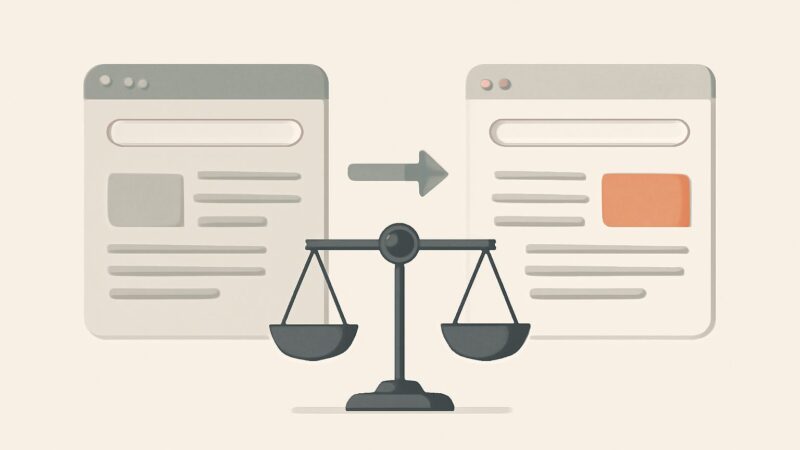
The marketplace vs standalone decision is usually pitched as a fees fight — Amazon’s cut versus your own Shopify bill — and that framing quietly ignores the variable that decides which channel is worth more over five years: who owns the ranking asset. Sell on a marketplace and you rent visibility inside someone else’s search engine. Sell on your own site and you build a domain that ranks in Google and keeps ranking after you stop paying. Both can move product. Only one of them accrues to you. Get the SEO trade-off wrong and you either bleed margin forever or starve for traffic while your competitors compound theirs.
Two Different Search Engines, Not One
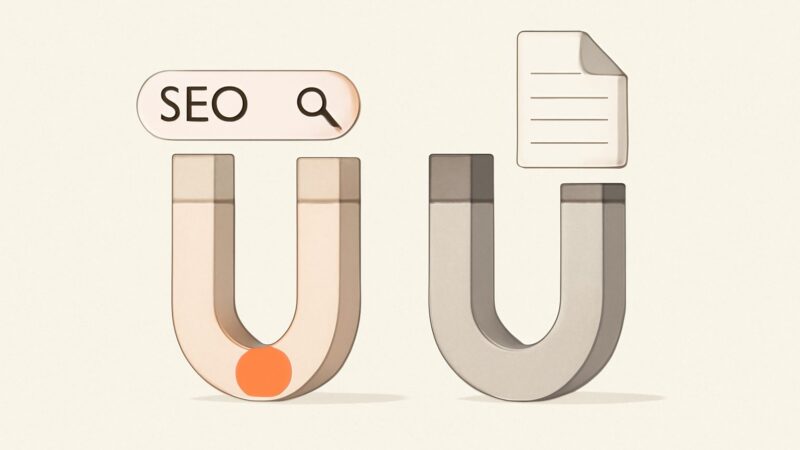
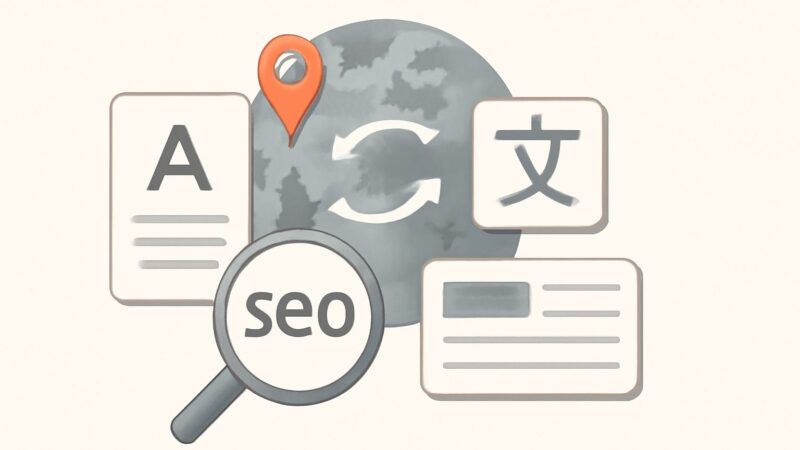
The first mistake in the marketplace vs standalone debate is assuming “SEO” means the same thing on both. It doesn’t. A standalone store competes in Google’s organic results, where the ranking signals are links, content depth, technical health, and query intent. A marketplace listing competes inside that marketplace’s own engine — Amazon’s A9/A10, Etsy’s search, eBay’s Best Match — where the signals are conversion rate, sales velocity, price, fulfillment speed, and review count. These are separate ranking systems with separate rules. A listing that dominates Amazon can be invisible in Google, and a page that ranks in Google may never surface on Amazon. Channel strategy is really two SEO problems wearing one label.
What You Actually Rank For on a Marketplace
Amazon’s algorithm is a sales machine, not a librarian. A9 and its successor A10 reward listings that convert and sell: relevant keywords in the title and backend fields get you into the consideration set, but sales velocity, click-through, review volume, and Prime eligibility decide who wins the buy box and the top slots. That has two consequences. First, keyword research still matters — you need the terms shoppers actually type — but it feeds a conversion engine, so a listing optimized purely for search relevance and not for images, price, and reviews will stall. Second, you are ranking a product, not a domain. Nothing about that listing builds equity you can move elsewhere. Stop paying to play and your position decays as competitors out-sell you.
What You Actually Rank For on a Standalone Store
A standalone store plays Google’s game, and Google ranks pages, not products. That means your category pages target broad head terms (“men’s leather boots”), your product pages target specific long-tail and model-number queries (“Redwing 875 8-inch moc toe”), and your buying guides capture research-intent searches that funnel down to both. You control the URL structure, the internal linking, the schema, and the content — the entire crawlable surface. The payoff is ownership: a page that earns its rank keeps earning while you sleep, and the authority you build on one product lifts the whole domain. The cost is that you start from zero authority, and Google makes you prove yourself over months, not days.
Borrowed Authority: The Marketplace’s Real Advantage
The strongest SEO argument for a marketplace is speed borrowed from someone else’s domain. Amazon, Etsy, and eBay carry enormous trust and link equity, so a brand-new listing can appear in relevant results almost immediately — no domain-age penalty, no cold-start crawl budget problem, no link building required to be taken seriously. For a launch with no audience, that borrowed authority is a genuine head start; you’re renting a storefront on the busiest street in the world. The catch is in the word “borrowed.” You never hold the deed. The marketplace can change its algorithm, raise fees, suppress your listing, or let a competitor undercut you into oblivion, and you have no recourse because the asset was never yours.
Owned Equity: The Standalone Store’s Real Advantage
The standalone store’s advantage is the mirror image: everything is slower to build and permanent once built. Every ranking page, every earned backlink, every reviewed product schema is an asset on your balance sheet, not a rented slot. That compounds. A store that has published fifty genuinely useful buying guides and ranked two hundred product pages has a moat a competitor can’t buy their way past in a quarter. It also means you own the customer relationship, the email list, the retargeting pixel, and the data — none of which a marketplace shares. The trade-off is real work and real patience: expect three to six months before organic traffic becomes meaningful, and longer in a competitive category.
The Technical SEO Problems a Standalone Store Must Solve
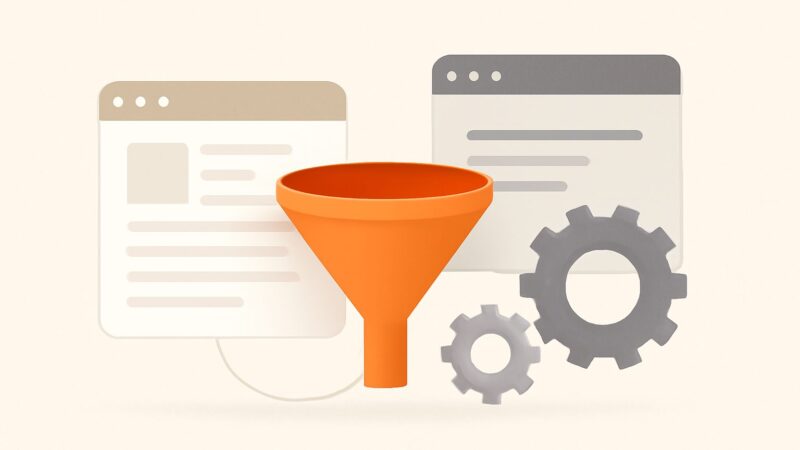
Owning the SEO asset means owning its failure modes, and ecommerce sites have specific, brutal ones that marketplaces handle for you. If you go standalone, these are the problems that decide whether Google rewards or ignores your catalog:
- Near-duplicate variant pages — the same shirt in eight colors generating eight thin, nearly identical URLs that split ranking signals or trip duplicate-content filters. Canonical tags and smart variant handling fix this; ignoring it wastes your crawl budget.
- Faceted-navigation URL explosion — filters for size, color, price, and brand multiplying into thousands of crawlable parameter URLs that dilute crawl budget and bury your real category pages. This needs deliberate rules on what to index, noindex, or block.
- Thin product descriptions at scale — manufacturer boilerplate copied across every retailer, which Google treats as duplicate, low-value content. Unique descriptions at catalog scale is the single hardest content problem in ecommerce.
- Out-of-stock and discontinued products — pages that once ranked now returning nothing, and how you handle the URL (keep, redirect, or 410) directly affects retained equity.
- Crawl budget and pagination — on a large catalog, Googlebot won’t crawl everything, so your architecture has to guide it to the pages that matter.
None of these exist on a marketplace, because you don’t own the platform. That’s the hidden cost of ownership — and the reason a real-crawler site audit matters. SEO Rocket’s audit crawls your store the way Googlebot does and surfaces exactly these failure modes: duplicate variants, thin pages, redirect chains, broken links, and orphaned URLs. Finding them is the difference between a catalog Google ranks and one it quietly ignores.
Schema, Reviews, and the Rich Results a Standalone Store Can Win
One place the standalone store genuinely out-earns a marketplace listing in Google is structured data. Correct Product, Offer, and AggregateRating schema makes your pages eligible for rich results — price, availability, and star ratings shown directly in the search snippet, which lifts click-through before a shopper ever clicks. Be accurate here: Google’s policy allows review snippets for reviews collected on your own products through self-serve or first-party systems, while third-party review widgets face restrictions and won’t always render stars. Don’t mark up ratings you can’t substantiate — a manual action for review spam costs more than the stars are worth. Done honestly, schema is a standalone advantage a marketplace never lets you control.
Platform Dependency: The Risk Ledger
Every channel choice is also a risk choice. A marketplace concentrates your risk in a single relationship you don’t govern: algorithm changes, fee hikes, listing suppression, counterfeit competition, and account suspension are all one email away, and any of them can zero your revenue overnight. A standalone store spreads that risk — Google core updates can hurt, but you can diagnose, fix, and recover because you control the site. The honest read is that marketplace risk is sharper and more sudden, while standalone risk is more gradual and more recoverable. Neither is risk-free; they fail differently.
A Worked Example: The Same Product, Two Channels
Picture a small brand selling handmade leather wallets. On Etsy, a new listing with the right keywords and a few early sales can appear in category results within days, riding Etsy’s authority — fast revenue, thin margin after fees, and zero equity. On a standalone Shopify store, the same wallet’s product page starts invisible; it needs a unique description, Product schema, internal links from a “best minimalist wallets” buying guide, and a few earned backlinks before Google trusts it. That takes months. But once the buying guide ranks for the research query and funnels shoppers to the product page, the brand owns a traffic source no one can revoke or tax. The marketplace paid the bills early; the standalone store built the business.
How to Decide: The Channel Rule That Holds
The durable answer to marketplace vs standalone is usually “both, in sequence, for different jobs.” Use the marketplace for what it’s good at — fast validation, launch revenue, and borrowed reach in a category where shoppers search on-platform. Use the standalone store to build the asset you own, starting the SEO work early so the compounding clock runs while the marketplace pays the rent. The decision rule: if you need cash and proof this quarter, lead with the marketplace; if you’re building an asset to sell or hold for years, the standalone store is where the SEO equity lives, and every month you delay it is a month of compounding you don’t get back.
Where SEO Rocket Fits the Standalone Side
Marketplaces optimize themselves inside their own walls; the standalone side is where SEO tooling earns its keep. SEO Rocket runs keyword research on real Ahrefs data so you can separate broad category head terms from specific product long-tail and research-intent buying-guide queries — the exact segmentation ecommerce SEO depends on. Its content-gap analysis shows what competitors rank for that you don’t, the real-crawler audit catches the duplicate-variant and thin-page problems above, and rank tracking follows your product and category terms over time. The validation-gated AI writer helps produce unique product descriptions and buying guides at scale, a direct answer to the thin-content-at-scale trap. It’s an SEO layer at around $50/mo with a free tier — not a store platform — built on a playbook proven across 1,000,000+ ranking pages.
Frequently Asked Questions
Does selling on Amazon help my own website rank in Google?
Not directly. Amazon’s ranking system is separate from Google’s, and your listings build Amazon’s domain authority, not yours. A marketplace can raise brand awareness that indirectly earns you branded searches and the occasional link, but it does nothing to build the crawlable, link-worthy asset that ranks your own site. If Google visibility is the goal, the standalone store is the only channel that compounds toward it.
Can I run a marketplace and a standalone store at the same time?
Yes, and most established brands do. The trap to avoid is publishing identical product descriptions on both — duplicate content weakens your own site’s pages. Write unique copy for your standalone store, keep the marketplace listing conversion-optimized for its own algorithm, and treat them as two channels serving two search engines rather than one catalog copied twice.
Is a standalone store’s SEO worth the wait if I’m just starting?
It depends on your horizon. Over anything longer than a few months, owned organic traffic beats rented marketplace visibility because it stops costing per sale and keeps compounding. Start the SEO work early even if the marketplace carries early revenue — the domain authority and content equity you build now are what let you eventually leave the marketplace’s fees behind.