Anyone researching how to switch from Writesonic to SEO Rocket usually already knows what Writesonic is good at: fast, cheap, high-volume AI content generation. That’s exactly why teams pick it up in the first place. The switch conversation starts once volume stops being the bottleneck and quality of targeting becomes the actual problem — when a team has published a lot of Writesonic content and still can’t say with confidence which keywords it’s supposed to rank for, or whether it’s ranking at all. This guide lays out what Writesonic does well, where the gap actually is, and how to move without losing the parts that worked.
What Writesonic Does Well
Writesonic earns its popularity on speed and price. Its bulk content generation and Article Writer tools can produce a large volume of drafts quickly, which is genuinely valuable for content teams under deadline pressure or agencies producing at scale for multiple clients. Chatsonic adds a conversational interface with some real-time web data, and Photosonic covers basic AI image generation alongside the writing tools — useful if you want text and visuals from one subscription. For teams whose main constraint is “we need more content, fast, at a low cost per word,” Writesonic does that job efficiently, and switching purely for that use case isn’t obviously worth it.
Why People Actually Leave
The complaints that push people to look elsewhere are consistent: bulk-generated content without real keyword data behind it tends to target the wrong things, or nothing measurable at all, and teams end up with a large content library and no clear picture of what’s actually driving traffic. Writesonic’s SEO features are lighter than the name suggests — there’s on-page checking and some SEO-adjacent tools, but no serious backlink index, no site-wide technical audit, and no dependable rank tracking. The second recurring issue is quality variance at high volume — fast bulk generation is efficient, but teams doing SEO-focused work often find they need more editorial oversight per piece than a bulk workflow is built to give them, especially once they start caring about actually ranking rather than just publishing.
Writesonic vs SEO Rocket: Feature by Feature
| Capability | Writesonic | SEO Rocket |
|---|---|---|
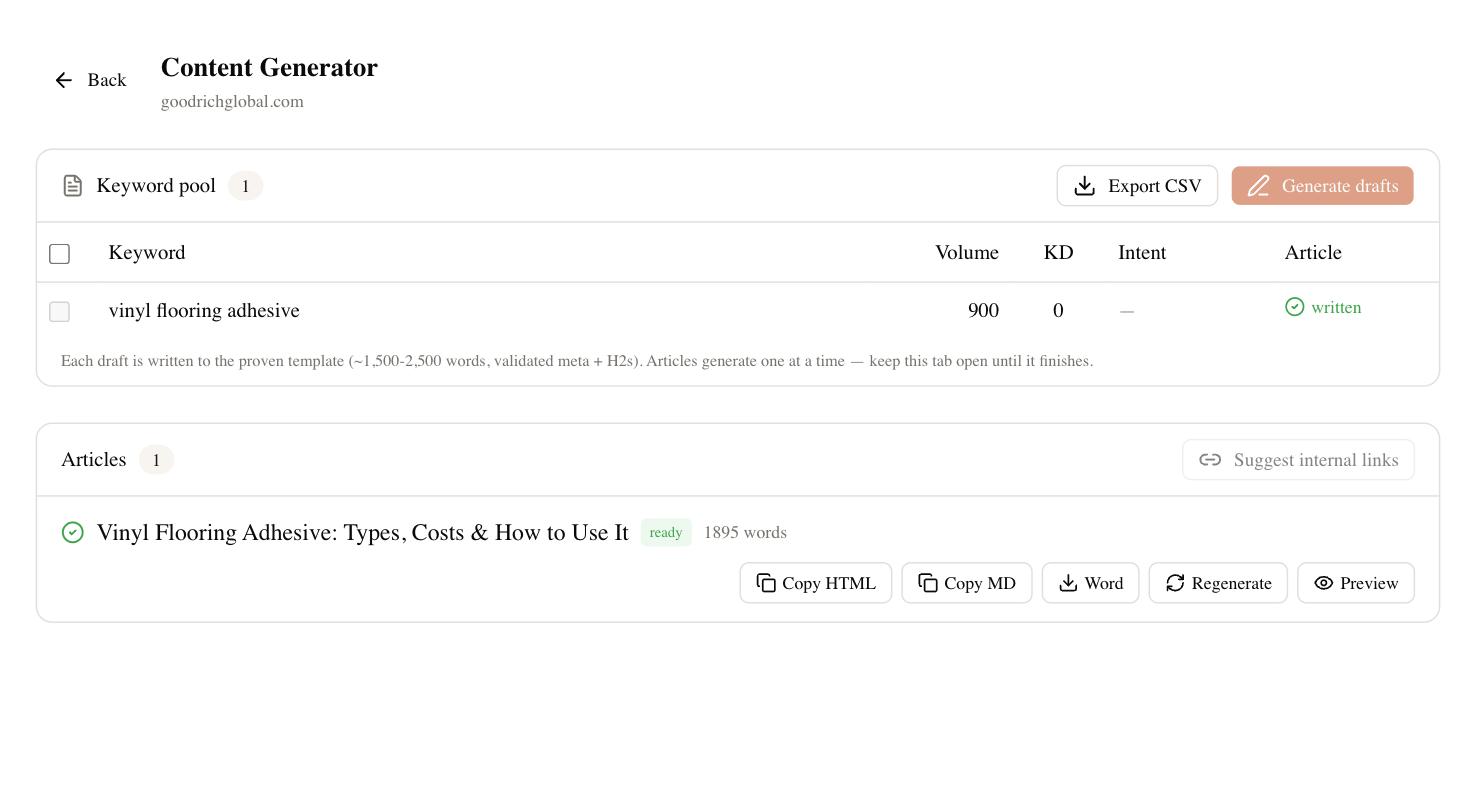
| AI content generation | Fast bulk generation, Article Writer, low cost per word | Claude-powered AI Content Writer, grounded in real keyword/competitive data |
| Chat interface | Chatsonic, general-purpose conversational assistant | Chat-first SEO workflow — research, audit, write, and track by asking |
| Keyword research | Basic, limited depth | Full Keywords Explorer: volume/KD/CPC plus 2D/3D semantic Keyword Graph |
| Backlinks / Site Explorer | Not offered | Full Site Explorer (backlinks, referring domains, top pages, organic keywords) on Ahrefs Enterprise data |
| Rank tracking | Not offered | Built-in rank tracking |
| Technical audits | Not offered | Site audits plus free Website Speed Test |
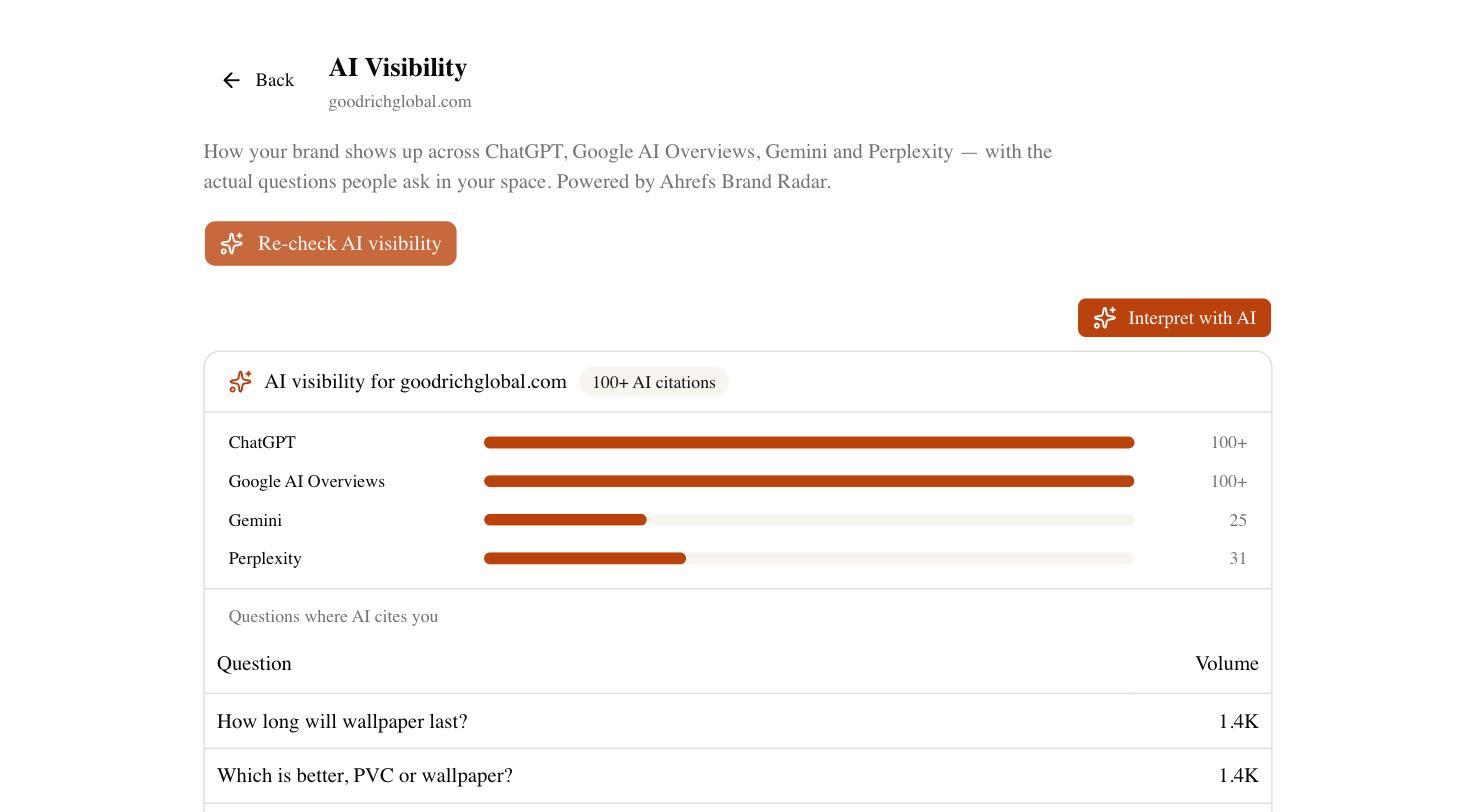
| AI-search / GEO visibility | Not offered | AI Visibility / Brand Radar across ChatGPT, Google AI Overviews, Gemini, Perplexity |
| AI image generation | Photosonic included | Not offered — SEO Rocket is focused on SEO data and content, not images |
| Entry price (2026, approx.) | ~$49/mo (varies by tier) | Free plan available; Pro $49/mo (3 sites, 400 credits/mo) |
Prices are approximate 2026 entry-tier list pricing, and Writesonic’s tiers vary more than most competitors — always confirm current pricing before deciding.
How to Migrate, Step by Step
1. Audit your existing Writesonic content library. Pull a list of published articles and, if you have it, whatever keyword each was meant to target — this becomes your baseline for comparison.
2. Create your SEO Rocket project, connect your domain, and let the initial site snapshot run — most teams coming from a bulk-generation tool have never had a real technical audit or backlink profile, so this alone surfaces new information.
3. Run Keywords Explorer and Content Gap analysis to see which of your existing Writesonic articles are actually targeting keywords with real volume and a viable ranking opportunity, and which ones aren’t targeting anything meaningful.
4. Prioritize rewrites for your highest-traffic-potential pages first, rather than trying to redo the entire library at once — use Content Gap output to rank the list.
5. Draft new content going forward with the AI Content Writer, so every new piece starts from real search data instead of a general prompt.
6. Set up rank tracking immediately for your priority keywords — this is likely the single biggest gap in your current setup, and it’s the only way to know if the switch is working.
What You Keep, What Changes
You keep AI-assisted drafting speed to a degree, though SEO Rocket is not optimized for the same raw bulk-output volume Writesonic offers — if your workflow depends on generating dozens of articles per day at minimal cost, that’s a real trade-off to weigh. What changes is that every draft is now backed by actual keyword volume, difficulty, and competitive gap data rather than a topic prompt, and you gain the SEO stack Writesonic never had: backlinks, technical audits, rank tracking, and AI-search visibility. You lose Photosonic’s image generation and Chatsonic’s general-purpose assistant use cases, which live outside SEO Rocket’s focus.
Pricing Comparison
| Plan tier | Writesonic (approx., 2026) | SEO Rocket |
|---|---|---|
| Free tier | Limited free trial/credits | Free — 1 site, 50 starter credits |
| Entry | ~$49/mo (varies by tier and word limits) | Pro $49/mo (3 sites, 400 credits/mo) |
| Mid | Higher tiers, more words/seats | Growth $99/mo (10 sites, 1,000 credits/mo) |
| Team / Agency | Business tier, custom seats | Agency $199/mo (25 sites, 2,500 credits/mo) |
| Enterprise | Custom | Custom |
Annual billing on SEO Rocket saves roughly 8% (one month free). Writesonic’s pricing varies notably by tier and word allowance — confirm current figures before switching.
Who Should NOT Switch
If your priority is genuinely maximum content volume at the lowest possible cost per word — for example, a content mill model where editorial quality and precise keyword targeting matter less than throughput — Writesonic’s bulk generation is built for exactly that, and SEO Rocket’s credit-metered model isn’t optimized to compete on raw volume. If you also rely on Photosonic for images or Chatsonic as a general-purpose assistant, those use cases don’t transfer. Switch when the problem is quality of targeting and lack of measurable results, not speed of production.
Frequently Asked Questions
Can I still generate content quickly with SEO Rocket?
Yes, drafting is fast, but the emphasis is on each piece being targeted at real keyword data rather than maximizing raw output volume — it’s a different priority than Writesonic’s bulk-generation model.
What happens to my existing Writesonic articles?
They stay published. Use Content Gap analysis in SEO Rocket to identify which ones are worth rewriting around real keyword opportunities and which are fine as-is.
Does SEO Rocket include image generation like Photosonic?
No, SEO Rocket is focused on SEO data and content, not image generation — you’d need a separate tool for that if it’s part of your workflow.
Is there a free way to try SEO Rocket first?
Yes — the Free plan includes one site and 50 starter credits, enough to run a real snapshot and compare a data-backed draft against your Writesonic output.
If your Writesonic content library is growing but your rankings aren’t, you can start free at app.seorocket.ai and see what your existing content looks like against real keyword and competitive data — no credit card required.