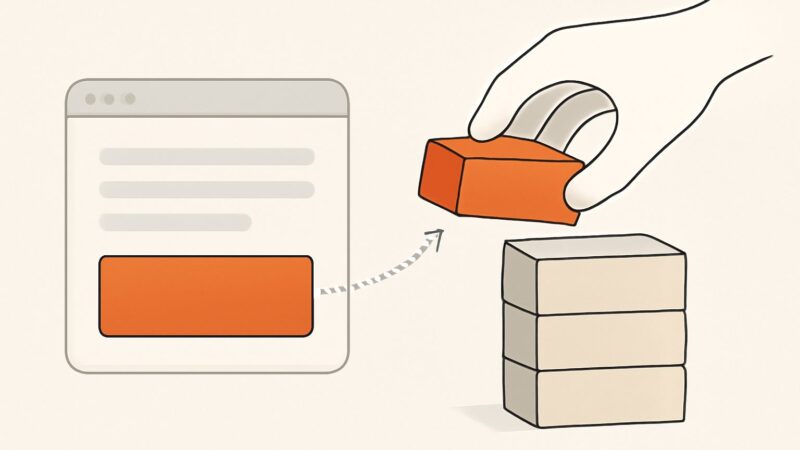
Most advice on topic clusters stops at a diagram — one pillar page in the middle, a ring of subpages around it, arrows pointing inward — as if drawing the shape were the strategy. It isn’t. A cluster only earns its keep when the internal links, the intent mapping, and the topical coverage are tight enough that Google reads your site as an authority on a subject rather than a pile of loosely related posts. This guide skips the diagram worship and gives you the mechanism: why clusters move rankings, how to size them, the linking rules that actually pass signal, and a build sequence you can run this quarter.
What Topic Clusters Actually Are (and What They’re Not)
A topic cluster is a group of interlinked pages that collectively cover one subject in depth: a broad pillar page targeting the head term, plus a set of cluster pages each targeting a specific sub-question, all linked to and from the pillar. The point is coverage plus connection. You are telling a search engine, through structure, that this section of your site answers not just one query but the whole neighborhood of queries around it.
What clusters are not: a pillar page is a single asset, not the strategy — the cluster is the pillar plus its spokes plus the links between them. And a content hub is a broader navigational concept (a landing area that organizes many resources); a topic cluster is the tighter semantic-and-linking unit underneath it. Confusing these leads to the common failure mode: publishing a long “ultimate guide,” calling it a cluster, and wondering why nothing ranks.
Why the Topic Cluster Model Works
The topic cluster model works because search engines rank pages on topical authority, not just individual keyword matches. When ten of your pages all address facets of “email deliverability” and link sensibly to one another, each page borrows relevance from the others. Google’s systems increasingly evaluate how completely a site covers an entity and its related concepts — a well-built cluster signals exactly that completeness.
There’s a second, more mechanical reason. Internal links distribute crawl priority and link equity. A pillar page that earns external backlinks can pass a share of that authority down to a dozen cluster pages that would never attract links on their own. Meanwhile the cluster pages, which target lower-competition long-tail terms, funnel their relevance and their own traffic back up to the pillar. It compounds in both directions.
Pillar Pages vs Cluster Pages: The Division of Labor
The two page types do different jobs, and blurring them is where most clusters go soft:
- The pillar page targets the broad head term (“content marketing“), stays comprehensive but shallow on each sub-topic, and exists to rank for the competitive term and to be the internal hub. It links out to every cluster page.
- Cluster pages each target one specific, lower-volume query (“content marketing for B2B SaaS,” “how to measure content ROI“) and go deep on that single intent. Each links back up to the pillar and, where relevant, sideways to sibling pages.
A useful test: if two cluster pages could realistically merge without either losing its distinct search intent, they should be one page. Clusters fail when they’re padded with near-duplicate spokes that cannibalize each other for the same query.
The Internal Linking Rules That Make or Break a Cluster
The links are the cluster — remove them and you just have a folder of posts. Three rules matter more than the rest. First, every cluster page links to its pillar using descriptive anchor text (the sub-topic phrasing, not “click here”). Second, the pillar links to every cluster page, so authority flows down and crawlers discover the spokes fast. Third, siblings link laterally only where a reader genuinely benefits — forced cross-links between unrelated spokes dilute the signal instead of strengthening it.
Anchor text is where practitioners leave value on the table. Vary it naturally around the target intent rather than repeating the exact keyword every time — Google reads over-optimized, identical anchors as manipulation. The goal is a graph a human editor would build for genuine navigation, which is also, not coincidentally, the graph that reads as authoritative to a crawler.
How to Build a Topic Cluster: A Step-by-Step Sequence
Here’s the practical order of operations for a cluster content strategy that holds up:
- Pick a pillar topic broad enough to sustain 8–20 sub-questions but narrow enough that you can plausibly become the best resource on it. If you can only think of three subtopics, it’s a page, not a cluster.
- Map the sub-questions from real search data. Pull the long-tail queries, “people also ask” questions, and related terms your audience actually searches — not the ones you assume they do.
- Group and dedupe by intent. Collapse queries that share one intent into a single planned page. Each surviving group becomes one cluster page.
- Write the cluster pages first, the pillar last. The pillar summarizes and links to the spokes, so it’s easier to write once the spokes exist.
- Wire the internal links per the rules above — pillar to every spoke, every spoke to pillar, siblings only where useful.
- Track the cluster as a unit, not page by page. A cluster’s success is the aggregate movement of the whole group across months.
This is exactly the workflow SEO Rocket is built to run: AI keyword research on real Ahrefs data surfaces the sub-questions and their difficulty, competitor gap analysis shows which spokes your rivals rank for that you’re missing, and the validation-gated AI writer drafts each page against enforced quality gates (a minimum length floor, title and meta limits, a required section count, and a repair loop) so you scale the cluster without shipping thin filler.
How Big Should a Cluster Be? Sizing and Splitting Rules
There’s no magic number, but there are thresholds. A cluster with fewer than five spokes rarely generates enough internal cross-signal to matter — it reads as a lonely pillar. A cluster that grows past roughly 20–25 spokes usually means the pillar topic was actually two topics; the crawler struggles to see a single coherent theme, and the pillar can’t credibly summarize that much ground.
The split rule: when a subset of spokes starts linking more to each other than to the pillar — because they share an intent the pillar doesn’t really cover — promote that subset into its own pillar and cluster. You’ll feel it as an editorial awkwardness first (“this section deserves its own hub”). Trust that instinct; it usually precedes the data.
A Worked Example: Building a “Local SEO” Cluster
Say you run an agency site and want to own “local SEO.” The pillar targets that head term. Your intent-mapped spokes might include: Google Business Profile optimization, local citation building, review-generation tactics, local keyword research, service-area vs storefront ranking, and NAP consistency. Each is a distinct query with its own searchers — none merge cleanly into another.
You’d draft the six spokes first, each 1,200–1,800 words going deep on one intent, then write the pillar as a structured overview that links to all six with descriptive anchors. The citation-building and NAP-consistency pages link to each other laterally (a reader fixing one cares about the other); the review page stands alone. Over three to six months you watch the cluster’s combined impressions and positions, not any single page’s daily jitter — because a spoke ranking on day 20 tells you nothing, but the whole group trending up over a quarter tells you the model is working. The illustrative ranges here are just that — your niche and domain authority set the real timeline.
Common Mistakes That Kill Cluster Performance
Four failure modes account for most disappointing clusters. Keyword cannibalization — two spokes targeting the same intent — is the most common; consolidate them. Orphaned spokes that never got linked from the pillar sit uncrawled and unranked; a real-crawler site audit (the kind SEO Rocket runs) surfaces these along with thin and duplicate pages. Pillar bloat, where the pillar tries to fully answer every subtopic itself, leaves the spokes with nothing distinct to rank for. And publish-and-forget: clusters decay like any content, so when rank tracking shows a spoke slipping, that’s your cue to refresh it, not to build a whole new cluster.
Measuring Whether Your Content Clusters Are Working
Judge content clusters at the group level. The signals that matter: aggregate organic traffic to the cluster URLs, the number of cluster pages ranking in the top 10 and top 50, the pillar’s position for its head term, and internal-link-driven crawl depth (are the spokes getting crawled promptly?). Cross-check ranking estimates against Search Console and GA4 as ground truth — index-based tools are directional, not gospel. If the pillar climbs while spokes stall, your internal linking is probably too top-heavy; if spokes rank but the pillar doesn’t, you likely need more external authority pointed at the pillar. This aggregate view is the kind of thing SEO Rocket’s rank tracking and client dashboard are meant to make legible across a whole cluster at once, for roughly $50/month with a free tier.
Frequently Asked Questions
How many topic clusters should a site have?
As many as your core subjects, no more. Most focused businesses run three to eight clusters mapping to their main service or product themes. It’s better to fully build and interlink a few clusters than to sketch a dozen half-finished ones — depth per cluster beats breadth across empty ones.
What’s the difference between a topic cluster and a pillar page?
A pillar page is a single page targeting a broad term. A topic cluster is the whole system: that pillar plus its cluster pages plus the internal links tying them together. The pillar is one component; the cluster is the structure that makes the component rank.
Can I turn my existing blog posts into a topic cluster?
Yes, and it’s often the fastest win. Group related existing posts by intent, dedupe or merge cannibalizing pairs, write or designate a pillar, and wire the internal links. You’re reorganizing assets you already paid to produce into a structure that finally passes topical-authority signal.