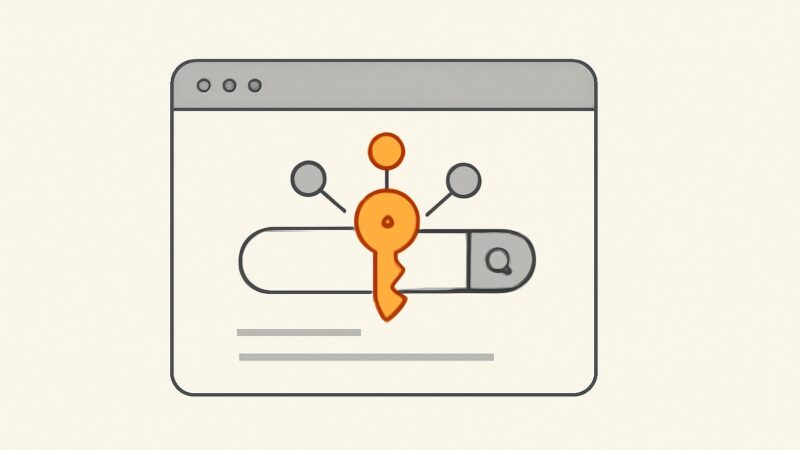
Most advice on above the fold SEO starts from a false premise: that there’s a single magic line 600 pixels down the page, and that stuffing keywords and a headline above it earns a ranking boost. There isn’t, and it doesn’t. Google has never rewarded a page for putting text in a particular pixel band. What it does care about — and has cared about for over a decade — is whether the first thing a visitor sees is the content they came for, or an obstacle course of ads, pop-ups, and slow-loading junk between them and the answer. Get that distinction right and above-the-fold optimization stops being superstition and becomes one of the highest-leverage on-page decisions you make.
The Fold Is a Range, Not a Line
The term “the fold” comes from newspapers — the crease a broadsheet was folded on, above which editors placed the biggest story. On the web it means the content visible without scrolling on initial load. The problem is that this viewport varies wildly: a phone in portrait shows roughly 650–900 vertical pixels, a laptop 700–1000, a large desktop monitor 1200 or more. There is no universal fold. Chasing a fixed pixel target is optimizing for a device that doesn’t exist. The right mental model for above the fold SEO is a probability range — “the region most visitors see first” — and you design for the smallest common case, which since mobile-first indexing means a mid-range phone.
What Google Actually Rewards at the Top of the Page
Google’s relevant mechanism here is the page layout algorithm, introduced in 2012 and folded into core ranking since. It doesn’t reward top-of-page content; it demotes pages where ads or distractions dominate the first screen and push the real content down. If a searcher lands and has to scroll past a leaderboard ad, a cookie banner, and an email pop-up before a single line of the article appears, that page is a candidate for demotion. So the SEO win from above-the-fold content is not additive — it’s about not tripping a negative signal. Keep the top of the page mostly about the thing the page is for, and you’ve cleared the bar that most competitors trip over.
This reframes the whole exercise. You’re not trying to cram ranking signals into the header. You’re trying to make the first screen an honest preview of the page’s value, because both Google’s systems and your actual readers judge relevance in the first few seconds.
Above the Fold Meets Core Web Vitals
The most concrete SEO connection to the top of the page in 2026 is Largest Contentful Paint (LCP), one of the three Core Web Vitals and a confirmed ranking factor within the page-experience signals. LCP measures how long the largest element in the initial viewport — usually a hero image, a headline block, or a banner — takes to render. That element is, almost by definition, above the fold. So fold optimization and performance optimization are the same job: the thing a visitor sees first should also be the thing that loads fastest.
The practical targets are worth stating plainly. Google considers LCP “good” at 2.5 seconds or under, “needs improvement” up to 4 seconds, and “poor” beyond that. If your above-the-fold hero is a 2MB uncompressed image loaded from a slow origin, you’re failing LCP and eroding the exact signal you thought you were strengthening. Prioritize that hero: serve it in a modern format, size it for the viewport, preload it, and never lazy-load the element that sits in the initial view — lazy-loading above-the-fold media is one of the most common self-inflicted LCP wounds.
The Intrusive Interstitial Problem
The other confirmed signal that lives at the top of the page is the intrusive interstitial penalty. Since 2017 Google has demoted mobile pages where a pop-up or overlay covers the main content immediately on load, or where a standalone interstitial must be dismissed before the content is reachable. Cookie consent and legally required notices are exempt when they’re reasonably sized; a full-screen “subscribe to our newsletter” gate over your article is not. This is where a lot of well-meaning above-the-fold content gets sabotaged — a beautifully optimized hero rendered irrelevant because a modal buries it two seconds after paint. If you run overlays, delay them, make them dismissible, and keep them off the first interaction.
Front-Load the Answer, Not the Keyword
For content pages, the strongest above-the-fold move is to answer the query in the first paragraph — the part most likely to sit above the fold on mobile. This isn’t about keyword placement; it’s about giving both readers and Google’s systems an immediate, self-contained answer. A concise 40–60 word direct response near the top is exactly what gets pulled into featured snippets and, increasingly, cited by AI Overviews and answer engines. The mechanism is that these features extract a passage that cleanly answers the query, and a front-loaded answer is the easiest passage to extract.
You can optimize for this, but you can’t guarantee it — snippet and AI-citation selection is algorithmic and shifts constantly. What you control is making your page the most extractable candidate: lead with the answer, then expand. When we generate drafts with SEO Rocket’s AI article writer, the validation gates push the direct answer into the opening rather than burying it under a throat-clearing introduction, because a buried answer is a wasted above-the-fold slot.
A Decision Framework for What Goes Up Top
Instead of a checklist, use a filter. For every element competing for the first screen, ask: does this help the visitor confirm they’re in the right place and start getting value? That yields a clear priority order:
- Keep it above the fold: the H1 that matches search intent, a one-line value statement or direct answer, the primary hero visual, and — for commercial pages — the main call to action.
- Push it down: secondary navigation, social proof carousels, related-article widgets, and anything decorative.
- Delay or remove: auto-playing pop-ups, oversized ad units, and multi-step consent flows that block content.
The rule of thumb: one clear message, one primary visual, one action. Everything else can wait for the scroll. Crowding the first screen with three competing CTAs and two ad units doesn’t raise engagement — it raises bounce, and bounce is the behavioral signal that eventually feeds back into rankings.
A Worked Example: A Service Page Hero
Take a local dentist’s “teeth whitening” page. A weak above-the-fold layout: a stock-photo carousel that takes four seconds to load (failing LCP), a generic “Welcome to our practice” headline that matches no search intent, and a chat widget that expands over the content. A visitor searching “teeth whitening [city]” sees none of what they came for.
The fixed version: an H1 reading “Professional Teeth Whitening in [City]” (intent match), a subhead answering the two questions everyone has — roughly how much and how long — a single optimized hero image preloaded for a sub-2.5-second LCP, and one “Book a consultation” button. The chat widget loads collapsed and never covers the copy. Nothing about this is a trick; it’s just removing every obstacle between the searcher and the answer. That’s the entire discipline of top-of-page SEO in one screen.
Common Above-the-Fold Mistakes
The recurring errors are predictable once you know the mechanisms:
- Lazy-loading the hero image — it delays LCP instead of improving it.
- A generic branded headline that ignores what the user searched, wasting the highest-value real estate on the page.
- Sticky headers that eat 20% of the mobile viewport, leaving almost no room for actual content on the first screen.
- Immediate overlays that trigger the intrusive-interstitial demotion.
- Layout shift — elements jumping as fonts and images load (a poor CLS score), which makes the first screen feel broken even when it’s fast.
How to Measure and Iterate
You can’t optimize what you don’t observe. Pull field data from Google Search Console‘s Core Web Vitals report and PageSpeed Insights to see your real-world LCP and layout-shift numbers, segmented by device — mobile is where above-the-fold problems concentrate. Then verify the layout itself: load the page on a real mid-range phone, not just a desktop emulator, and note exactly what’s visible before the first scroll. If the answer to the query isn’t in that view, you have work to do.
At scale, this is where a crawler earns its keep. SEO Rocket’s site audit runs a real browser-based crawl that flags slow-loading primary elements, render-blocking resources, and layout issues across every page at once, so you’re fixing above-the-fold problems systematically rather than one URL at a time. Pair that with rank tracking to confirm the changes actually moved positions — because top-of-page tweaks that don’t shift rankings or engagement were the wrong tweaks, and only trend data over weeks tells you which is which.
Where Above-the-Fold SEO Fits in the Bigger Picture
Keep the weighting honest. The top of the page is a real signal cluster — LCP, layout, no intrusive overlays, an intent-matching first screen — but it’s a hygiene factor, not a ranking cheat code. It won’t lift a thin, off-intent page onto page one. What it does is remove friction that silently caps otherwise good content, and it’s the kind of fix that compounds across an entire site. In a playbook proven across 1,000,000+ ranking pages, the pattern holds: pages that answer fast, load fast, and don’t fight the reader on the first screen tend to hold their positions through updates, because nothing about that advantage depends on Google failing to notice a trick.
Frequently Asked Questions
Is above the fold still relevant for SEO in 2026?
Yes, but not as a keyword-placement tactic. It matters because the top of the page drives Largest Contentful Paint (a Core Web Vitals ranking factor), because the layout algorithm demotes ad-heavy first screens, and because a front-loaded answer is what featured snippets and AI Overviews extract. It’s a hygiene factor, not a boost you bolt on.
Does Google penalize content below the fold?
No. Google indexes and ranks the full page regardless of scroll position — content below the fold carries the same weight. What Google demotes is the opposite: pushing the main content down with excessive ads or overlays. There’s no penalty for depth, only for burying the answer.
How much content should be above the fold?
Enough to confirm intent and start delivering value — typically an intent-matching H1, a one-line answer or value statement, one primary visual, and one action. Design for a mid-range phone viewport, since mobile-first indexing means the mobile first screen is what counts. Resist crowding it with multiple CTAs or ad units.
What’s the difference between above-the-fold SEO and Core Web Vitals?
They overlap heavily. LCP measures how fast the largest above-the-fold element renders, so fold optimization and LCP optimization are largely the same task. Above-the-fold SEO is broader, also covering intent match, layout, and intrusive overlays — but performance is the part with the most direct, confirmed ranking impact.