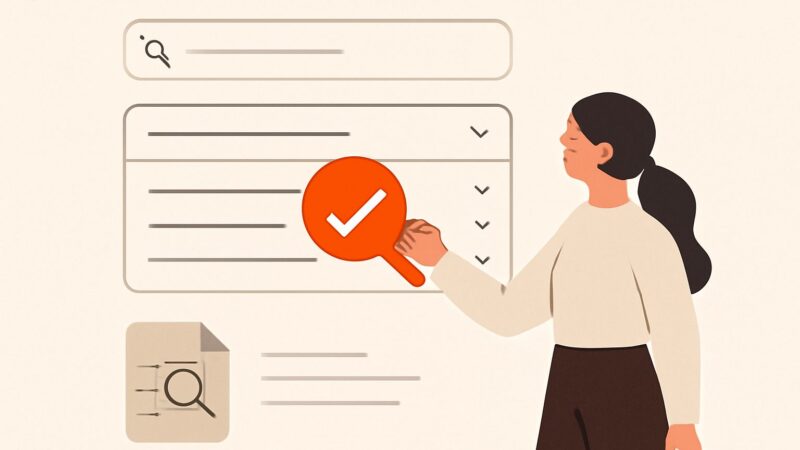
Most guides treat a knowledge panel like a form you can fill out — do these ten things and Google awards you the box on the right of the search results. That framing is why so many brands waste months. There is no application, no lever, no submit button that produces a panel. It is a display artifact: Google generates it automatically when it is confident it understands an entity — a person, company, product, or place — well enough to summarize it. You do not build the panel. You build the entity. The panel is what falls out the other end once the graph believes you exist.
A Knowledge Panel Is an Output, Not a Target
The single most useful reframe here: stop trying to “get a knowledge panel” and start trying to become an unambiguous, well-corroborated entity. Google’s Knowledge Graph is a database of things and the relationships between them — this founder works at that company, which sells this product, which is a type of that. When the graph holds a confident, cross-referenced record of your entity, the panel appears on branded searches almost as a side effect. When the record is thin, contradictory, or missing, no amount of on-page tweaking conjures one. Aim at the entity and the box tends to follow; aim at the box and you optimize a thing you can’t directly touch.
The Knowledge Graph vs the Panel: Two Different Things
People use the terms interchangeably and it costs them. The Knowledge Graph is the underlying data structure — billions of entities and facts Google maintains internally. The panel is one of several surfaces that renders that data: the sidebar card on desktop, the block at the top of mobile results, the entity carousel, and increasingly the citations inside AI Overviews. This distinction matters because your work happens at the graph layer, not the panel layer. Knowledge graph SEO means feeding the database clean, corroborated facts. If the graph is right, every surface it powers — panel, voice answer, AI summary — tends to be right too. Fix the source, not the symptom.
The Two Kinds of Panel, and Why the Difference Is Everything
There are two very different objects both called a panel, and conflating them wrecks strategy:
- Local / business panels come from your Google Business Profile. If you have a verified physical presence, this is the panel you control most directly — you edit hours, categories, photos, and reviews inside the profile. This is the fast, reliable path for a local business.
- Entity / Knowledge Graph panels are generated for people, brands, organizations, and products from the graph itself. There is no dashboard. You influence these only indirectly, by making the entity legible across the open web. This is the hard one, and the one this guide is really about.
If you run a café, claim your Business Profile and you’re mostly done. If you’re a SaaS company, a consultant, or an author hoping for a brand panel, you’re in entity-SEO territory, where the work is slower and the guarantees are honest zeros.
Where the Knowledge Graph Gets Its Facts
Google assembles entity records from a predictable set of corroborating sources. Understanding them tells you exactly where to do the work:
- Wikidata and Wikipedia — the structured backbone of the graph. A notable, well-sourced Wikidata item is the strongest single signal, though notability rules mean most small brands won’t qualify, and you should never create self-serving Wikipedia pages.
- Your own site’s structured data — schema.org markup that declares, in machine-readable form, who and what you are.
- Google Business Profile — for anything with a location or verified organization.
- Authoritative third-party mentions — press, industry directories, Crunchbase, LinkedIn, review platforms, and other databases Google trusts.
- Licensed and public datasets — for well-known people, works, and places.
The pattern across all of them is corroboration. Google trusts a fact when several independent, credible sources agree on it. One page saying you’re the CEO is a claim; five saying it consistently is a fact.
Entity SEO: Making Yourself Machine-Readable
Entity SEO is the discipline of turning your brand from a string of characters into a thing Google can identify and describe. It starts with an “entity home” — a single canonical URL (usually your About page or homepage) that you treat as the authoritative definition of who you are. Every other profile, mention, and dataset should point back to and agree with this page. On it, state the entity plainly: legal name, what it does, founding date, founder, location, category. Ambiguity is the enemy. If Google can’t tell whether “Rocket” is your company, a spacecraft, or a salad green, it holds off on a panel rather than risk a wrong one.
The sameAs Signal and Entity Disambiguation
The most important piece of markup for knowledge graph SEO is the sameAs property. It lets you tell Google, in structured data, “this entity is the same as these external profiles” — your Wikidata item, LinkedIn company page, Crunchbase profile, official social accounts, and industry listings. Each link is a corroboration bridge. It stitches your scattered web presence into one resolved identity and disambiguates you from every other entity sharing your name. A brand with a dozen consistent sameAs references across authoritative platforms is far easier for Google to promote to the graph than one floating alone on its own domain. Consistency is non-negotiable: the same name, spelling, and description everywhere. Contradictions read as low confidence, and low confidence means no panel.
Structured Data That Actually Feeds the Graph
On your site, implement Organization or Person schema (via JSON-LD) with the fields Google uses to build entity records: name, url, logo, founder, foundingDate, description, and the sameAs array above. For products, add Product schema; for content creators, Person with knowsAbout to declare topical expertise. Be honest about what schema does: it does not force a panel and it is not a direct ranking multiplier. It is a translation layer that removes guesswork, so Google’s confidence in your entity climbs faster. Treat it as the machine-readable version of the facts you’re already corroborating elsewhere — never as a place to inflate claims, which the graph will simply ignore when other sources disagree.
Corroboration: The Signal You Can’t Fake
Here’s the part cheaper guides skip. You cannot markup your way to a panel if the open web is silent about you. Google weights independent, editorially-earned mentions far above anything you publish about yourself. That means real digital PR: getting written about in industry publications, being listed in reputable databases, earning profiles you didn’t pay to place. Each credible third-party reference that agrees with your entity home raises Google’s confidence a notch. This is why brand-new companies rarely get entity panels no matter how clean their schema is — the corroboration hasn’t accumulated yet. The honest timeline is months to a few years of consistent, verifiable presence, not a two-week markup sprint. There is no shortcut around being genuinely known.
Why This Now Matters Beyond the Panel
Entity work used to be a vanity project — a nice box on branded searches. In 2026 it’s foundational infrastructure. Google’s AI systems draw heavily on the Knowledge Graph to decide what to say about you in AI Overviews and generative answers, and to decide whether to cite you at all. A well-established entity is now a prerequisite for showing up accurately in AI search, not just for earning the sidebar card. If the graph doesn’t have a confident record of your brand, AI answers will paraphrase whatever scraps they find — often wrong, often a competitor’s framing. Establishing the entity is how you get a say in the sentence the machine writes about you. The panel is the visible tip; AI visibility is the larger iceberg underneath.
Claiming and Correcting a Panel You Already Have
Once a panel exists, Google lets the entity it represents “claim” it. Search your brand, and if a panel appears, look for the “Claim this knowledge panel” link at the bottom. Verification is done through an existing Google-verified property — your Business Profile, YouTube channel, Search Console, or an official social account. Claiming does not let you rewrite facts freely; it lets you suggest corrections, which Google reviews against its sources. If a panel shows a wrong founding date or logo, the durable fix is to correct the underlying corroborating sources (Wikidata, your schema, authoritative listings) so the facts agree — then suggest the edit. Change the evidence and the panel updates; argue with the panel and nothing happens.
A Realistic Playbook, and Where SEO Rocket Fits
The sequence that actually works: define your entity home, mark it up with complete Organization/Person schema and a thorough sameAs array, claim your Business Profile if you have a location, build consistent profiles across the databases Google trusts, and then earn real third-party coverage over time. It’s slow, it compounds, and it can’t be guaranteed — anyone promising a panel by a deadline is selling you the one thing that isn’t for sale.
Tooling helps you find where the gaps are. SEO Rocket runs a real-crawler site audit that flags missing or malformed structured data — the exact machine-readable signals the graph reads — so your entity home is technically legible. Its AI-visibility tracking shows whether AI search and answer engines are surfacing your brand accurately or citing competitors instead, which is the modern read on whether your entity work is landing. And the competitor and keyword gap analysis, built on real Ahrefs data, shows which better-established entities are winning the queries you want — useful context, since the brands with panels are usually the ones with the deepest corroboration. None of this manufactures a panel. What it does is tell you, honestly, how close your entity is to the confidence threshold Google needs before it draws the box.
Frequently Asked Questions
How long does it take to get a knowledge panel?
There’s no fixed timeline because it depends on how quickly your entity accumulates corroboration. Local business panels can appear within days of verifying a Google Business Profile. Entity panels for brands and people typically take months to a few years of consistent, verifiable presence across trusted sources — and are never guaranteed.
Can I request a knowledge panel from Google directly?
No. There is no request form. Google generates one automatically once it holds a confident record of your entity in the Knowledge Graph. You influence that indirectly through entity SEO, structured data, and third-party corroboration — not by asking.
Does structured data guarantee a panel?
No. Schema markup makes your entity machine-readable and raises Google’s confidence, but it’s one signal among many. Without independent corroboration from sources Google trusts, markup alone won’t produce a panel. Treat it as a translation layer, not a trigger.
How do I fix a wrong fact in my panel?
Correct the underlying sources first — your schema, Wikidata item, and authoritative listings — so the facts agree everywhere. Then, if you’ve claimed the panel, suggest the edit through verification. Google reviews suggestions against its sources, so aligned evidence is what actually moves it.