Most advice on voice search optimization tells you to sprinkle in conversational phrases, add a few question headings, and wait for Alexa to start reading your page aloud. That framing has been wrong for years, and it’s actively misleading in 2026. There is no separate voice index and no dedicated voice ranking algorithm. A voice assistant doesn’t crawl a special version of the web — it takes a normal search result, usually the single best answer to a spoken question, and reads it back. Optimizing for voice is really optimizing to be that one answer, on channels you already know: featured snippets, the knowledge graph, the local pack, and now generative AI assistants. Get that reframe right and everything else follows.
Voice Search Isn’t a Channel — It’s a Delivery Format
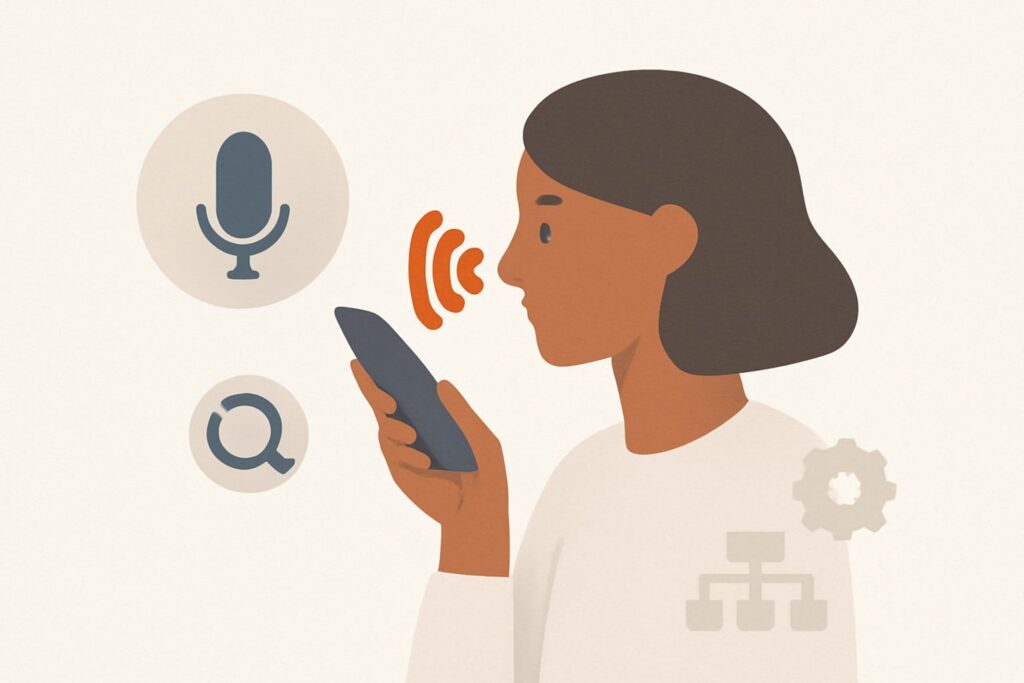
The core mistake is treating voice as a destination you rank in, like Google Images or YouTube. It isn’t. Voice is a delivery format layered on top of ordinary search infrastructure. When someone asks their phone a question, the device transcribes the speech, runs a fairly standard query, picks an answer source, and converts text to speech. Your page never entered a “voice engine.” It won or lost on the same signals that govern the text SERP, then got selected because it was the concise, authoritative, single answer the assistant could speak in one breath.
That distinction has a practical payoff. It means you don’t build voice-specific pages — you make your existing pages answerable. And it sets the real constraint of the medium: on a screen, ten results compete; through a speaker, there is usually room for exactly one. Voice is position-zero economics with the runners-up deleted.
How a Voice Query Actually Gets Answered
Walk the pipeline and the optimization targets become obvious. A spoken query moves through four stages: speech-to-text transcription, query interpretation (including entity resolution and intent), answer selection from a source, and text-to-speech playback. You can’t influence the first or last stage — those are the device’s job. Your leverage is entirely in stages two and three: making your content the resolvable, selectable answer.
Answer selection is the stage that matters most, and it’s where the “one answer” constraint bites. A screen result can be a 2,000-word page the user skims. A spoken answer has to be a self-contained 25-to-55-word passage the assistant can lift cleanly. If your best information is buried in paragraph nine, wrapped in qualifiers, or split across three sections, it’s unspeakable — and it loses to a competitor who stated the answer plainly in one block near the top.
The Four Places Voice Answers Come From
Almost every spoken answer in 2026 is pulled from one of four sources. Knowing which one your query triggers tells you exactly what to optimize:
- Featured snippets. For informational and how-to questions, assistants overwhelmingly read the featured snippet — the boxed answer at the top of the text SERP. Win the snippet and you win the voice answer for that query. This is the single highest-leverage target.
- The knowledge graph. Factual, entity-based questions (“how tall is…”, “who founded…”) are answered directly from Google’s knowledge graph, not a ranked page. You influence these by being a well-defined, correctly-linked entity, not by writing a blog post.
- The local pack. “Near me” and location queries pull from Google Business Profile listings. Voice here is a local-SEO problem, not a content one.
- Generative AI assistants. Increasingly the assistant synthesizes an answer from multiple sources and cites some of them. Here the target is being one of the cited sources — the newest and fastest-growing front, covered below.
What Voice Queries Actually Look Like
Voice queries differ from typed ones in ways that shape which content wins. They’re longer and phrased as full questions — “what’s the best way to remove hard water stains from glass” rather than “hard water stain removal.” They lean heavily on natural question words: who, what, where, when, why, how. And a large share carry local or immediate intent — hours, directions, “open now,” “near me.”
This is why conversational, question-shaped content genuinely helps — not as a keyword trick, but because it matches how people actually phrase spoken queries. The move is to research the real questions your audience asks and answer each one crisply. Pulling question keywords and their search estimates from a real dataset is faster than guessing; SEO Rocket’s keyword research runs on live Ahrefs data, so you can surface the “how,” “what,” and “near me” variations people actually search — with the honest caveat that volume and difficulty figures are third-party estimates, not Google’s ground truth, and voice-only volume is never broken out separately.
Winning the Featured Snippet Is Winning Voice
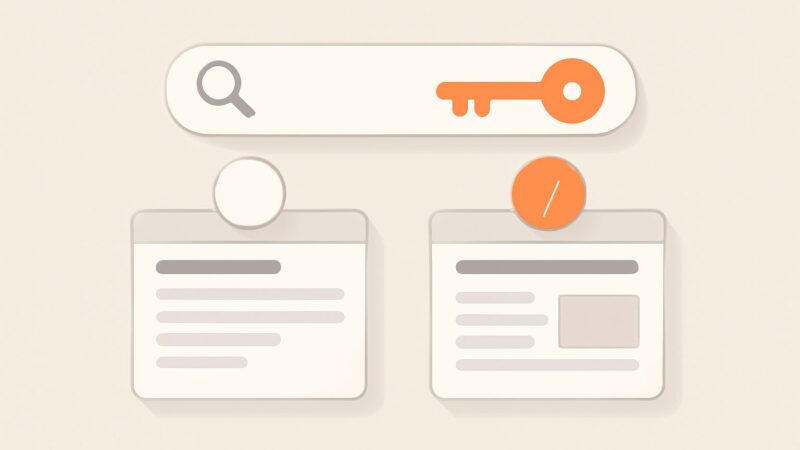
Because informational voice answers come straight from featured snippets, snippet optimization is the heart of any voice search optimization strategy. You cannot guarantee a snippet — Google decides — but you can make your page the obvious candidate. The pattern is consistent: pose the exact question as a heading, then answer it immediately in a tight, self-contained passage before you elaborate.
A worked example. Suppose the query is “how long does it take to charge an electric car.” A page that opens its section with “Charging times depend on many interacting factors, and it’s worth understanding the landscape before…” will never be read aloud. Rewrite it as a snippet-ready block: “Charging an electric car takes about 8–12 hours on a home Level 2 charger, or 20–40 minutes to reach 80% at a public DC fast charger. Actual time depends on battery size, charger speed, and starting charge.” That’s 40 words, answers the question in the first sentence, gives the range, and names the variables — exactly the shape an assistant can speak and a snippet algorithm can extract.
Structured Data and Entities: What Helps, What’s Overhyped
Schema markup is where voice advice gets sloppy. Structured data helps search engines parse and disambiguate your content — it clarifies what your page is about and how entities relate — which supports entity resolution in stage two of the pipeline. That’s real. What’s overhyped is the promise that adding FAQ schema will win you voice answers. Google restricted FAQ rich results to authoritative government and health sites back in 2023, so for most sites that markup no longer produces a visible enhancement. Speakable schema exists for news content but remains limited and experimental, not a broad win.
The honest position: use Organization, Article, LocalBusiness, and Product schema where they genuinely describe your content, keep your entity information consistent across the web, and treat structured data as parsing help, not a magic voice lever. A site audit that flags missing or malformed structured data — like the real-crawler audit inside SEO Rocket — is the practical way to keep this layer clean without overinvesting in markup that no longer pays.
Local Voice Search and the “Near Me” Economics
A disproportionate share of voice queries are local, and they bypass your website almost entirely. “Find a plumber near me” or “what time does the pharmacy close” is answered from Google Business Profile, not your homepage. So local voice optimization is local-pack optimization: a complete, accurate Business Profile; consistent name, address, and phone number (NAP) across directories; correct hours; categories that match how people describe you; and reviews that reinforce relevance. If your NAP is inconsistent or your hours are stale, you lose the spoken answer no matter how good your on-page content is.
Speed, Mobile, and HTTPS: The Table-Stakes Layer
Voice searches happen overwhelmingly on phones and smart speakers, so the mobile fundamentals are prerequisites rather than differentiators. A page that’s the best answer but loads slowly or renders poorly on mobile is a weaker candidate for the snippet it needs to win. Secure (HTTPS) delivery, fast Core Web Vitals, and a genuinely mobile-usable layout don’t magically boost you into voice results — but their absence quietly disqualifies you. Treat them as the floor you clear before the answer-quality game even starts.
The 2026 Shift: Voice Is Becoming an AI Assistant
The biggest change to voice search optimization isn’t a Google algorithm tweak — it’s who answers the question. Google Assistant is being replaced by Gemini across Android. Apple has folded ChatGPT into Siri via Apple Intelligence. Amazon’s generative “Alexa+” reasons over sources rather than reading one result. Increasingly, a spoken question returns a synthesized answer assembled from several sources, sometimes with citations, rather than a single featured snippet read verbatim.
That changes the target. You’re no longer only trying to be the one snippet — you’re trying to be one of the sources a language model pulls from and, ideally, names. The inputs overlap heavily with classic SEO (clear, factual, well-structured, authoritative content earns citations too), but the outcome now lives partly outside the traditional SERP. This is why tracking whether AI assistants mention or cite your brand has become its own discipline; SEO Rocket added AI-visibility tracking for exactly this reason, so you can see whether the models answering voice queries are surfacing you — not just whether you rank in the blue links.
How to Measure Voice Search (Honestly)
Here’s the caveat almost no guide states plainly: you largely cannot isolate voice performance. Google Search Console does not segment queries by voice versus typed input, and smart-speaker answers frequently generate no click at all, so they never register as a session in your analytics. Anyone selling you a precise “voice traffic” number is guessing. The workable proxies are indirect: track your featured-snippet ownership for question queries, monitor rankings for long conversational phrases, watch local-pack visibility, and increasingly, watch AI-assistant citations. Rank tracking on question and long-tail keywords is the closest thing to a voice dashboard you’ll get — measure the answers you’re winning, and accept that the spoken read-back itself is mostly invisible.
A Voice-Ready Content Checklist
Pulling it together, here’s the practical sequence that actually moves voice outcomes:
- Research the real questions people ask, not invented ones — mine “who/what/where/when/why/how” variants and “near me” phrasing.
- Put the exact question in a heading, then answer it in a self-contained 25–55 word block before you elaborate.
- Lead with the direct answer; save nuance and context for the paragraphs after it.
- Keep your Business Profile and NAP flawless if any of your queries are local.
- Clear the mobile fundamentals: HTTPS, fast load, clean mobile layout.
- Use structured data honestly to describe entities — parsing help, not a voice guarantee.
- Track snippet ownership, long-tail rankings, and AI-assistant citations as your real scoreboard.
None of this is a separate voice project. It’s disciplined answer-first SEO, aimed at the one result a speaker can read aloud. Do it across a site consistently — the same playbook proven across 1,000,000+ ranking pages — and voice takes care of itself, because you’ve become the answer wherever the question is asked.
Frequently Asked Questions
Does voice search use a different ranking algorithm?
No. There’s no separate voice index or algorithm. Assistants pull from ordinary search results — usually the featured snippet, knowledge graph, or local pack — and read the best single answer aloud. Optimizing for voice means optimizing to be that top answer on the normal SERP, not chasing a hidden voice ranking factor.
Is FAQ schema worth adding for voice search?
Rarely, for voice specifically. Google restricted FAQ rich results to authoritative government and health sites in 2023, so most sites see no enhancement from it. Structured data still helps engines parse your content, but don’t expect FAQ markup to win spoken answers. Winning the featured snippet with a crisp on-page answer matters far more.
How do I know if I’m winning voice searches?
You mostly can’t measure it directly — Search Console doesn’t separate voice queries, and speaker answers often produce no click. Use proxies instead: featured-snippet ownership for question queries, rankings on long conversational phrases, local-pack visibility, and AI-assistant citations. Those are the closest measurable signals to actual voice performance.