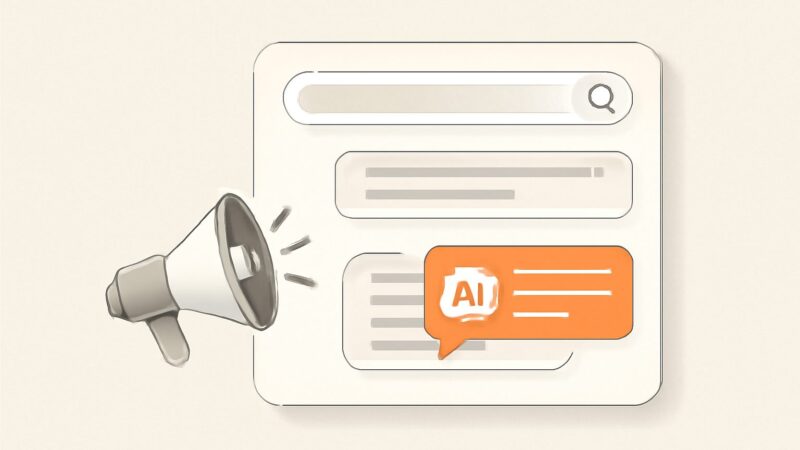
There’s a difference between being mentioned by an AI and being cited by one, and most brands chase the wrong one. AI citations are the sources a generative engine credits, links, or footnotes when it builds an answer — the references under a Perplexity response, the linked sites in a Google AI Overview, the pages ChatGPT Search pulls from when it browses the web. Earning them is how you turn from a name a model happens to know into a source it actively sends people to. That’s the difference between influence and traffic.
What AI Citations Are and Why They’re Different
A brand mention is the model saying your name from what it learned in training. A citation is the model pointing to a specific page of yours as the basis for a claim, usually because it retrieved that page live at answer time. The distinction matters because citations do two things a mention can’t: they lend your page verifiable credit inside the answer, and they can send a click. In retrieval-augmented systems like Perplexity, ChatGPT Search, and Google AI Overviews, citations are the plumbing — the model grounds its answer in sources it fetches, and those sources are the citation slots you’re competing for.
This is why chasing raw mentions can mislead you. Being named in a paragraph is nice, but if a competitor’s page is the cited source underneath, they own the authority and the traffic. The goal is to be the page the model reaches for, not just a word in its vocabulary.
How Engines Choose What to Cite
The mechanism is retrieval plus judgement. When a query needs current or specific information, the engine runs its own searches, pulls a set of candidate pages, and selects passages that best support the answer it’s assembling. Selection favours a few consistent traits: relevance to the exact question, clarity and extractability of the passage, apparent authority of the source, and freshness where the query is time-sensitive. In other words, the same fundamentals that earn a good Google ranking, filtered through “can I lift a clean, quotable answer from this page right now?”
That framing is the key to everything else. A model isn’t reading your page for pleasure — it’s scanning for a passage it can stand behind. Pages that make that easy get cited; pages that bury the answer in fluff get skipped even when they rank.
It’s also worth separating the two systems at play. Training-time knowledge decides which brands a model can recall unprompted; retrieval-time selection decides which pages it cites for a live query. You influence the first slowly, through broad, consistent presence across the web, and the second directly, through pages built to be retrieved and quoted right now. Most citation wins come from the second, which is good news — it’s the lever you control on a timescale that matters.
Write Content Models Can Actually Lift
The single biggest lever on AI citations is extractability. Give the model a clean, self-contained answer it can quote without rewriting. In practice that means leading each section with a direct answer before the elaboration, using specific numbers and named entities instead of vague claims, and structuring content so a single passage stands on its own. Definitions, step lists, and comparison points get cited far more than winding narrative, because they’re liftable as-is.
- Answer first, explain second — put the quotable claim in the opening sentence of a section.
- Be specific — figures, timeframes, and named things read as authoritative and citable.
- Use structure — clear headings, short passages, lists, and tables map to how retrieval chunks a page.
- Match the question — phrase headings the way people actually ask, so retrieval connects query to passage.
Build the Authority That Earns Citations
Extractable content gets you into the candidate set; authority gets you selected from it. Models lean toward sources that look credible, and credibility is built the way it always has been: genuine expertise on the page, consistent entity signals so the model resolves your brand as one coherent, trusted thing, and third-party recognition — being referenced and discussed across reputable sites in your niche. Topical depth compounds here. A site that comprehensively covers a subject is more likely to be retrieved for any question within it than a site with one thin post.
Unlinked brand mentions feed this too. When credible publications describe your product by name in the right context, you strengthen the model’s sense that you’re an authority worth citing. None of this is a trick; it’s the durable version of authority-building, which is exactly why it survives the model updates that flush out manipulation.
Measure Which Citations You Win and Lose
You can’t improve citations you can’t see. Because generative answers are non-deterministic and personalised, a single check tells you nothing — you have to run a fixed panel of buyer-intent prompts repeatedly, across the engines your audience uses, and record where your domain is cited versus where a competitor’s is. That’s the measurement layer SEO Rocket’s AI-visibility tracking provides: it runs your prompts across the major generative engines on a schedule, logs where your brand is cited and where rivals win the slot instead, and tracks the trend so you know whether your work is moving the number.
Once you can see the gaps, closing them gets concrete. SEO Rocket’s competitor gap analysis shows the topics and queries where rivals are cited and you’re absent, and the validation-gated AI article writer builds the pages to compete — held to a real editorial standard, minimum length, and a repair loop, because thin content earns neither rankings nor AI citations. That’s the playbook proven across 1,000,000+ ranking pages, pointed at the citation layer.
The Mistakes That Kill Citations
The first is optimising for mentions instead of citations — being named while a rival is the cited source is a loss dressed as a win. The second is hiding the answer; if a model has to dig through three paragraphs of preamble to find your point, it’ll cite the page that stated it up front. The third is thin, model-baiting content built to game retrieval, which the same quality systems that catch spam in classic search increasingly catch here. And the fourth is treating citations as a one-time win — retrieval re-runs on every query, so freshness and continued authority decide whether you keep the slot.
The Bottom Line
AI citations are the currency of generative search because they carry both authority and traffic, and they go to pages that make the model’s job easy: clear, specific, extractable answers backed by genuine authority. Write so a model can lift a clean passage, build the topical depth and third-party recognition that mark you as credible, and measure which citations you win and lose so you can keep closing the gap. Do that consistently and you stop hoping AI mentions you — you become the source it cites.