Link building has two halves — finding the right prospects and actually reaching them — and the best link building tools are the ones that make one of those halves dramatically faster without pretending links alone will rank you. No tool earns a backlink for you. What the best link building tools do is cut the hours: surfacing where competitors got their links, finding the contact behind a domain, and keeping your outreach organized so nothing slips.
This roundup compares six tools that genuinely hold up in daily campaign work. Each does one part of the job better than the rest, so the honest answer is usually a small stack, not a single winner. Below is a plain comparison, then a note on who each tool actually suits — including when a cheaper or more specialized option beats the one we list first.
What actually makes a link building tool worth it
Three capabilities separate a real tool from a shiny dashboard. First, link data: how large and fresh the backlink index is, because your whole prospect list comes from seeing who links to your competitors. Second, outreach: whether the tool finds contact details and manages the follow-up sequence, or leaves you copy-pasting into a spreadsheet. Third, the connective tissue — does it tie link work to the rest of your SEO, or is it a silo you pay for separately?
Most tools are strong on one axis and weak on the others. A pure link index gives you brilliant prospect lists and no way to email anyone. A pure outreach platform runs beautiful sequences on prospects you had to source elsewhere. Knowing which axis you’re short on is how you avoid buying the wrong thing.
The best link building tools at a glance
Skim the table, then read the two or three notes below that match your gap. Prices are broad bands, not current quotes — every vendor changes plans, so confirm before you buy.
| Tool | Best for | AI-native? | Standout strength | Rough price band |
|---|---|---|---|---|
| SEO Rocket | Solo SEOs, consultants & agencies wanting link data inside one AI workflow | Yes — chat-first | Ahrefs-grade backlink profiles plus rank, content & AI-search tracking in one login | Low $ / entry-friendly |
| Ahrefs | Link specialists who live in backlink data | Some | One of the largest, freshest link indexes going | Higher $$ |
| Majestic | Analysts who want link-quality signals | No | Trust Flow / Citation Flow and historic link maps | Mid $$ |
| Semrush | Teams wanting outreach plus a full SEO suite | Add-ons | Built-in Link Building tool tied to broad research data | Higher $$ |
| Pitchbox | Agencies running outreach at real scale | Some | Automated, personalized sequences and follow-ups | Higher $$ |
| Hunter.io | Anyone who just needs the email address | Light | Fast, accurate email finding and verification | Low–mid $ |
SEO Rocket — the AI-native pick
SEO Rocket is the option built for how link work fits into a modern SEO week. Instead of jumping between a backlink tool, a rank tracker, and a content editor, you ask in plain language — “who links to my top three competitors but not to me” — and it pulls the referring domains on real, Ahrefs-grade data, then ranks them by domain rating so you start with the prospects that matter.
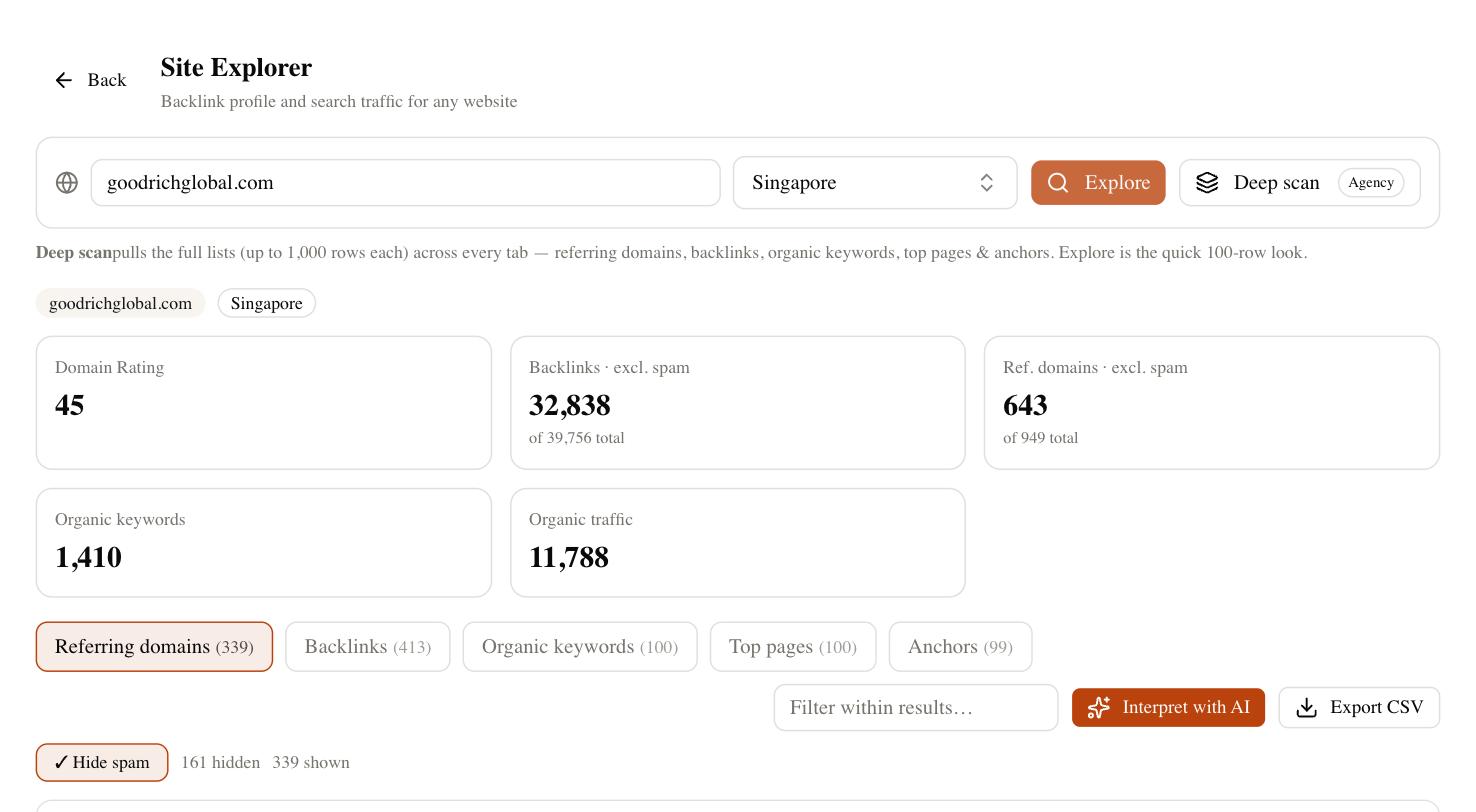
The advantage isn’t the link index alone; it’s that the same tool then shows what those competitors rank for, drafts the outreach-worthy content you’re pitching, and tracks whether your brand shows up in AI answers like ChatGPT and Perplexity. For a consultant or small agency, that consolidation replaces two or three subscriptions, and the client-dashboard side lets you hand a read-only backlink report straight to a client. It is not a dedicated mass-outreach engine — if your model is thousands of cold emails a month, pair it with a specialist. For everyone doing targeted, quality-first link work alongside the rest of their SEO, it is the strongest single fit here.
Ahrefs and Majestic — the link-data heavyweights
When your whole job is backlink data, these two are the benchmark. Ahrefs runs one of the largest and freshest link indexes in the industry, and its backlink reports, broken-link finder, and link-intersect view are what serious link builders open every day. If competitive link audits and disavow work are your bread and butter, its depth is hard to replace — though you pay a higher band for it, and it does little to help you send the actual emails.
Majestic takes a different angle. Its Trust Flow and Citation Flow scores try to quantify link quality rather than raw quantity, and its historic index is useful for mapping how a domain’s link profile changed over years. It won’t draft anything or run outreach, but for an analyst who wants a second opinion on link quality, it earns its place. Treat both tools’ metrics as estimates — no third-party score is ground truth, and different indexes will disagree by design.
Semrush — outreach plus a full suite
Semrush is the closest thing to a do-everything platform, and its dedicated Link Building tool is a genuine differentiator: it suggests prospects from your competitive data, then manages outreach and status tracking inside the same login. If you already run Semrush for keyword and competitive research, adding link work without a new subscription is real value.
The trade-off is the familiar one. Semrush sits in a higher price band once you add the seats and features that justify it, and the breadth means a steeper learning curve — you’ll pay for a lot of suite you never open if links are all you want. Its link index is solid but not the deepest on this list, so heavy link specialists often keep a dedicated backlink tool alongside it.
Pitchbox and Hunter.io — the outreach engines
If your bottleneck is sending and following up at scale, this is where you spend. Pitchbox is built for agencies running large, personalized outreach campaigns — automated sequences, smart follow-ups, and reporting that shows which templates actually land links. It expects you to bring prospects from your link tool, and it sits in a higher band, so it earns out when outreach volume, not sourcing, is your constraint.
Hunter.io solves the smaller, universal problem: you found the site, now you need a real email address. It finds and verifies contacts quickly, integrates with most outreach flows, and its lower band makes it easy to bolt onto any stack. It won’t build a prospect list or run a campaign, but almost every link builder needs what it does, which is why it shows up in so many toolkits.
How to choose the right link building tool
Match the tool to the half of the job you’re short on, not to the longest feature page. If your gap is data and workflow sprawl — and you want link prospecting to sit next to rank tracking, content, and AI-search visibility — SEO Rocket is the natural move. If backlink depth is your entire world, Ahrefs or Majestic still set the bar. If you want outreach folded into a broad suite, Semrush earns its price; if outreach volume is the whole game, Pitchbox plus Hunter.io is the specialist combination.
A quick way to decide: look at where your last campaign actually stalled. If you had great prospects but never got the emails out, buy outreach. If you were guessing at targets, buy data. Most people who think they need “everything” really need one strong data tool and one cheap email finder — the mistake is paying enterprise-suite prices for a workflow that two focused tools would cover faster.
Whatever you choose, keep expectations honest. Links are necessary but not sufficient — thin content loses even with a strong profile, and rankings jitter a few spots day to day no matter how clean your backlinks are. Give any tool a full campaign cycle before you judge it, run your own site and two competitors through it first, and keep the one that answers your real questions fastest. That, not the biggest logo grid, is how you find the best link building tools for the way you actually work.