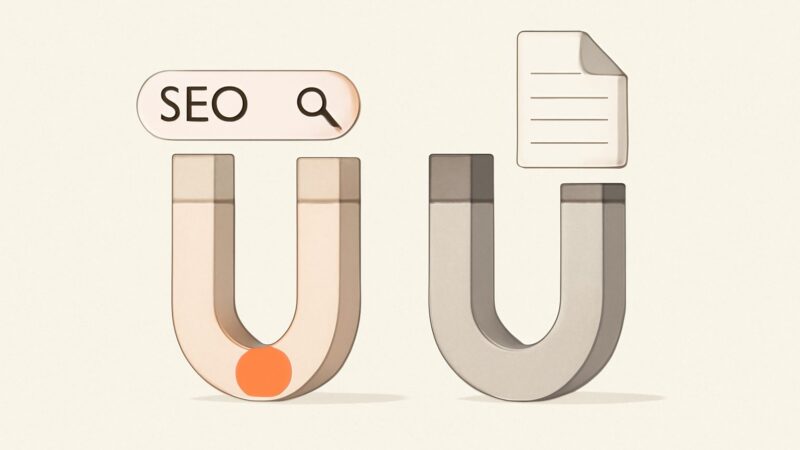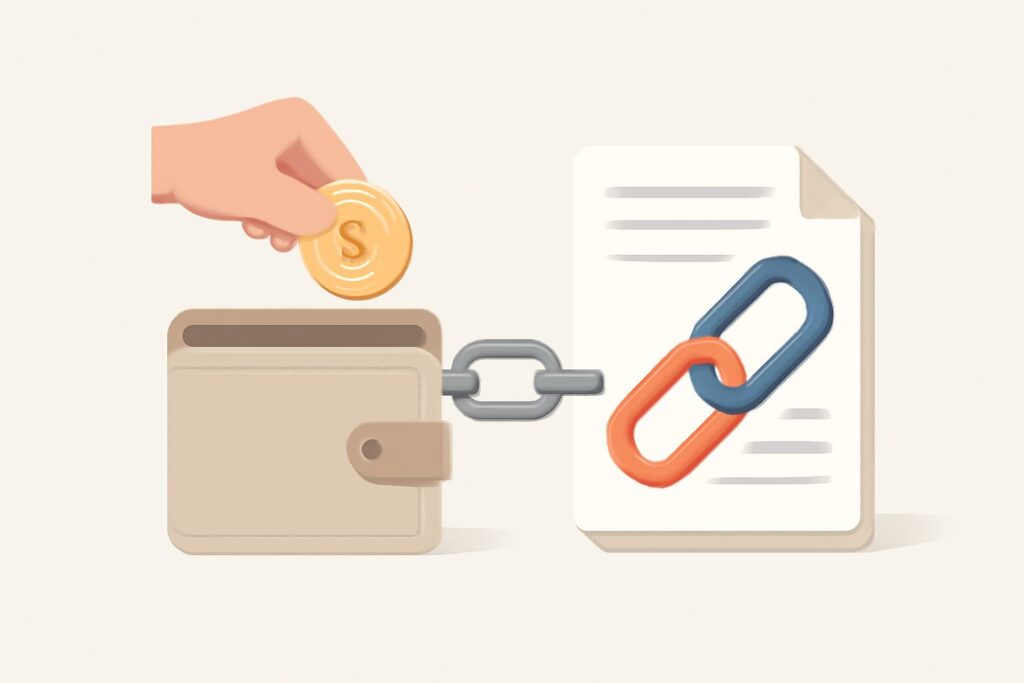
The buying vs earning links debate usually gets settled with a shrug — “everyone buys links, Google can’t catch them all” — and that shrug is exactly what costs people their rankings. This isn’t a question of ethics or bravado. It’s a sourcing decision with two very different cost structures: one path buys you a fast position on a lease you don’t control and can’t renew on your own terms, the other builds an asset that survives the updates that flatten everyone else. Frame paid vs earned links that way and the choice stops being about nerve and starts being about how long you need the ranking to hold.
It’s a Sourcing Decision, Not a Morality Contest
Strip the guilt and the swagger out of the buy links vs earn argument and you’re left with a supply question: where does the link come from, and what does the person giving it get in return? An earned link exists because someone decided your page was worth citing. A bought link exists because money changed hands. Google’s entire link-spam apparatus is built to tell those two situations apart, and it has gotten disturbingly good at it — not by reading minds, but by reading patterns in anchor text, link velocity, the neighbourhood a link sits in, and whether the surrounding content reads like editorial or like inventory.
Both approaches can move a page up. That’s the trap. Buying links works often enough and fast enough that it feels like a discovered edge, right up until the core update that treats those links as if they were never there.
How Buying Backlinks Actually Works
People searching this genuinely want to understand the machinery, so here it is without the euphemisms. Bought links move through a few recognisable channels: link vendors selling packages by “domain authority” tier, guest-post marketplaces where a fee gets your article (and link) placed, “niche edits” or link insertions where someone slips your URL into an existing aged post, and private blog networks — clusters of expired domains rebuilt purely to pass equity. The pitch is always the same: relevant, high-DA, do-follow, safe.
The problem starts with the word “authority.” Domain Authority is a Moz metric, and Domain Rating is an Ahrefs one — third-party scores that estimate a site’s link strength. Neither is a signal Google uses. Vendors price on those numbers because they’re easy to inflate, which means you’re often paying a premium for a proxy Google ignores. Under Google’s guidelines, any link intended to manipulate ranking — money, goods, or services exchanged for a do-follow link — is a link scheme, full stop. That’s the exposure you’re actually buying.
How Earning Backlinks Actually Works
Earning links means creating something people reference on their own initiative, then making sure the right people know it exists. The mechanisms are unglamorous and they work: original data or research others cite, a genuinely better resource on a topic that’s currently served by thin pages, an expert quote or contribution a journalist or blogger needed, and reclaiming mentions of your brand that never got hyperlinked. Outreach still happens — you email people — but you’re offering a reason to link, not a payment.
Be honest about the shape of it: outreach is a numbers game with low reply rates. Cold pitches convert in the low single digits, and even warm, relevant pitches to people who’d genuinely value your resource rarely clear double digits. Nobody earns a hundred links from a hundred emails. You earn a handful of good ones from a few hundred well-targeted, personalised sends — and those few are worth more than a bulk package because they came with editorial intent baked in.
The Real Risk of Buying Backlinks
Here’s the mechanism most “just buy them carefully” advice gets wrong. Google mostly doesn’t penalise spammy links anymore — it neutralises them. Its link-spam systems, driven by SpamBrain, increasingly detect manipulative links and simply pass no value through them. So the common outcome of a paid campaign isn’t a dramatic penalty; it’s nothing. You spend the money, the links get algorithmically discounted, and your ranking doesn’t move. There’s no crater to point at and no signal telling you to stop, which is why people keep re-buying into a channel that quietly stopped working.
The rarer, sharper outcome is a manual action for unnatural links — a human reviewer flags the profile, rankings drop site-wide, and the only exit is cleaning up the links and filing a reconsideration request that can take weeks to months to clear. Between those two lies the everyday risk: buying backlinks risk isn’t only the penalty, it’s the compounding waste of paying, again and again, for equity that evaporates on Google’s schedule rather than yours. And the vendor who sold you the links has no incentive to tell you they’ve been devalued.
Why Earned Links Compound and Paid Links Decay
Think in terms of a link’s half-life. A bought link has a short one: it degrades toward zero as Google’s systems catch up to the network or the footprint, and you spend continuously just to hold ground. An earned link from a real editorial context has a long half-life — it survives updates because nothing about it depends on Google failing to notice how it was placed. It also tends to attract more links, because pages that rank get seen and cited by the next person researching the topic. That second-order effect is the entire argument for the slow path: earned links seed more earned links, while paid links need constant re-purchasing.
The Grey Zone: Guest Posts, Niche Edits, and “Digital PR”
Most real businesses operate somewhere between the poles, and pretending otherwise is dishonest. A sponsored post clearly marked and set to nofollow or sponsored is legitimate advertising — the tags tell Google not to pass ranking equity, and that’s fine. A “digital PR” campaign that earns coverage on relevant publications is white hat even though you paid an agency to do the outreach, because you paid for the work, not for the link. The line isn’t whether money touched the process; it’s whether money bought the do-follow link itself. Buy the outreach, the data, the story — never the link.
Niche edits and paid guest posts at scale fail that test. So do reciprocal “you link me, I link you” schemes and excessive link exchanges, which Google names explicitly as link schemes. Rel attributes matter here: nofollow, UGC, and sponsored are hints Google uses to understand a link’s nature, not strict directives, but marking paid links appropriately is the honest move and the safe one.
The Cost Comparison Nobody Runs Honestly
Put the two side by side over a real horizon rather than a single campaign. Buying links is front-loaded and recurring: you pay per placement, and because a share of those links get neutralised, you pay again to replace their lost value, indefinitely. The cost never stops because the asset never stabilises. Earning links is front-loaded in effort and back-loaded in payoff: the research, the resource, the outreach all cost time before anything ranks, but once a page earns its links and holds position, the marginal cost of keeping it there drops toward zero.
Over any horizon longer than a quarter, earned links win the arithmetic badly, and the gap widens the more valuable the keyword. The honest caveat: if you have no time and a very short window — a campaign that only needs to rank for a season — paid placements can look rational on paper. Just price in the replacement cost and the probability the links are already being ignored, and the “cheap” option usually isn’t.
How to Earn Links That Actually Move Rankings
The process that holds up is unremarkable and repeatable:
- Find who links to your rivals but not you. A competitor link-gap analysis surfaces the referring domains pointing at three or four competitors that you’re missing — that’s your qualified prospect list, pre-filtered for relevance.
- Qualify every prospect on relevance and real editorial standards, not a third-party authority score. A topically relevant link from a modest site beats a high-DR link from an irrelevant one.
- Build the reason to link first — original data, a genuinely superior resource, a tool — before you send a single email. Outreach without an asset is just begging.
- Write a short, specific pitch: name the exact page, say precisely why it helps their audience, and make the ask trivially easy to say yes to. No flattery, no templates that read like templates.
- Measure the payoff in rankings and traffic, not link count. A hundred links that don’t move a position are a hundred wasted sends.
This is where tooling earns its keep. SEO Rocket runs competitor backlink and link-gap analysis on real Ahrefs data, so instead of guessing, you get the named list of domains linking to rivals but not to you — the exact prospects worth pitching. Its cost-to-rank view estimates how many links and what niche cost band it realistically takes to reach parity on a target keyword, which turns “should we invest here” from a hunch into a decision.
How to Audit the Links You Already Have
If you’ve bought links in the past and want out, don’t panic-delete everything at once — a sudden mass removal can look as unnatural as the buying did. Start with a backlink audit: identify the clearly toxic and obviously paid links, and disavow only those, since Google now ignores most of the rest anyway. Then redirect your effort into earning replacements for the equity you’re losing. SEO Rocket’s backlink audit flags the risky patterns in your profile, and its rank tracking lets you watch whether the cleanup and the new earned links are actually moving positions, month over month, on a client-ready dashboard — for around $50/month with a free tier. This is a playbook proven across 1,000,000+ ranking pages: the sites that grew through core updates never relied on a link you could buy.
The Honest Bottom Line
Buying vs earning links comes down to what you’re willing to depend on. Buy links and your rankings depend on Google continuing not to notice — a bet that gets worse every year as detection improves and neutralisation quietly replaces penalties. Earn them and your rankings depend on your page being genuinely worth citing, which is the one thing no algorithm update punishes. The slow path costs more upfront in effort and less forever after. That’s the whole trade.
Frequently Asked Questions
Can Google actually tell the difference between bought and earned links?
Increasingly, yes — not perfectly, but well enough to make buying a losing bet. Google’s link-spam systems read patterns: unnatural anchor text, link velocity spikes, footprints shared across a network, and content that reads like paid placement. The common result isn’t a penalty but silent neutralisation, where the link passes no value. You often can’t tell it failed, which is exactly why the spend keeps recurring.
Are paid links always against Google’s guidelines?
A paid link that passes ranking equity is a link scheme under Google’s guidelines. Paying is only fine when you buy the work, not the do-follow link — sponsored posts marked with the sponsored or nofollow attribute, or a digital PR agency you pay for outreach and coverage rather than for the link itself. The dividing line is whether money bought the equity-passing link.
How long does earning links take to show up in rankings?
For a new or mid-authority site, expect three to six months for earned links to accumulate and translate into competitive-keyword movement, longer in the hardest niches. It’s slower than a bought spike, but the positions tend to hold through updates instead of resetting, so the return over a year is far higher than a paid campaign that has to be continually re-funded.