
Cloaking SEO is the practice of showing search engine crawlers one version of a page and showing human visitors a completely different version, in an attempt to rank for content that real users never actually see. It’s one of the oldest tricks in the search manipulation playbook, dating back to the earliest days of Google, and it still shows up today in more sophisticated forms — dynamic serving based on user-agent, IP-based redirects, and JavaScript that swaps content after the crawler has already indexed a page. This guide explains what cloaking actually looks like, why it’s tempting, why Google is unusually good at catching it, and what to do if you want durable rankings instead of a manual action.
What Cloaking Actually Looks Like
In its simplest form, cloaking means a server checks the incoming request’s user-agent string or IP address, and if it recognizes “Googlebot,” it serves a keyword-stuffed, heavily optimized page. If it recognizes a regular browser, it serves something entirely different — often a page with different content, different links, or even a different topic altogether. Some versions are crude: a static HTML page for crawlers and a JavaScript-rendered shopping cart for humans. Others are subtler: showing crawlers an old, high-ranking version of a page while quietly redirecting real visitors to an affiliate offer, a gambling site, or a page stuffed with ads. All of these share the same core mechanic — the search engine’s index and the human experience diverge on purpose.
Why People Try It
The appeal is obvious once you see it from the operator’s side. Ranking a page organically for competitive terms can take months of genuine content work, technical fixes, and link building — cloaking promises to skip that timeline entirely by feeding the crawler exactly what it wants to see while showing users something that converts better, loads faster, or simply exists on a completely different domain than the one being indexed. It’s especially common in industries where the “true” content isn’t very search-friendly — think affiliate redirects, adult content, pharma, or gambling operations trying to rank in regions where they’re restricted. The pitch is always the same: get the ranking now, deal with the audience mismatch after the click.
How Google Actually Catches It
Google has spent two decades building detection specifically for this pattern, and it’s one of the areas where its systems are most mature. Googlebot doesn’t just crawl with a fixed user-agent anymore — it periodically re-crawls and renders pages using different signals, compares the rendered DOM against what a real Chrome browser sees, and cross-references IP ranges known to serve differentiated content. Google also relies heavily on user behavior signals: if a page ranks for one topic but users immediately bounce because the actual page is about something else, that mismatch shows up in click and engagement data even before a manual reviewer looks at it. Google’s Search Quality Raters Guidelines explicitly instruct human reviewers to check for exactly this kind of divergence, and cloaking is one of the few violations that can trigger a manual action rather than just an algorithmic demotion — meaning a human at Google reviewed the site and decided to penalize it directly.
The Real Consequences
The downside of cloaking isn’t a minor ranking dip — it’s usually total removal from the index. A confirmed cloaking manual action typically results in some or all of a site’s pages being deindexed entirely, which means zero organic visibility until the issue is fixed and a reconsideration request is filed and approved, a process that can take weeks even after the technical problem is resolved. Because cloaking is often deployed at scale across many pages or an entire site, the damage compounds — it’s rarely just one URL that gets hit. And because the practice is inherently deceptive, recovering trust with Google after a confirmed violation is harder than recovering from most other technical issues; reconsideration requests for cloaking get more scrutiny than requests for, say, a thin content problem.
| Signal Google checks | What it reveals |
|---|---|
| Rendered DOM vs. crawled HTML | Whether the page a browser renders matches what was served to Googlebot |
| User-agent / IP-based serving logs | Whether content varies based on who (or what) is requesting it |
| Click-through and bounce patterns | Whether users landing on a “ranked” page immediately leave, suggesting a mismatch |
| Manual quality rater review | Human confirmation of intentional deception, which can trigger a direct manual action |
The Honest Verdict
Cloaking can occasionally produce a short burst of rankings before it’s caught, but “before it’s caught” is doing a lot of work in that sentence — Google’s detection has gotten good enough that most cloaking schemes are identified within weeks to a few months, not years. Even in the rare case where a site skates by for longer, the underlying problem never goes away: the page ranking isn’t the page users actually see, so even undetected cloaking produces poor conversion, high bounce rates, and a brand experience that damages trust the moment a real visitor notices the mismatch. There is no version of this where cloaking is a sound long-term strategy — it’s a bet against Google’s detection systems getting better, and that bet has been losing for years.
What to Do Instead
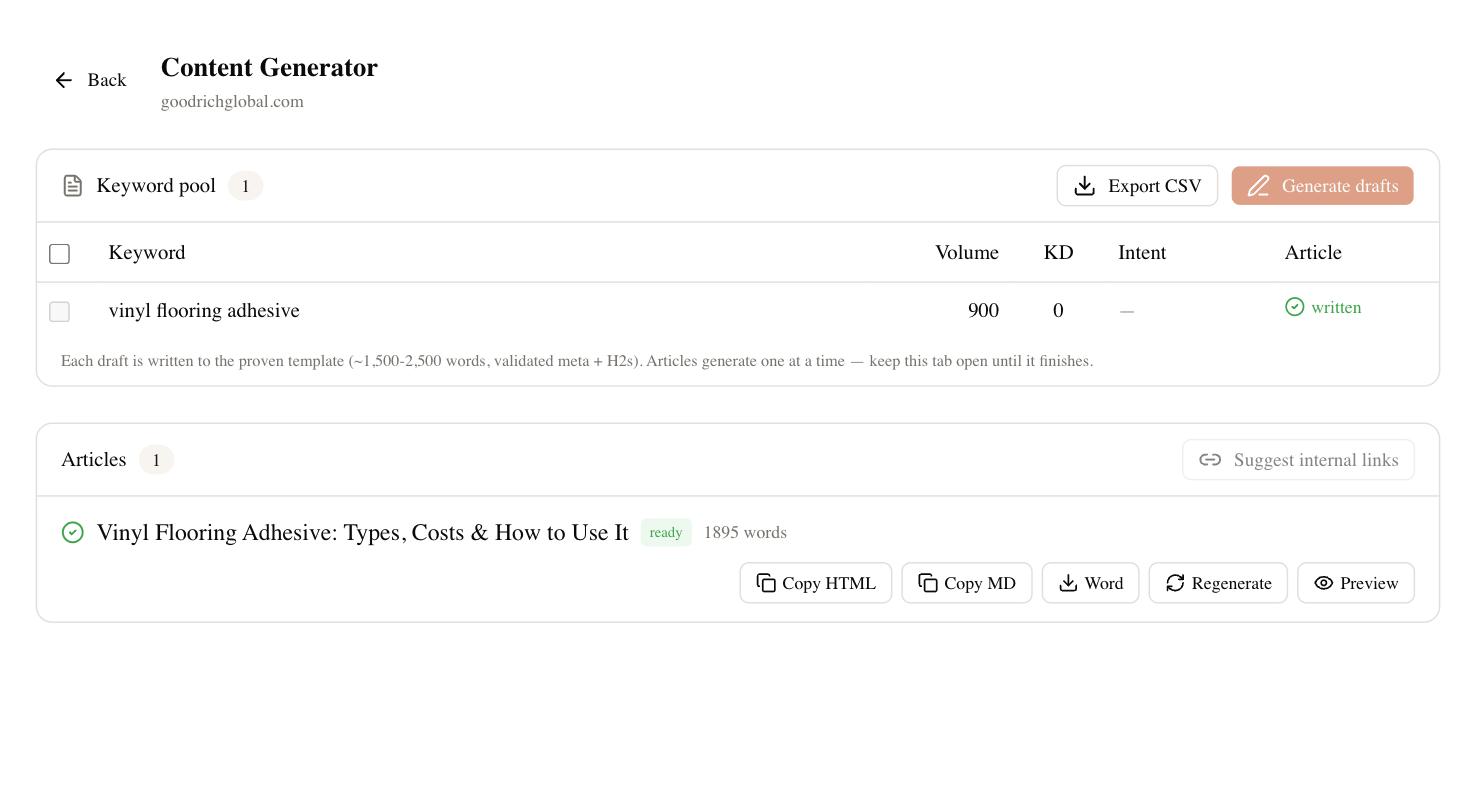
The durable alternative is unglamorous but reliable: build one page that’s genuinely good for both crawlers and humans, because that’s the only version of “optimized” that survives an algorithm update. That means writing real, useful content around the keywords you want to rank for, structuring the page so both search engines and users can understand it, and using legitimate technical SEO — fast load times, clean HTML, proper schema markup — instead of divergent serving. If your current content genuinely isn’t converting for users even though it’s the right topic, that’s a UX and content problem to solve directly, not a reason to show two different pages. Tools like SEO Rocket’s Content Generator produce original, SEO-validated articles built around real keyword and content-gap data from Ahrefs, so the page that ranks is the same page your visitors read — no divergence, no manual action risk, and no need to maintain two versions of the truth. Pairing that with a Technical Audit to catch legitimate crawlability or rendering issues (which sometimes get mistaken for cloaking by Google if JavaScript rendering breaks unintentionally) closes the loop without ever touching a gray-hat tactic.
A Quick Self-Check
If you’re not sure whether something your site does counts as cloaking, ask a simple question: if I fetched this URL as Googlebot and then loaded it in an incognito browser as a regular visitor, would I see materially the same content? If the answer is yes, you’re fine — templated content, A/B tests, geolocation-based currency display, and paywalls with proper structured data are not cloaking, because Google has explicit, sanctioned ways to handle those cases. If the answer is no, and the difference exists specifically to show the crawler something better than what users get, that’s cloaking, and it’s worth fixing before it’s found rather than after.
Frequently Asked Questions
Is cloaking always intentional?
No — sometimes it happens by accident, usually through misconfigured caching, broken JavaScript rendering, or a CDN rule that was never meant to differentiate by user-agent. Google’s systems don’t always distinguish accidental cloaking from deliberate manipulation right away, so it’s worth auditing your own rendering setup even if you never intended to cloak anything.
Can paywalled content trigger a cloaking penalty?
Not if implemented correctly. Google has a specific “flexible sampling” method for paywalled and subscription content that uses structured data to signal the paywall legitimately, rather than simply serving different content to the crawler.
How long does a cloaking manual action take to resolve?
There’s no fixed timeline. After fixing the underlying issue, you file a reconsideration request, and Google’s review can take anywhere from a few days to several weeks, during which the site typically remains deindexed or suppressed.
Is dynamic serving based on device type considered cloaking?
No, as long as the core content and intent are the same across desktop and mobile versions. Cloaking specifically involves showing different content to deceive rankings, not simply adapting layout for different devices.
If you’re trying to rank content that actually holds up when a real person clicks through, start with a genuine content and technical audit rather than a shortcut that risks your entire index footprint. SEO Rocket runs on real Ahrefs data to show you what’s actually working and what needs fixing — try it free at app.seorocket.ai.