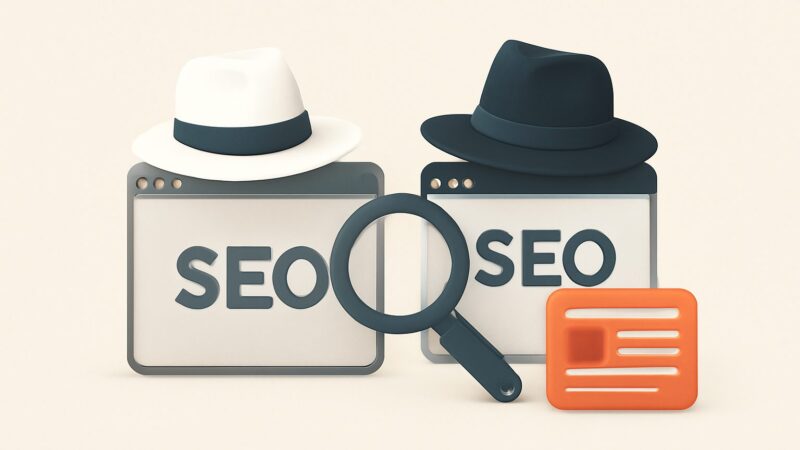
One of the first things every beginner runs into when learning SEO is the split between on-page vs off-page SEO. They sound like opposites, and in a sense they are — one happens on your website, the other happens everywhere else — but they’re really two halves of the same job. Understanding the difference, and knowing which one to focus on first, can save you months of misdirected effort. This guide walks through both in plain terms, with a side-by-side comparison and practical next steps.
What Is On-Page SEO?
On-page SEO refers to everything you can directly control on your own website to help it rank and to help visitors understand and use it well. It covers the content itself, the HTML structure behind it, and the internal architecture connecting your pages together.
Typical on-page elements include:
- Title tags — the clickable blue link text in search results, ideally including your target keyword naturally.
- Meta descriptions — the short summary under the title that influences click-through rate.
- Headings (H1, H2, H3) — organizing your content logically for readers and search engines.
- Body content — depth, clarity, and genuine usefulness relative to what the searcher is looking for.
- URL structure — clean, descriptive URLs rather than strings of random characters.
- Internal links — links between your own pages that help visitors (and crawlers) find related content.
- Images and alt text — properly described visuals that support both SEO and accessibility.
- Page speed and mobile usability — sometimes classified separately as technical SEO, but closely tied to the on-page experience.
Because you own and control all of it, on-page SEO is usually where beginners should start. There’s no need to convince anyone else to cooperate — you can improve it today.
What Is Off-Page SEO?
Off-page SEO covers the signals that build your site’s authority and trustworthiness from outside your own domain. The biggest and most well-known piece is backlinks: when other websites link to your content, search engines interpret that as a vote of confidence, especially when the linking site is reputable and topically relevant.
Off-page SEO also includes:
- Backlink building — earned through digital PR, guest posts, partnerships, or genuinely link-worthy content.
- Brand mentions — even unlinked references to your business can carry some weight.
- Reviews and reputation — customer reviews on Google, Trustpilot, and industry-specific platforms.
- Social signals — shares and engagement, which don’t directly move rankings but can drive traffic and links indirectly.
- Influencer and community mentions — third parties talking about your brand in relevant spaces.
Off-page SEO is harder to control because it depends on other people’s actions — you can’t force a website to link to you. It typically takes longer to build, but it also tends to be harder for competitors to quickly replicate, which makes it a durable long-term advantage.
On-Page vs Off-Page SEO: Side-by-Side Comparison
| Factor | On-Page SEO | Off-Page SEO |
|---|---|---|
| Where it happens | On your own website | On other websites and platforms |
| Level of control | Full control | Indirect — depends on others |
| Main examples | Titles, headings, content, internal links | Backlinks, reviews, brand mentions, PR |
| Speed to implement | Fast — can be done immediately | Slow — requires outreach and time |
| Primary purpose | Relevance and on-site experience | Authority and trust |
| Typical starting point | Ideal first step for beginners | Builds on a solid on-page foundation |
| Ease of measurement | Easy to audit directly | Requires backlink and mention tracking tools |

Why Both Matter — Not Either/Or
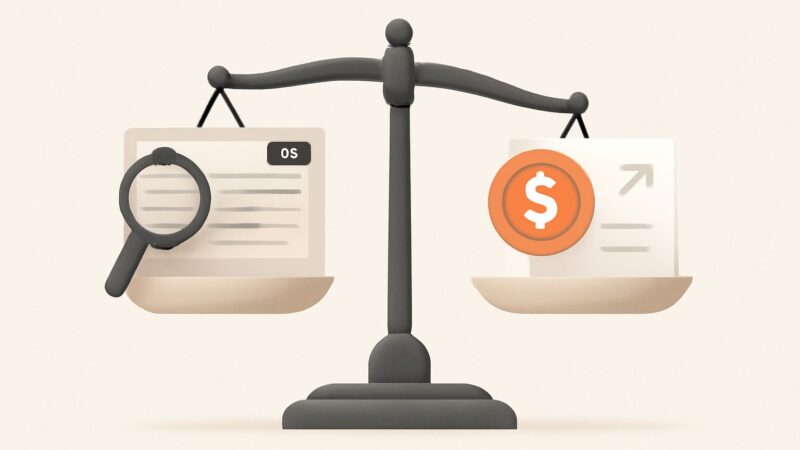
A common mistake is treating on-page and off-page SEO as competing priorities, when in reality search engines use both to answer two very different questions. On-page SEO helps answer “is this page relevant and useful for this specific search?” Off-page SEO helps answer “can this website be trusted as an authority on this topic?” You need a convincing answer to both questions to rank well, especially for competitive keywords.
Picture two websites with identical, excellent content on the same topic. If one has dozens of relevant backlinks from respected industry sites and the other has none, the one with backlinks will typically outrank the other, all else being equal. Conversely, a site with hundreds of backlinks but thin, poorly organized content will struggle to hold rankings even with strong authority, because search engines increasingly prioritize genuinely useful content.
Which Should You Prioritize First?
For almost every beginner, the practical answer is: start with on-page SEO. Here’s why:
- You control it entirely. No outreach, no waiting on someone else to say yes.
- It’s foundational. Earning backlinks to a page with thin or confusing content is a poor return on effort — fix the destination first.
- It’s faster to see progress. On-page fixes can shift rankings within weeks; off-page results typically take months to compound.
- It’s cheaper. On-page work mostly costs time, while off-page strategies like PR or sponsored content can require budget.
Once your key pages are solid — clear titles, genuinely helpful content, sensible internal linking — that’s the right moment to start investing seriously in off-page work like outreach, partnerships, and digital PR.
How On-Page and Off-Page SEO Interact With Technical SEO
It’s worth noting both on-page and off-page SEO depend on a third category: technical SEO — the underlying crawlability, indexing, and site speed that determines whether search engines can even access your pages in the first place. Great on-page content and a strong backlink profile won’t help if your site has indexing errors or takes ten seconds to load. Think of technical SEO as the plumbing that has to work before either on-page or off-page efforts can pay off.
Practical Next Steps
If you’re auditing your own site today, a reasonable checklist looks like this:
- Review your top pages’ titles and meta descriptions — are they clear, unique, and compelling?
- Check whether your content genuinely and thoroughly answers the query it’s targeting.
- Look at your internal linking — are related pages connected in a logical way?
- Once on-page basics are solid, identify a handful of realistic backlink opportunities — industry directories, partner sites, guest post opportunities, or press coverage.
- Monitor your Google Business Profile and review presence if you serve a local audience.
Manually auditing on-page elements across dozens of pages, and then researching realistic backlink opportunities, is genuinely time-consuming work. This is where a tool like SEO Rocket can help — it’s a chat-first AI SEO assistant, so you can simply describe what you’re trying to improve and it will help audit your on-page content, flag technical issues, and support your broader strategy. There’s a free plan to get started, with paid plans from $49/month for deeper audits and tracking.
Frequently Asked Questions
Can I rank well with only on-page SEO? For low-competition, long-tail keywords, yes, it’s possible. For competitive terms, you’ll typically need off-page authority as well.
Is off-page SEO just link building? Link building is the largest component, but brand mentions, reviews, and reputation also count as off-page signals.
How long does off-page SEO take to show results? Expect several months at minimum. Authority builds gradually and search engines tend to trust links and mentions that accumulate naturally over time rather than appearing all at once.
On-page and off-page SEO aren’t rivals — they’re two halves of the same strategy, one built on what you control directly and the other on how the wider web vouches for you. Get the on-page foundation right first, then layer off-page authority on top of it.