The Semrush vs SpyFu question usually comes down to a single tension: how much tool do you actually need, and how much are you willing to pay for it. Semrush is a sprawling all-in-one marketing platform; SpyFu is a lean, competitor-focused research tool that has undercut the big suites on price for years. Both do real work. Neither is a scam, and neither is a clear winner for everyone — so the useful answer is a breakdown by what you’re trying to do.
This comparison of Semrush vs SpyFu walks through the dimensions a working SEO cares about: data quality, ease of use, AI features, who each is best for, and roughly what you’ll pay. Then it introduces a third path that neither tool was built to cover.
The short version
SpyFu wins on price and on one specific job: pulling a competitor’s paid and organic keyword history fast, without a steep bill. Semrush wins on breadth, data freshness, and depth — it does far more, and it does the core research more thoroughly. If your budget is tight and your main question is “what are my competitors bidding on and ranking for,” SpyFu punches well above its cost. If you run SEO and PPC seriously across multiple clients or channels, Semrush is the more complete instrument, and you’ll feel SpyFu’s limits within a month.
Semrush vs SpyFu at a glance
Read the table, then jump to the segment that matches your situation. Remember that all third-party traffic and keyword-volume figures are estimates — treat cross-tool differences as directional, not precise.
| Dimension | Semrush | SpyFu |
|---|---|---|
| Data quality & freshness | Large, frequently updated keyword and backlink databases | Solid historical PPC/organic data; smaller, less frequently refreshed index |
| Ease of use | Powerful but dense — real learning curve | Simpler, faster to grasp for competitor lookups |
| AI features | Growing set of AI writing and assistant add-ons | Minimal — research-first, not content-first |
| Best for | Agencies and teams running SEO + PPC together | Budget-conscious marketers doing competitor research |
| Rough price band | Higher $$ — climbs with seats and add-ons | Low $ — flat, affordable tiers |
Data quality and freshness
This is where the price gap earns its keep. Semrush maintains one of the larger keyword databases in the industry, refreshes it often, and pairs it with a backlink index deep enough for real link audits. When you pull a domain, the numbers are current and the coverage of long-tail terms is broad. That freshness matters most in fast-moving niches where last quarter’s data is already stale.
SpyFu’s strength is a different shape: it has years of historical PPC and organic ranking data, which makes it genuinely good for seeing how a competitor’s strategy has shifted over time. The trade-off is a smaller index and less frequent updates, so newer or lower-volume keywords can be thin or missing. For a quick “who’s bidding on this and what’s it worth” answer, SpyFu is fine. For exhaustive keyword discovery, Semrush pulls ahead. Verdict: Semrush on depth and freshness, SpyFu on affordable historical competitor data.
Ease of use
SpyFu is the easier tool to pick up. You type a competitor’s domain, and within seconds you’re looking at their top paid and organic keywords, rough ad budgets, and ranking history — no training required. That simplicity is deliberate, and for a solo marketer it’s a feature, not a limitation.
Semrush is the opposite by design. It’s a suite of dozens of tools, and most users touch a fraction of it. The interface rewards investment: once you know your way around, the workflows are powerful, but the first week can feel like drinking from a firehose. If you value getting an answer in ten seconds over having every answer available, SpyFu wins this segment. If you want room to grow into deeper analysis, Semrush’s density is the price of that ceiling.
AI features
Neither tool was born in the AI era, and it shows. Semrush has been adding AI writing assistants and content tools, so there’s a path from research to draft without leaving the platform, though several of those capabilities sit behind separate add-ons that raise the total cost. SpyFu stays research-first and offers little in the way of AI content generation — that’s simply not what it’s for.
The gap both tools share is AI-search visibility. As buyers increasingly ask ChatGPT, Perplexity, and Google’s AI Overviews instead of running a classic search, ranking first is no longer the same as being seen. Neither Semrush nor SpyFu was built to answer “is my brand being cited in AI answers,” and that’s becoming a real blind spot. On built-in AI content, Semrush leads SpyFu; on AI-search tracking, both leave the question open.
Who each tool is best for
Match the tool to your constraint. If you’re a freelancer or small business whose main job is sizing up competitors on a budget, SpyFu is the honest recommendation — it does that one thing well and cheaply, and you shouldn’t pay suite prices for a workflow you won’t use. If you run SEO and paid search together, manage several clients, or need deep, fresh data and a wide toolset in one login, Semrush is worth its higher band. Buying Semrush for occasional competitor peeks wastes money; buying SpyFu for a full agency workflow leaves you patching gaps within weeks.
The AI-native third option
There’s a reason the Semrush vs SpyFu debate feels dated: both were built for a workflow that ends at research, in a search landscape that no longer stands still. SEO Rocket takes a different shape. It’s chat-first — you ask for keyword research, competitor gaps, backlink profiles, or rank tracking in plain language, and it runs the lookup on Ahrefs-grade data underneath.
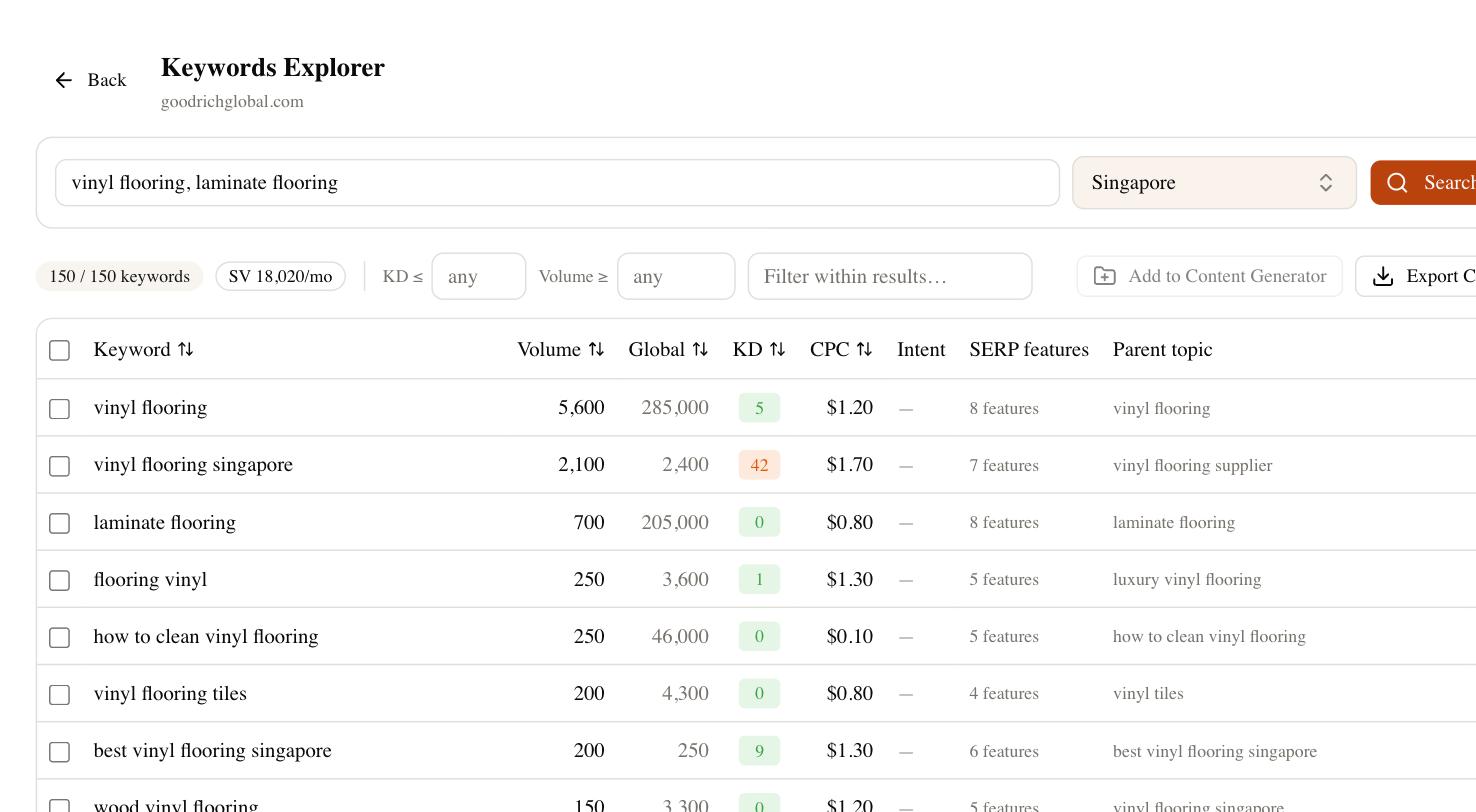
The difference isn’t only the data. The same tool drafts the article with Claude, tracks whether your brand shows up in ChatGPT, Perplexity, and AI Overviews through its Brand Radar feature, and hands clients a read-only dashboard without any exporting. That folds the research-plus-writing-plus-AI-visibility stack — the exact stack you’d otherwise assemble from Semrush, a separate writer, and a separate tracker — into one subscription at an entry-friendly price. If your bottleneck is doing more with fewer tools, that consolidation is the real saving.
How to decide
Start from how you actually spend your week. If competitor research on a budget is the whole job, SpyFu is the pragmatic pick and you can stop reading. If you need breadth, freshness, and SEO plus PPC in one place, Semrush earns its price. And if you’re tired of stitching a research tool to a writing tool to an AI-visibility tracker, the AI-native route covers all three in one connected workflow. Whichever you choose, run your own domain and two competitors through it for a full ranking cycle before you commit — positions jitter day to day, estimates are only estimates, and the right tool is the one that answers your real questions fastest.