
SEO for forums is a different sport from optimizing a normal website, and treating it like one is how good communities end up buried on page five. A forum is not a handful of pages a writer controls; it is thousands of threads written by strangers, wrapped in software that generates its own URLs, its own pagination, and its own duplicate views of the same content. That is what makes SEO for forums tricky — you are optimizing a machine that keeps producing pages whether you want them or not.
The good news is that forums have a structural advantage most sites would kill for: real questions, real answers, and constant fresh content. The job is to stop the software from wasting that advantage. Below is what genuinely matters on forum platforms, where your control ends, and where the honest limitations sit.
What you can and cannot control
Your leverage depends entirely on the platform. Self-hosted software — XenForo, phpBB, vBulletin, MyBB, self-hosted Discourse — gives you the template files, the .htaccess or Nginx config, robots.txt, and full control over the head of every page. That means URLs, title tags, meta descriptions, canonical tags, redirects, and structured data are all yours to shape.
Hosted platforms are the opposite. Reddit, a subforum on someone else’s board, or a locked-down managed Discourse instance give you almost no control over the wrapper — you cannot set canonicals, you cannot noindex, you cannot touch the URL structure or the redirects. On those, “SEO” mostly means writing a strong thread title, front-loading the useful answer in the first post, and earning links from elsewhere. If you are on a platform you do not own, accept that limitation early rather than fighting it. The honest read is that a self-hosted forum is a real SEO asset you can tune for years, while a thread on someone else’s platform is borrowed reach — worth having, but never something you can fully optimize.
The duplicate-content problem is the whole game
Forum software is a duplicate-content factory, and this is the single biggest issue. The same thread is often reachable at a dozen URLs: a print version, a “?sort=oldest” version, a “?page=1” that duplicates the bare thread URL, mobile variants, and session-ID-tagged links. Left alone, Google crawls all of them, splits your ranking signals, and burns crawl budget on junk.
The fix on self-hosted boards is deliberate and boring: canonical tags on every thread pointing to the clean URL, print and sort variants either canonicalized or blocked in robots.txt, and session IDs kept out of URLs entirely. Most modern forum software does some of this by default, but “by default” is rarely enough — you have to verify it, because a stock install often leaves print views and sort parameters wide open. The tell is usually in your crawl report: if one thread shows up at four or five slightly different addresses, the software is leaking, and that leak scales with every new post your members make.
Pagination, thin threads, and noindex
Long threads get split across numbered pages, and each page is a real, indexable URL. You want page one to rank and the rest to support it, not compete with it. Give each paginated page a self-referencing canonical (not one pointing back to page one — that tells Google to drop the deeper pages) and let internal links flow naturally between them.
The harder call is thin content. A forum accumulates dead threads: one-line questions with no answer, “+1” replies, spam that slipped moderation. These dilute quality across the whole domain. Be willing to noindex low-value stuff — member profile pages, the internal search results pages, tag archives with two posts, and threads that never got a real answer. Member profiles and on-site search results are the two that quietly generate thousands of worthless indexable URLs on almost every forum; noindexing them is one of the highest-leverage moves available.
Structured data forums actually qualify for
This is where forums have an edge worth taking. Discussion and Q&A threads are eligible for schema that plain articles are not. On self-hosted software you can add DiscussionForumPosting markup to threads and QAPage markup to question-and-answer style posts, exposing vote counts, answer counts, and dates to Google. XenForo and Discourse ship structured data, but check what it actually outputs rather than assuming it is complete or correct.
Do not over-claim here. Structured data helps eligibility for richer results; it does not manufacture rankings on its own, and marking up thin or fake Q&A to game it is a good way to get ignored. Use it where the thread genuinely is a discussion or a question with answers.
Rendering, speed, and the JavaScript question
Older forum software (phpBB, vBulletin) renders on the server, so Google sees the content in the raw HTML — no rendering problem, but often bloated templates and slow queries. Newer platforms like Discourse are JavaScript-heavy single-page apps, and here you have to confirm that thread content is actually present for crawlers rather than assembled client-side. Discourse handles this with server-side rendering for bots, but if yours is misconfigured, your threads can be near-invisible to search engines while looking fine in a browser.
Speed is a real weak spot for forums. Decades-old software, heavy plugins, and unoptimized database queries make many boards slow, and Core Web Vitals suffer. Caching, a lean theme, and lazy-loaded images do more for a forum than most on-page tweaks.
Where SEO Rocket fits the forum workflow
A forum’s best SEO opportunity is answering questions people already search for, and that starts with knowing which questions carry volume. Point SEO Rocket’s Keywords Explorer at your niche and it surfaces the real queries and their difficulty, so you can seed threads and shape titles around demand instead of guessing.
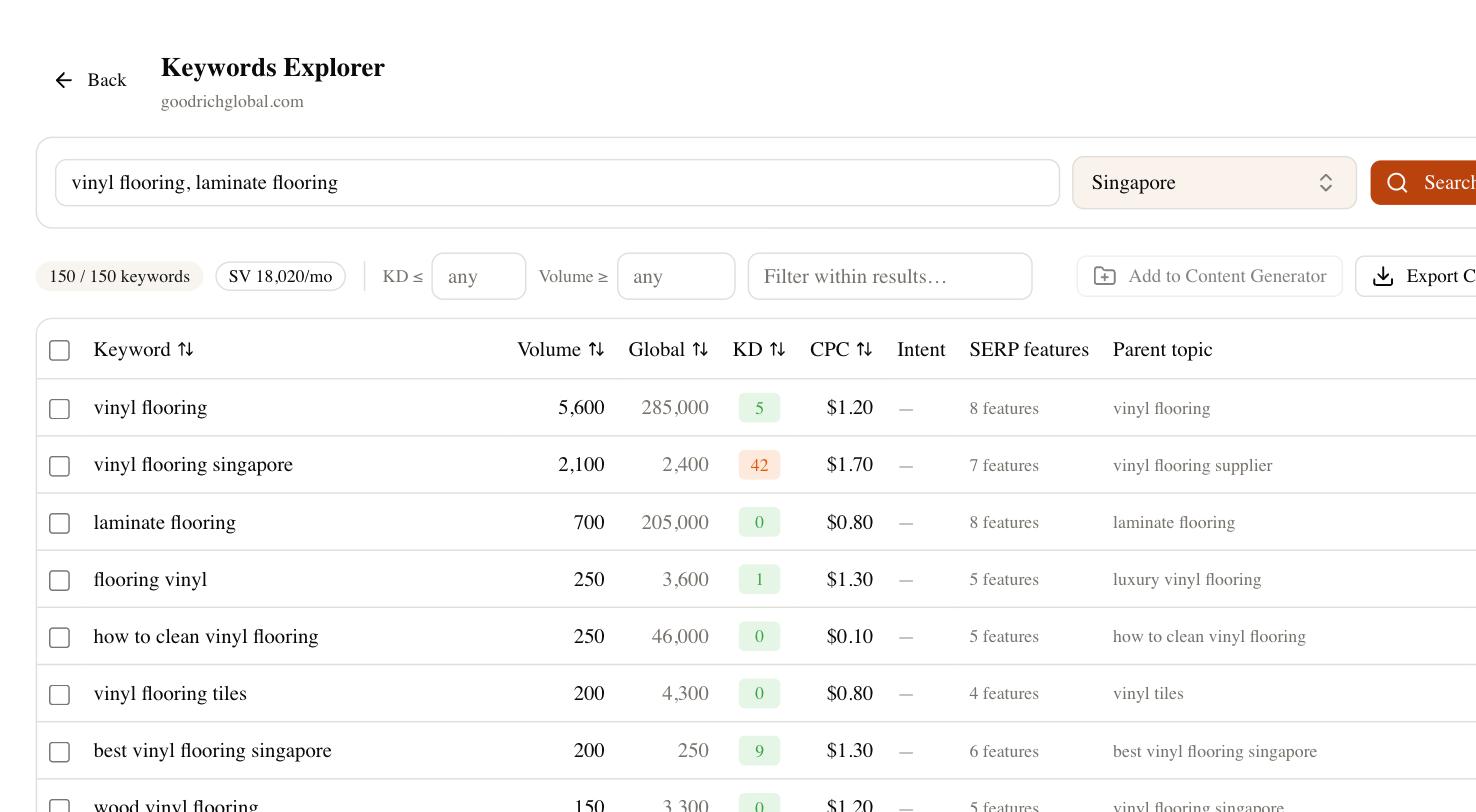
The site audit is built for exactly the duplicate-and-thin mess forums create — it flags the print variants, parameter URLs, missing canonicals, and noindex gaps that stock forum software leaves behind, which is tedious to find by hand across thousands of threads. Rank tracking tells you which threads are climbing, the competitor gap shows which questions rival communities answer that yours does not, and Brand Radar checks whether your forum’s answers are being cited in AI results, where more of these queries now get resolved.
A forum SEO checklist
If you own the platform, work through this before chasing anything fancier:
- Canonical tags on every thread, pointing to the clean URL
- Print, sort, and session-ID variants canonicalized or blocked
- Self-referencing canonicals on paginated pages — not page-one canonicals
- Noindex on member profiles, internal search results, and empty tag archives
- Thread titles that read as searchable questions, not “help pls”
DiscussionForumPostingorQAPageschema where it genuinely applies- Confirmed server-rendered content on JavaScript-based platforms
- Caching and a lean theme for Core Web Vitals
Get those right and the forum’s natural strengths — volume, freshness, real answers — start working for you instead of against you. Skip them and the software will keep generating pages that quietly drag the whole domain down.