
SEO for Quora is a strange discipline, because most of the levers you would normally pull simply do not exist here. When you do SEO for Quora, you are not optimizing a page you own — you are competing for a slot on a page Quora owns, on a domain with authority you will never match, that Quora has already optimized for you.
That framing changes everything. You cannot touch the URL, the title tag, the meta description, the page speed, the schema, or the canonical. What you can influence is narrow but real: which questions you answer, how well your answer earns upvotes, and whether the question itself has search demand. Get those three right and Quora becomes a legitimate traffic and visibility channel. Get them wrong and you are writing essays into a void.
What ranking on Quora actually means
The ranking asset on Quora is the question page, not your answer. A single question URL like quora.com/What-is-the-best-CRM-for-small-business ranks in Google as one page, and every answer on it — yours and thirty others — shares that ranking. Your job is not to build a page that ranks. Quora’s domain authority already does that. Your job is to win the top-answer slot on a question that Google already sends traffic to.
This is closer to conversion optimization than classic on-page SEO. The traffic is captured upstream by Quora; you are fighting over how it converts once it lands. That is why keyword stuffing your answer does almost nothing, and why upvotes and answer placement do almost everything.
It also means your unit of work is the question, not the article. On your own blog you might publish one long post targeting a cluster of terms. On Quora each question is a separate battle, ranked and merged independently, so you win by picking the right handful of questions and answering each one better than the current top slot — not by writing more.
What you control on Quora — and what you don’t
Be honest with yourself about the constraints before you spend a week writing answers. Here is the real breakdown of the standard SEO surface area versus what Quora exposes.
| SEO lever | On your own site | On Quora |
|---|---|---|
| URL / slug | Full control | None — generated from the question text |
| Title tag & meta description | Full control | None — Quora sets them |
| Canonical / duplicate handling | You choose | Quora merges duplicate questions for you |
| Redirects | Full control | None |
| Page speed / Core Web Vitals | Your problem to fix | Quora’s problem, already handled |
| Rendering / JavaScript / indexing | Yours to manage | Yours to ignore |
| Structured data | You add it | Quora applies its own |
| Internal links | You design them | Algorithmic, out of your hands |
| Link equity from your answer | Follow links you place | Nofollow — no PageRank passed |
| Answer content & upvotes | N/A | Fully yours to win |
Read that last column top to bottom and the strategy writes itself. Almost every technical lever is either handled or unavailable. The only column you own outright is content and engagement — so that is where all your effort should go.
The highest-leverage moves that actually work
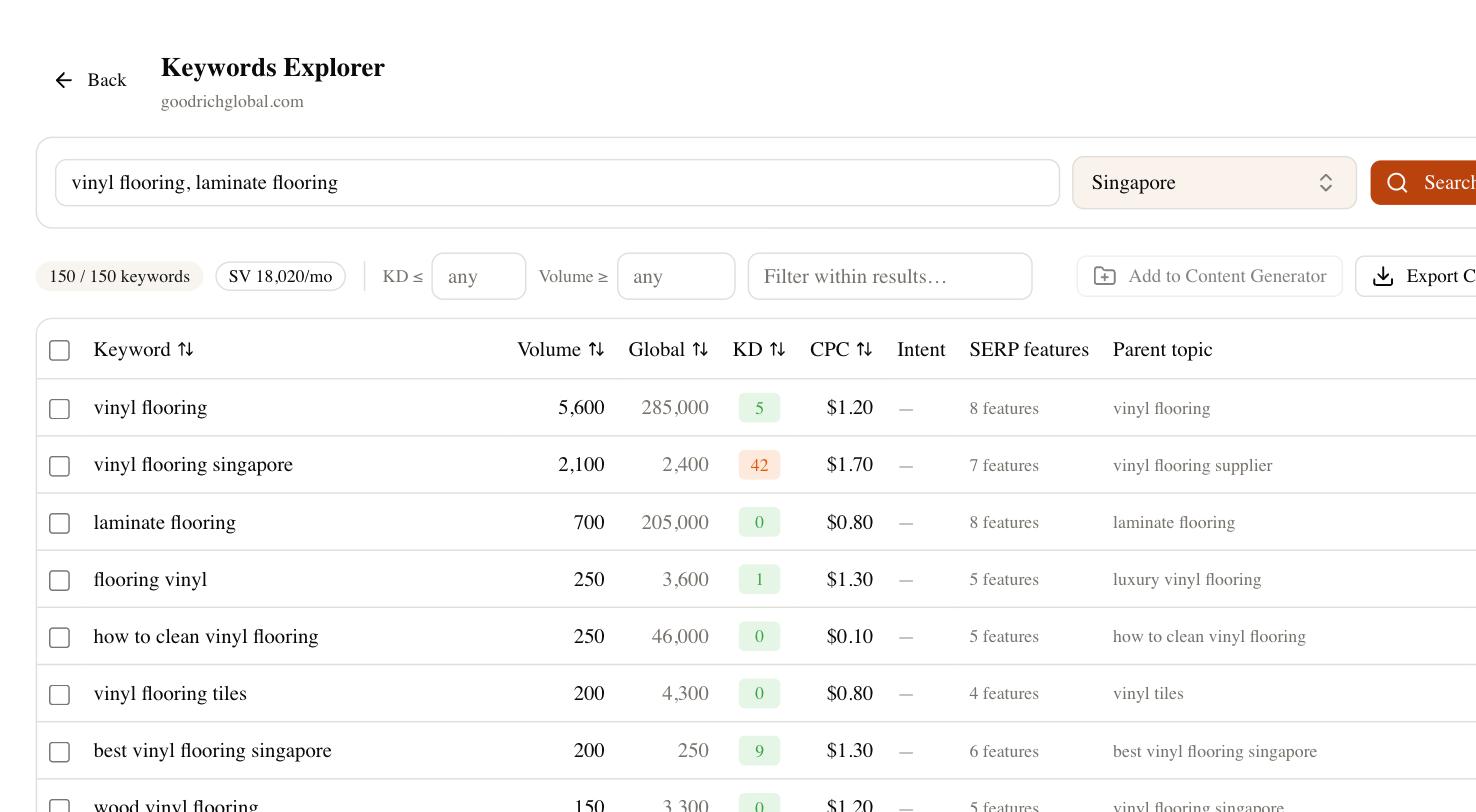
Start with demand, not with answers. The mistake most people make is browsing Quora, spotting a question they like, and answering it. Instead, work backward from keywords that already send Google traffic, then find the Quora questions that rank for them.
Pull your target keywords, filter for the ones where a quora.com result already sits on page one, and answer those specific questions. A question that already ranks is a question with captured traffic; your answer starts earning views the day it clears review. A question with no ranking and no followers is a page nobody will ever see, no matter how good your answer is.
Once you are answering the right questions, win the slot. Answer placement is driven heavily by early upvotes, so the first hours matter. Lead with a direct answer in the first two lines — Quora truncates answers with a “Continue Reading” fold, and most readers never expand it. Use a real photo and a specific credential line, because Quora surfaces author credibility next to your name. Add one relevant image; answers with a visual tend to hold attention past the fold.
The nofollow reality nobody tells you
Here is the part that kills a lot of Quora “link building” strategies: outbound links in Quora answers are nofollow. You will not pass PageRank to your site, and dropping five links into an answer is a fast way to get flagged for self-promotion and collapsed. Treat Quora as a referral and brand-visibility channel, not a backlink source.
That does not make links worthless. A single, genuinely useful link — placed where it answers the reader’s next question — still sends real referral clicks from people already in a buying or research mindset. And Quora answers are increasingly cited inside AI search results, which means a strong answer can put your brand in front of people who never click through to Quora at all. The value is attention and citation, not link equity.
Set your expectations accordingly. If your goal is to lift a page’s rankings through backlinks, Quora is the wrong tool and no amount of answering will change that. If your goal is qualified referral traffic, brand recognition inside a niche, and a shot at being quoted in AI answers, it earns its place — as long as you measure it on those terms and not on link metrics it was never going to produce.
Platform-specific mistakes people make
The failure patterns on Quora are consistent, and most come from treating it like a blog you control.
- Answering dead questions. No search demand and no followers means no traffic, forever. Check demand first.
- Link stuffing. Multiple promotional links get your answer collapsed and can flag your account. One useful link, at most.
- Writing for the keyword instead of the reader. Quora ranks answers by engagement within a page, not keyword density. Stuffing does nothing.
- Ignoring the fold. If your answer does not deliver value in the first two lines, the upvotes never come.
- Creating your own question and answering it. A brand-new question has zero authority and zero followers; it will not rank just because you asked it.
- Expecting backlink value. Nofollow means no link equity. Measure this channel on referrals and brand mentions.
Where SEO Rocket fits into a Quora workflow
Quora rewards picking the right questions, and that is a data problem SEO Rocket is built to solve. Use Keywords Explorer to find the terms with real volume in your niche, then check which of them already return a Quora page in the results — those are your priority targets. Rank tracking tells you whether the Quora questions you have invested in are holding or slipping in Google, so you know where to refresh an answer. Competitor gap analysis surfaces the questions your rivals are winning that you have not touched yet. And Brand Radar shows whether your Quora answers — and your brand — are being cited inside AI-search answers, the surface where good Quora content increasingly gets a second life.
A simple, honest Quora checklist
Keep it disciplined and Quora pays back the effort. Before you write a single answer, confirm the question has search demand and, ideally, already ranks. Answer the direct question in the first two lines. Back it with specifics only you would know. Use your real name, photo, and a credible one-line bio. Add at most one relevant link and one image. Then chase early upvotes honestly, because placement is won in the first hours, not the first week.
Done this way, doing SEO for Quora stops being a numbers game and becomes what it should be: showing up with the best answer on a page that already gets found. You cannot out-optimize Quora on the technical side, and you do not need to. You just need to win the one column the platform actually leaves open to you.