
SEO for real estate agents works completely differently from SEO for most other businesses, and most guides that promise you’ll “rank #1 on Google” are quietly ignoring the one fact that matters most: on almost every broad, high-volume term in this industry, you are not competing against other agents. You’re competing against Zillow, Rightmove, PropertyGuru, Realtor.com, or whatever the dominant listings portal is in your market — sites with millions of backlinks, decades of domain history, and entire engineering teams dedicated to nothing but SEO. This guide is about the SEO that actually works for an individual agent or small brokerage: hyper-local, long-tail, and reputation-driven, not a head-on fight you can’t win.
Why local SEO is basically the whole game
Search intent in real estate is overwhelmingly local. Nobody searches “buy a house” and expects a useful result — they search “3 bedroom homes for sale in [suburb]” or “[neighbourhood] real estate agent.” Google knows this, and for these queries it blends two very different result sets: the local pack (the map with three pinned businesses) and organic listings. The local pack is where an individual agent has a real, winnable shot, because it’s ranked primarily on proximity, relevance, and your Google Business Profile signals — not domain authority. Organic web results below the map are where the portals dominate, because they’ve aggregated more listings and more backlinks than any single agent site ever will.
The practical implication: your SEO strategy should be built around two things portals structurally can’t do as well as you — hyper-local specificity and personal trust — rather than trying to out-rank aggregators at their own game.
Google Business Profile: your highest-leverage asset
If you do nothing else, get this right. Your Google Business Profile (GBP) is the single biggest lever for showing up in the local pack for “[suburb] real estate agent” and similar searches. The basics that most agents still get wrong:
- Primary category set to “Real Estate Agent” (or the closest exact match), not a vague catch-all category.
- A complete, honest business description that naturally mentions the areas you actually serve — not keyword-stuffed, just accurate.
- Service areas listed precisely (the actual suburbs/neighbourhoods, not just “Greater [City]”).
- Regular posts — new listings, open houses, closed sales, market updates — GBP rewards activity.
- Photos uploaded consistently: headshots, office, listings, community shots. Profiles with more recent photos get more engagement, which feeds back into ranking.
- Questions & Answers section seeded with the things clients actually ask.
GBP optimization is necessary but not sufficient — it gets you into the consideration set for local pack visibility, but proximity and review signals (below) do a lot of the remaining work. One honest caveat: SEO tools, including ours, can audit your GBP setup and track how you show up for local terms, but none of them manage or post to your Google Business Profile for you. That’s a manual, ongoing task, not a checkbox you tick once.
The keyword reality: you will not outrank the portals on head terms
Search “homes for sale in [any major city]” right now and look at page one. It will be dominated by Zillow, Redfin, Realtor.com, Rightmove, PropertyGuru, or your market’s equivalent, plus maybe one or two large brokerage franchises with decades of authority. An individual agent site is not going to displace that, and any SEO plan built around trying to is a waste of a marketing budget. The honest strategy is to go where the portals are structurally weak: highly specific, long-tail, personal-intent queries.
| Keyword type | Example | Realistic for an agent? |
|---|---|---|
| Broad head term | “homes for sale” | No — portals own this indefinitely |
| City-level term | “real estate agent [city]” | Hard — high competition, only realistic for established brokerages with strong local link profiles |
| Suburb/neighbourhood term | “real estate agent in [suburb]” | Yes — this is your sweet spot |
| Hyper-local + intent | “sell my house fast [suburb]” | Yes — low competition, high buyer/seller intent |
| Named development/street | “[condo/development name] resale price” | Yes — near-zero competition if you write it first |
| Personal/brand | “[your name] realtor reviews” | Yes — you should own this completely |
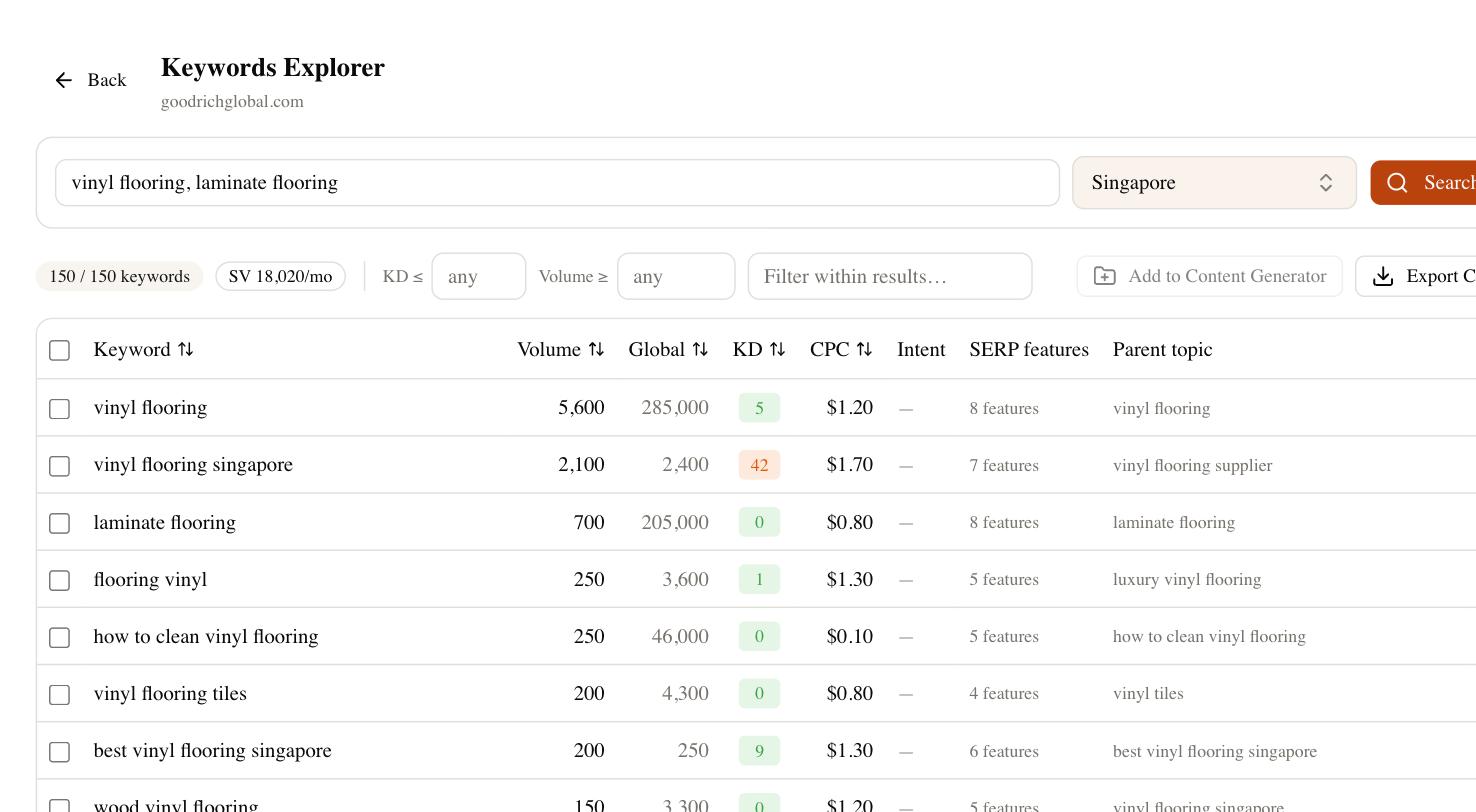
The pattern is clear: the more specific and local the query, the more winnable it is, and the more likely it reflects someone close to actually transacting rather than someone doing general research.
Hyper-local landing pages: the actual playbook
This is the highest-leverage content work an agent can do. Instead of one generic “Areas We Serve” page, build a dedicated page per neighbourhood or suburb you actively work — not a thin page with a name swapped in, but something with real, specific value: current median prices, recent sold comparables, school catchment notes, commute times, HOA or condo fee context, and a short, genuinely local narrative about what it’s like to live there. Google can tell the difference between a templated page and one written by someone who actually knows the area, and so can the reader.
A few rules that keep these pages from becoming thin, low-value duplicates that Google may not even bother indexing:
- Each page needs unique content, not a mail-merge of the same paragraph with the suburb name changed.
- Update sold-price data regularly — stale numbers are both an SEO and a trust problem.
- Include your own listings and testimonials from clients in that specific area if you have them.
- Link these pages from your homepage and from each other (nearby-area cross-links), so Google understands your geographic footprint.
- Don’t try to cover 40 suburbs on day one. Five to ten well-built pages for the areas where you actually close deals will outperform fifty thin ones.
Listing and IDX pages: useful, but not your SEO engine
Most agent websites run on an IDX/MLS feed that auto-generates listing pages. These are useful for site visitors but weak for SEO, for a structural reason: the same listing data is syndicated to dozens of other sites, including the portals, at the same time. Google sees the same address, same photos, same description on Zillow, Realtor.com, and fifty agent sites simultaneously — there’s no way your syndicated copy wins that duplicate-content fight. Individual listing pages will occasionally pick up long-tail traffic for a specific address, but you should never plan your SEO strategy around them ranking. Treat IDX pages as a conversion tool for people who already found you, not as an acquisition channel. Your neighbourhood pages, blog content, and GBP are the acquisition engine; the IDX feed is what closes the visitor once they’re on your site.
Reviews and reputation as a ranking signal
Review count, recency, and rating are direct inputs into local pack ranking, on top of being the thing that actually convinces a buyer or seller to call you. A simple, unglamorous process beats any trick here: ask every closed client for a Google review within a week of closing, while the experience is fresh, and respond to every review — good or bad — because engagement itself is a signal Google reads. Agents who treat review generation as a systematic part of every closing (not an occasional afterthought) consistently out-rank agents with better websites but thinner review profiles.
Photos, video, and seasonality
Real estate is one of the most visual categories in local search, and Google’s local results increasingly favor profiles and sites with fresh photo and video activity. Listing walkthroughs, neighbourhood tours, and short “what it’s like to live in [area]” videos do double duty: they support your hyper-local pages with genuine, hard-to-fake local expertise, and video content tends to earn engagement and shares that pure text doesn’t. Alt text on images should describe the property and area naturally, not be stuffed with keywords.
Seasonality also matters for planning. Spring and early summer are peak listing and search-volume months in most markets; content and GBP posting cadence should ramp up ahead of that window, not during it. Off-season is the right time to build out neighbourhood pages, refresh sold-price data, and catch up on reviews — the low-competition work that pays off when demand returns.
A 90-day local SEO checklist
| Phase | Focus | Key actions |
|---|---|---|
| Days 1-30 | Foundation | Complete and verify GBP; fix NAP (name/address/phone) consistency across directories; audit site for basic technical issues; identify your 5-10 core service areas |
| Days 31-60 | Local content | Publish first batch of neighbourhood landing pages; start systematic review requests; begin GBP posting cadence (weekly) |
| Days 61-90 | Compounding | Add sold-comparable updates to existing pages; publish 2-3 long-tail blog posts (e.g. “[suburb] market update”); build local backlinks (chamber of commerce, local press, community sponsorships); review analytics and double down on what’s working |
Where a tool like SEO Rocket actually fits
To be direct about what this does and doesn’t solve: SEO Rocket won’t manage your Google Business Profile, generate reviews, or take listing photos — that part of the work is manual and relationship-driven, and no software replaces it. Where a chat-first, Ahrefs-data-backed tool genuinely helps is the research and tracking layer around it: finding the actual low-competition, high-intent local keywords worth building pages around, tracking how you rank for “[suburb] real estate agent” over time instead of guessing, running a technical audit so your neighbourhood pages aren’t quietly getting deprioritized by crawl or speed issues, and seeing what neighbouring agents or portals are ranking for in your service areas via content gap analysis. It’s the research and measurement engine behind a strategy you’re still the one executing.
If you want to see the actual keyword and ranking data behind your service area rather than guessing, SEO Rocket has a free plan to start with.