Understanding how search engines work starts with a simple fact: when you type a search into Google, it isn’t searching the live internet in that instant. It’s searching an enormous, pre-built index — a copy and analysis of billions of pages that Google has already visited, stored, and organized in advance. Everything that determines whether your website shows up, and where, happens in three stages before you ever type a query: crawling, indexing, and ranking. This guide walks through each one honestly, including the parts most explanations skip.
Stage 1: Crawling — how search engines find pages
Crawling is the discovery stage. Search engines use automated programs called crawlers or bots (Google’s is called Googlebot) that constantly move across the web, visiting pages and following the links on them to find more pages. Think of it like an explorer who starts at a few known addresses and keeps walking through every door (link) they find, taking notes as they go.
A crawler typically discovers a new page one of a few ways:
- It follows a link from a page it already knows about (internal or external link)
- It reads an XML sitemap — a file you can submit that lists your site’s pages directly
- Someone manually requests indexing through a tool like Google Search Console
Crawling isn’t unlimited. Every site has what’s called a crawl budget — roughly, how much of a search engine’s attention it’s willing to spend crawling that particular site, based on factors like the site’s size, how often it changes, and its overall authority. For small sites this is rarely a problem; for very large sites (hundreds of thousands of pages), wasted crawl budget on low-value pages can mean important pages get crawled less often.
A page can also actively block crawling, sometimes by accident. A robots.txt file with the wrong rule, a stray noindex tag left over from a staging environment, or a broken internal link structure can all quietly prevent a page from ever being found — one of the most common and hardest-to-notice technical SEO problems.
Stage 2: Indexing — how search engines understand and store pages
Once a page is crawled, the search engine analyzes it and decides whether to add it to the index — essentially, an enormous, searchable database of everything the search engine has judged worth storing. Being crawled does not guarantee being indexed. A page can be visited by Googlebot and still left out of the index if it’s judged to be low-quality, duplicate content, or blocked by a directive.
During indexing, the search engine works out what a page is actually about: the topics it covers, the words and phrases it uses, its structure (headings, images, links), and signals like page speed and mobile-friendliness. Modern search engines, including Google, use language-understanding models to grasp meaning and context rather than just matching keywords literally — which is why a page about “affordable running shoes” can still rank for “cheap sneakers” without using that exact phrase.
A few common reasons a page fails to get indexed:
| Reason | What’s happening |
|---|---|
| noindex tag present | An explicit instruction telling search engines not to index the page, sometimes left in by mistake after launch |
| Blocked by robots.txt | Crawlers are told not to visit the page at all, so it’s never even evaluated |
| Duplicate or near-duplicate content | The page is judged too similar to another indexed page, so it’s skipped to avoid redundancy |
| Very low content quality | Thin, auto-generated, or unhelpful pages may be crawled but excluded from the index |
| Not linked from anywhere | An “orphan” page with no internal links pointing to it can be hard to discover at all |
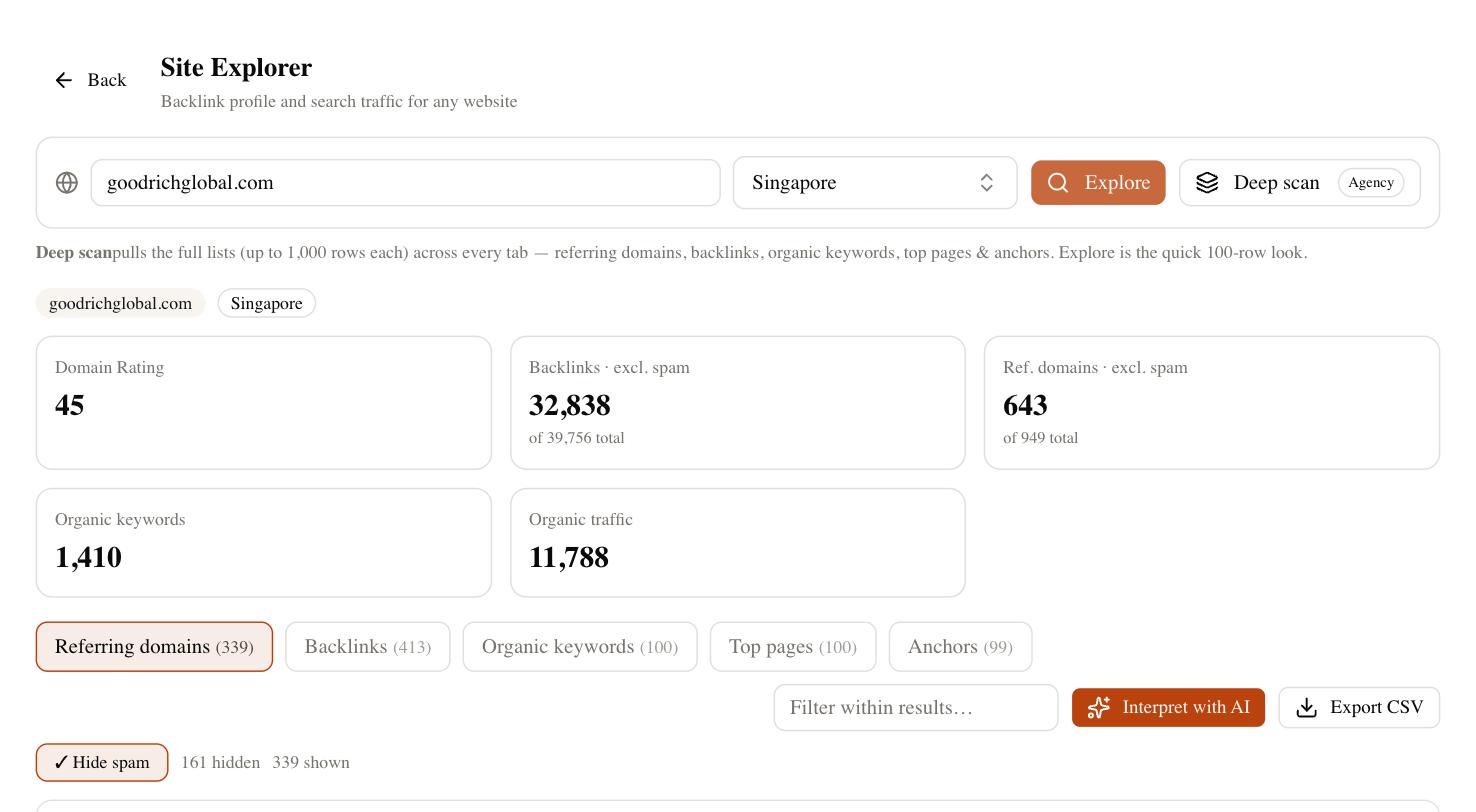
You can check a page’s indexing status directly in Google Search Console, which will tell you whether a URL is indexed and, if not, why.
Stage 3: Ranking — how search engines decide the order
Ranking is the final and most complex stage: when someone searches, the engine looks at every indexed page that could plausibly be relevant and sorts them by how well each one is likely to satisfy that specific search. This happens in a fraction of a second, drawing on an enormous number of signals rather than one single rule.
Google doesn’t publish an exact list of ranking factors or their weightings, and treats much of the ranking system as a trade secret — so be skeptical of any source claiming a precise, definitive “top 200 ranking factors” list with exact percentages. What’s well established, from Google’s own public documentation and long-term observation of search results, is that ranking factors cluster into a few broad categories:
- Relevance: how well the page’s content matches the meaning and intent behind the search, not just the literal words
- Content quality: depth, accuracy, originality, and whether the content is genuinely useful rather than thin or derivative
- Authority and trust: signals like backlinks from other credible sites, and increasingly, demonstrated expertise and trustworthiness
- User experience: page speed, mobile-friendliness, and clean, usable design
- Context: the searcher’s location, device, search history, and language, which can all shift results for the same query
For a full breakdown of these categories, see our companion guide on Google ranking factors.
Search engine results pages have changed a lot
A modern results page rarely looks like a plain list of ten blue links anymore. Depending on the search, Google may show a mix of:
- Paid ads, clearly labeled, above or alongside organic results
- A featured snippet — a highlighted, direct-answer box pulled from one page’s content
- A Knowledge Panel for well-known entities (people, places, brands)
- Local pack results (a map with nearby businesses) for location-relevant searches
- Images, videos, or “People also ask” boxes
- An AI Overview — an AI-generated summary that synthesizes information from multiple sources, sometimes with citations, appearing above traditional results
This matters for SEO because ranking well in the traditional sense is no longer the only goal. Being cited as a source inside an AI Overview, or referenced when someone asks ChatGPT, Gemini, or Perplexity a related question, is becoming its own visibility channel — one that depends on many of the same fundamentals (clear, well-structured, trustworthy content) but is measured differently.
A simplified walkthrough: from publishing to appearing in results
- You publish a new page and link to it from your homepage or another indexed page.
- Googlebot eventually crawls your site again (following links or your sitemap) and discovers the new page.
- Google analyzes the page’s content and decides whether to add it to the index.
- Once indexed, the page becomes eligible to appear in results for relevant searches.
- For each individual search, Google’s ranking systems evaluate every eligible page in real time and order them by predicted relevance and quality.
- The results page assembles — organic listings, plus any ads, snippets, or AI-generated elements that search decided to include for that particular query.
This entire cycle, from publishing to first appearing in results, commonly takes anywhere from a few days to a few weeks for a healthy, established site, and can take longer for a brand-new domain with little existing authority.
Why this matters practically
Every SEO tactic exists to influence one of these three stages. Submitting a sitemap and fixing broken links helps crawling. Writing clear, well-structured, genuinely useful content and avoiding accidental noindex tags helps indexing. Building authority through backlinks, improving page experience, and matching search intent helps ranking. When a page isn’t performing, working backward through these three stages — is it even indexed? is it relevant and well-built? — is usually the fastest way to diagnose why, and it’s exactly the kind of diagnostic a basic technical audit is built to answer.
Checklist: is your page set up to be found?
- The page is linked to from at least one other page on your site (no orphan pages)
- Your XML sitemap includes the page and is submitted to Google Search Console
- No accidental
noindextag or robots.txt block is present - The content is substantive and not a near-duplicate of another page on your site
- Page speed and mobile display have been checked, not assumed
- You’ve confirmed indexing status directly in Google Search Console, not just guessed
Checking crawlability and indexing issues by hand across a whole site is tedious, and it’s one of the most useful things a beginner can hand off to a tool. SEO Rocket’s chat-first audits will scan a site, flag crawling and indexing problems in plain language, and explain what to fix and why — no need to already know what a “noindex tag” or “crawl budget” is going in. There’s a free plan to try it, with paid plans from $49/month: app.seorocket.ai.