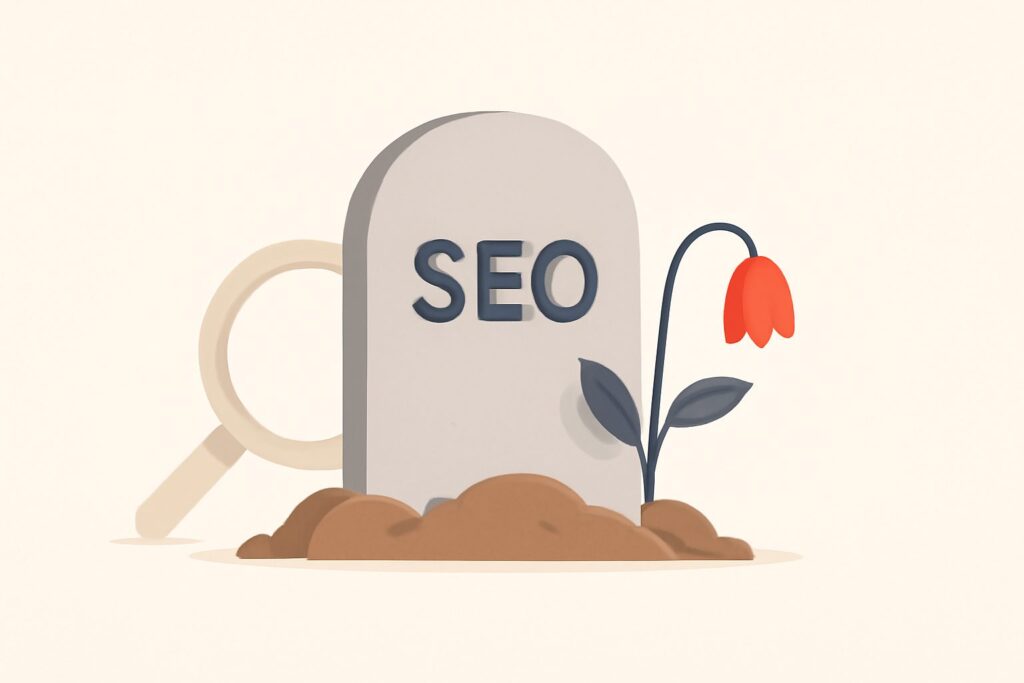
“Is SEO dead?” has become one of the most searched questions in the industry itself, which is a little ironic given the answer requires understanding SEO in the first place. The short, honest answer is no — SEO is not dead. But it is changing faster than at almost any point since Google’s founding, driven by AI Overviews, ChatGPT, Perplexity, and other AI-powered ways of finding information. This article walks through what’s actually changing, what’s overstated, and what still works, without the doom-mongering or the denial.
Why people keep declaring SEO dead
This isn’t the first time. SEO has been pronounced dead after the Panda and Penguin algorithm updates, after the rise of social media, after mobile search, after voice assistants, and now after generative AI. Each time, search behavior shifted and some tactics stopped working, but the underlying need — people trying to find information, products, and services through a search interface — didn’t go away. What’s different this time is that the shift is real and measurable: AI Overviews now appear on a meaningful share of Google searches, and tools like ChatGPT and Perplexity are genuinely displacing some traditional search queries, particularly research and comparison ones. So the anxiety behind the question is legitimate, even if the conclusion (“SEO is dead”) isn’t.
What is actually changing
To be honest about this topic, it’s worth separating what’s genuinely different from what’s just noise.
- AI Overviews answer some queries directly. For simple, factual, informational searches, Google increasingly generates an answer at the top of the results page, which can reduce the need to click through to a website at all.
- Click-through rates are shifting, not vanishing. Some purely informational queries are seeing fewer clicks to organic results as users get their answer directly. This is a real, documented shift for certain query types — it is not, however, a collapse of organic traffic across the board, and transactional and local queries have been affected far less.
- AI chat tools are a genuine new discovery surface. People are increasingly starting research in ChatGPT, Perplexity, or Gemini instead of a search engine, especially for comparison and recommendation-style questions.
- Being cited inside an AI answer is now a visibility channel of its own. Whether ChatGPT or an AI Overview mentions and links to your business when someone asks a relevant question is becoming a measurable, important thing — sometimes called generative engine optimization, or GEO.
What GEO actually means (without the hype)
Generative engine optimization is the practice of making your content more likely to be understood, trusted, and cited by AI systems when they generate an answer. It is not a separate discipline from SEO so much as an extension of it — the same fundamentals that help traditional search engines understand and trust your content (clear structure, accurate information, credible sourcing, real expertise) are largely the same signals AI systems rely on when deciding what to cite. The practical differences are mostly about clarity and structure: AI systems tend to favor content that states facts plainly, uses clear headings and direct answers, and comes from sources that are independently corroborated elsewhere. If your content is vague, keyword-stuffed, or thin, it was already underperforming in traditional SEO — AI search just makes that weakness more visible.
What still works exactly as before
It’s worth being explicit about this, because the “SEO is dead” narrative tends to bury it: the fundamentals of good SEO have not changed. Technical crawlability and site speed still matter, because AI systems still need to access and process your content the same way search engines always have. Genuine expertise and depth still outperform shallow content, arguably more than ever, since both traditional rankings and AI citation both reward being a credible, well-corroborated source. Local search — “plumber near me,” “best dentist in [city]” — remains overwhelmingly driven by direct clicks to maps, listings, and websites, largely untouched by AI Overviews. Transactional, high-intent queries where people want to compare prices, read reviews, or complete a purchase still send real traffic to real websites, because AI-generated summaries are a poor substitute for actually comparing products yourself. And backlinks, brand mentions, and reputation still function as trust signals for both traditional algorithms and AI systems alike.
What SEO practitioners should honestly change
Given the shifts above, a few adjustments are genuinely warranted, without overreacting:
- Stop optimizing purely for ranking position on simple informational queries that AI Overviews are likely to answer directly — that traffic may not come regardless of your rank.
- Invest more in content that AI systems are less able to fully answer on their own: original data, first-hand experience, local specifics, pricing, and anything requiring judgment or comparison.
- Track visibility beyond the traditional rankings report — whether your brand shows up when someone asks ChatGPT or an AI Overview a relevant question is now a legitimate metric worth watching, even though it’s newer and less standardized than classic rank tracking.
- Keep structure and clarity high — clear headings, direct answers near the top of a page, and well-organized information help both classic SEO and AI citation simultaneously.
Myth vs reality
| Claim | Verdict | Why |
|---|---|---|
| “SEO is dead, AI killed it” | Myth | Organic search still drives significant traffic; AI is reshaping some query types, not eliminating search |
| “AI Overviews reduce clicks on some queries” | Reality | Documented behavior shift for certain informational, easily-summarized queries |
| “Local and transactional search is largely unaffected” | Mostly reality | These queries require comparison, decisions, or location specifics that AI summaries don’t fully replace |
| “You need a completely different strategy now” | Partly myth | Core fundamentals (technical health, expertise, structure) still apply; adjustments are additive, not a full rebuild |
| “Being cited by ChatGPT or AI Overviews is worth tracking” | Reality | It’s a genuine emerging visibility channel, even if measurement standards are still maturing |
| “Content quality matters less now” | Myth | If anything, thin or generic content is more exposed, since AI systems can summarize the obvious answer instantly |
Where SEO Rocket fits into this shift
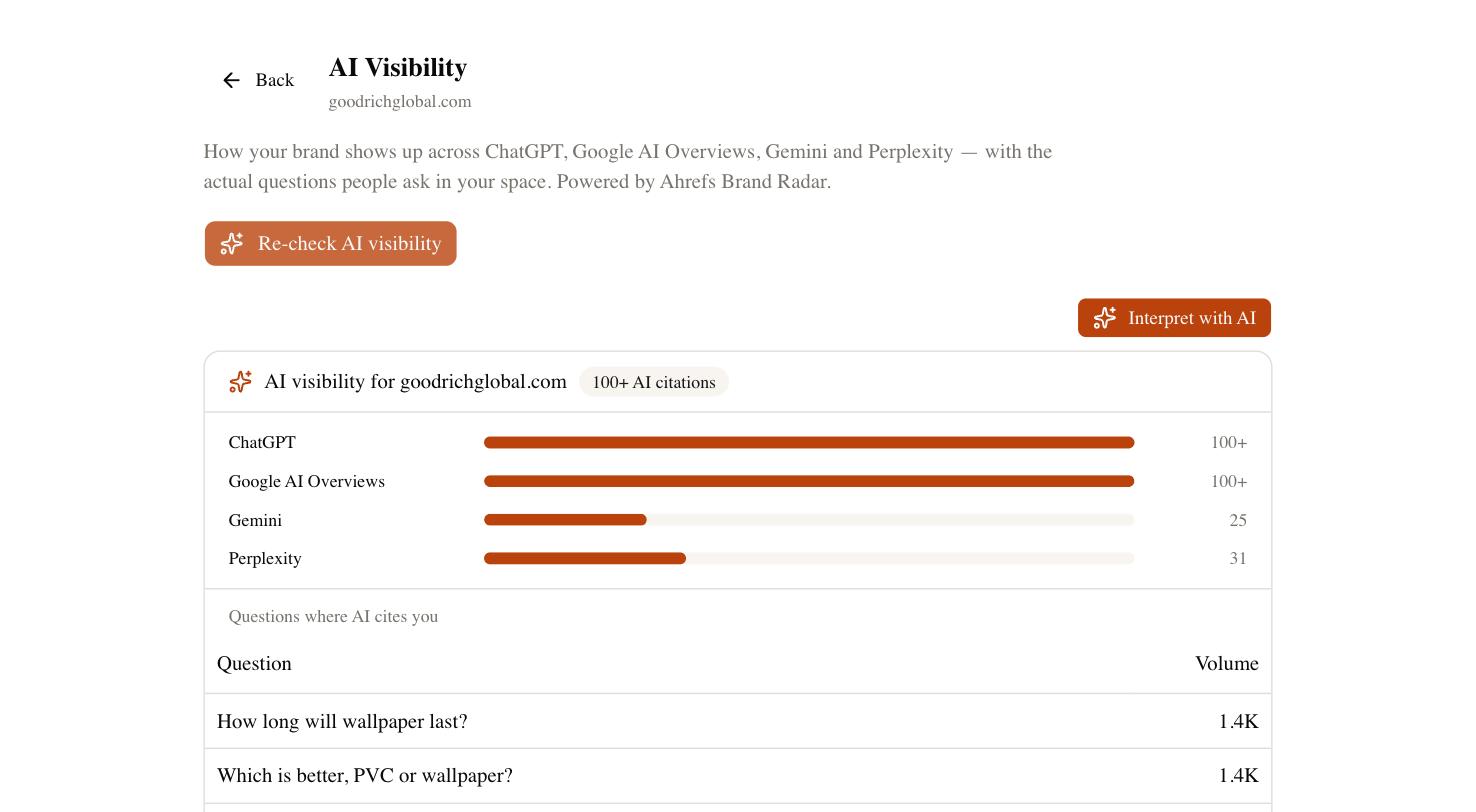
This is precisely the gap that motivated building SEO Rocket as a chat-first, AI-search-era tool rather than a classic rank tracker. Alongside standard keyword research, technical audits, content tools, and rank tracking, it includes Brand Radar, which measures how often and how favorably your brand is cited across ChatGPT, Google AI Overviews, Gemini, and Perplexity — the visibility layer that traditional SEO tools were never built to see. It doesn’t replace the fundamentals covered above; it just makes the new part of the picture measurable alongside the parts you already track. There’s a free plan to start, with paid plans from $49/month for more depth.
The honest bottom line
SEO is not dead. It is being reshaped, in real and measurable ways, by AI search — some query types are sending fewer clicks, and a new visibility surface (AI citation, or GEO) has emerged alongside traditional rankings. But the underlying work of being genuinely useful, technically sound, and trustworthy to both search engines and AI systems hasn’t gone away; it has, if anything, become more valuable as low-effort content gets filtered out by AI summarization. The businesses that will struggle are the ones relying on thin, keyword-stuffed content that AI can now answer instantly. The businesses that will keep winning are the ones producing genuinely useful, well-structured, expert content — which was always the actual goal of good SEO, even before anyone was worried about AI.