Most people who switch from Ubersuggest to SEO Rocket aren’t unhappy with Ubersuggest — they’ve simply outgrown it. Ubersuggest is the tool a huge number of small business owners and solo bloggers cut their teeth on: cheap, simple, and good enough for a first look at keywords and traffic estimates. The switch usually happens once a site starts generating real revenue and the gaps in data depth and lack of content production tooling start costing more than the subscription saves.
This is a vendor comparison — we make SEO Rocket — so we’ve tried to keep the Ubersuggest praise as specific and honest as the criticism.
What Ubersuggest does well
Ubersuggest’s core value is accessibility. It’s cheap — genuinely cheap, including a lifetime plan option that no competitor in this space offers — and its interface strips SEO down to something a total beginner can understand in ten minutes: type a domain or keyword, get traffic estimates, keyword ideas, and a basic backlink count. For a freelancer or small business owner doing SEO themselves for the first time, that simplicity is a real feature, not a limitation. Its content ideas tool and basic site audit are enough to catch the most obvious technical problems on a small site, and Neil Patel’s associated content has made it a familiar, trusted name for people just getting started.
Why people switch
The most common complaint is data depth and accuracy. Ubersuggest’s keyword volume and traffic estimates are known to be rougher than Ahrefs-, Semrush-, or Google-grade data, particularly for competitive or lower-volume terms — fine for directional guidance, less reliable when you’re making budget decisions off the numbers. The second complaint is workflow: Ubersuggest tells you what to write about, but you still have to go write it somewhere else, and there’s no way to track whether AI systems like ChatGPT or Google’s AI Overviews are citing your content at all. As sites scale past a hobby-blog stage, teams find they need backlink data they can trust, rank tracking that’s genuinely reliable, and a way to turn research directly into published content — all in one place.
Feature comparison
| Capability | Ubersuggest | SEO Rocket |
|---|---|---|
| Keyword research | Yes, simplified metrics | Yes — volume, KD, CPC, plus 2D/3D semantic Keyword Graph |
| Data source depth | Ubersuggest’s own estimates, lighter coverage | Ahrefs Enterprise data across backlinks, keywords, traffic |
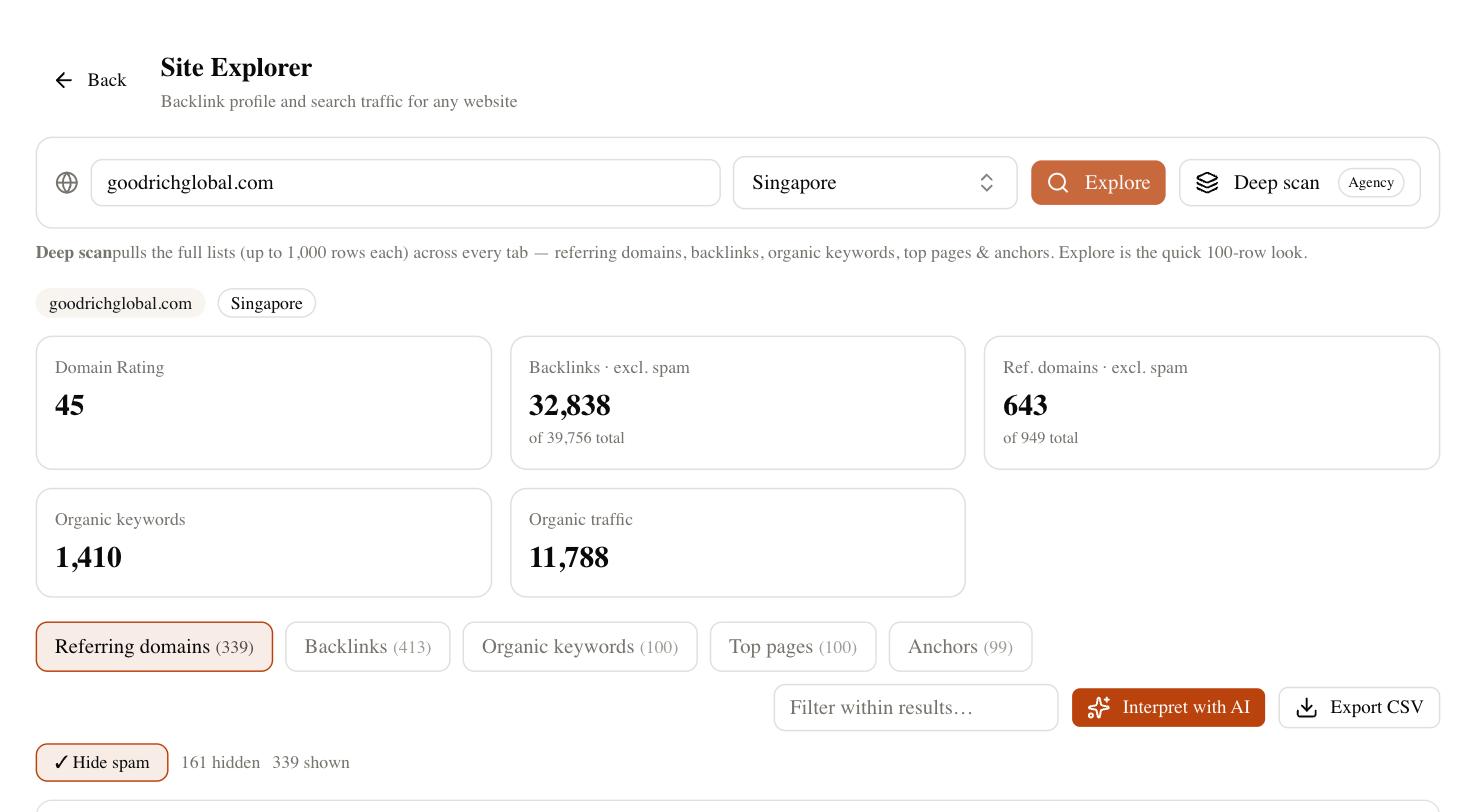
| Backlink analysis | Basic count and list | Full Site Explorer — referring domains, top pages, history |
| Rank tracking | Yes, limited by plan | Yes, chat-driven or dashboard |
| Technical audit | Basic checklist | Full site audit + PageSpeed + free Website Speed Test |
| Content gap analysis | Content ideas, not true gap analysis | Yes, dedicated competitive gap tool |
| AI content writer | Basic AI writer add-on | Yes — Claude-powered, tied to your keyword data |
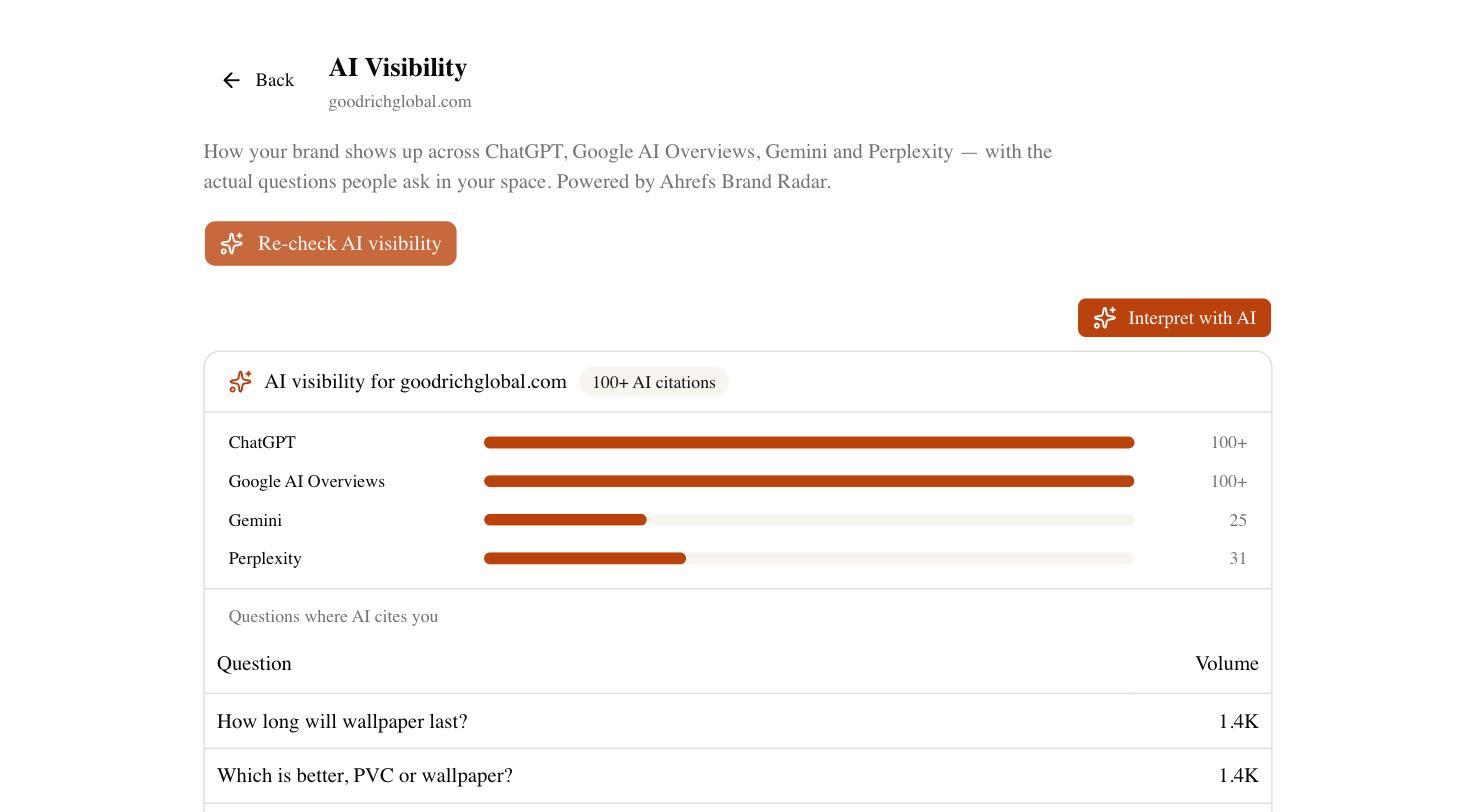
| AI Visibility / GEO tracking | No | Yes — Brand Radar |
| Lifetime plan option | Yes | No — subscription with credit top-ups instead |
What you keep, what changes
You keep the ability to do quick keyword and traffic lookups, but the numbers behind them get more reliable — SEO Rocket runs on Ahrefs Enterprise data rather than Ubersuggest’s proprietary estimates, so expect the figures to shift, sometimes significantly, when you switch. What changes is the depth available on backlinks and competitor research, which Ubersuggest only lightly covers. You gain a genuine content production workflow and AI-visibility tracking that Ubersuggest doesn’t have at all. What you give up is Ubersuggest’s rock-bottom price point and, if you bought one, its lifetime plan — SEO Rocket is a recurring subscription with a real free tier, not a one-time purchase.
Step-by-step migration
- Export what you can from Ubersuggest. Pull your tracked keyword list and any saved keyword research as CSV — Ubersuggest’s export options are more limited than dedicated SEO suites, so don’t expect a full historical archive.
- Set up your SEO Rocket project. Sign up at app.seorocket.ai, add your domain, and let the initial site snapshot pull your current technical and keyword state.
- Confirm target market in project settings, especially if your Ubersuggest tracking spanned more than one country.
- Rebuild rank tracking by importing your exported keyword list or pasting it into chat.
- Connect Search Console and GA4 for real click and conversion data alongside rankings.
- Re-verify keyword volumes for your priority terms — since data sources differ, sanity-check anything you were using to justify budget or content decisions before Ubersuggest’s numbers are fully replaced.
- Run a content gap analysis to find real opportunities Ubersuggest’s content ideas tool wasn’t built to surface.
- Cancel Ubersuggest once tracking is confirmed, or let a lifetime plan sit idle at no ongoing cost if you already own one.
Pricing comparison
Prices are approximate as of 2026 — always confirm current pricing before deciding, and note Ubersuggest’s lifetime option changes the math significantly if you’ve already purchased it.
| Plan tier | Ubersuggest | SEO Rocket |
|---|---|---|
| Entry paid plan | Individual, ~$29/mo | Pro, $49/mo (3 sites, 400 credits/mo) |
| Free tier | Limited daily free searches | Free plan: 1 site, 50 starter credits, $0 |
| One-time / lifetime option | Yes, lifetime plan available | No — but credit top-ups never expire |
| Mid tier | Business plan | Growth, $99/mo (10 sites, 1,000 credits/mo) |
| Top tier | Enterprise/agency | Agency, $199/mo (25 sites, 2,500 credits/mo) |
Ubersuggest is genuinely the cheaper option on a monthly-price basis, and its lifetime plan is unmatched for anyone who wants to pay once. SEO Rocket costs more but includes content writing, AI-visibility tracking, and enterprise-grade backlink data that Ubersuggest doesn’t offer at any price.
Who should NOT switch
If you own an Ubersuggest lifetime plan and your needs are genuinely basic — occasional keyword lookups, a simple content calendar, no need for deep backlink or AI-visibility data — there’s little financial reason to add a subscription on top of a tool you already paid for once. If budget is the binding constraint and you’re a true beginner just starting to learn SEO, Ubersuggest’s simplicity and price remain hard to beat as a first tool. And if you don’t produce content directly in any tool — you outsource writing entirely — the content-writer advantage of SEO Rocket won’t matter to you as much.
FAQ
Is SEO Rocket’s data actually more accurate than Ubersuggest’s?
SEO Rocket runs on Ahrefs Enterprise data, which is widely regarded as more rigorous than Ubersuggest’s proprietary estimates, particularly for search volume and backlink counts. Neither tool is perfectly accurate — no keyword tool is — but the underlying data source is a meaningfully larger, more frequently updated index.
I have an Ubersuggest lifetime plan — should I still switch?
Not necessarily. If Ubersuggest covers your needs, keep using what you already paid for. Switch only if you specifically need deeper backlink data, real content production, or AI-visibility tracking.
Can I export my Ubersuggest content ideas into SEO Rocket?
There’s no direct import, but you can paste topic ideas into SEO Rocket chat and ask it to validate them against real keyword volume and difficulty before writing.
Does SEO Rocket have a free plan like Ubersuggest’s free searches?
Yes — the Free plan includes 1 site and 50 starter credits at $0, enough to run a site snapshot and initial keyword research before deciding to upgrade.
Try SEO Rocket free at app.seorocket.ai and compare the data on your own site before committing to anything.