Ask ten SEO blogs what are backlinks and you’ll get ten versions of “a vote of confidence from another website.” That’s true, and it’s also useless, because it tells you nothing about which votes count, why most of them don’t, and how a single link from the right page can outperform a hundred from the wrong ones. So let’s answer what are backlinks the way a practitioner would: not as a metaphor, but as a mechanism you can actually work with.
What Are Backlinks, Mechanically
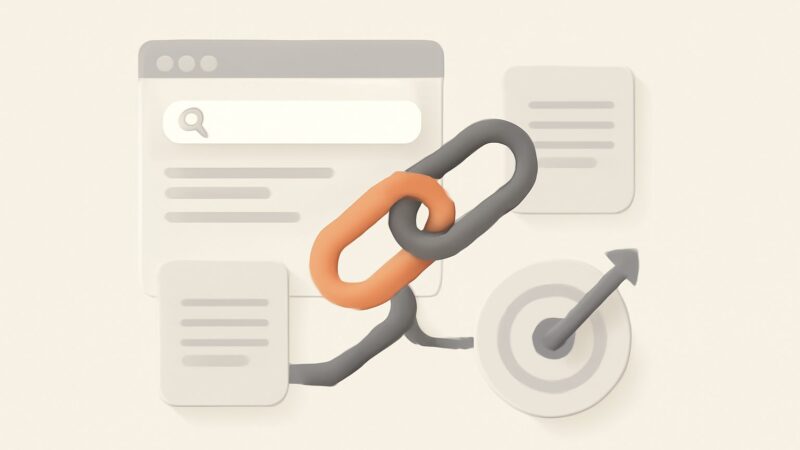
A backlink is a hyperlink on another site’s page that points to yours. When Google’s crawler follows that link, it does two things: it discovers your page (links are still a primary way pages get found and re-crawled), and it passes a fraction of the linking page’s ranking signal along the edge — the thing old-school SEOs call “link equity” and Google’s original patents called PageRank. That flow is directional and it decays: a page with more outbound links splits its equity thinner across each one, and the signal weakens with every hop from a strong seed. So the question was never “how many backlinks do I have” — it’s “how much real equity is flowing to this specific URL, from where, and through what anchor.”
Why Google Still Counts Links at All
Links predate every ranking factor Google added afterward, and they’ve survived because they’re expensive to fake convincingly. The core logic hasn’t changed since 1998: if independent site owners choose to reference your page, that’s a costly signal of usefulness that’s hard to manufacture at scale. Google refined this with the “reasonable surfer” model — links a real user would plausibly click (in-content, contextually relevant, above the fold) carry more weight than a link buried in a footer or sidebar template on every page of a site. That single refinement kills the intuition that “a link is a link.” A contextual editorial mention inside a relevant article is worth many multiples of a sitewide footer credit, even from the same domain.
The Link-Value Equation
Here’s the framework I’d hand a client instead of a checklist. The value of any backlink is roughly the product — not the sum — of four factors:
- Relevance — how topically close the linking page and site are to yours. A link from a page about the same subject transfers more usable signal than a high-authority link from an unrelated domain.
- Authority — how much equity the linking page has accumulated itself. A page nobody links to has little to pass on, regardless of the domain it sits on.
- Placement — in-content and contextual beats boilerplate. A link inside the body of an article that a reader would actually click outranks a sitewide sidebar or footer link.
- Uniqueness — how many other sites the linking page also links out to, and whether it already links to your competitors. A page that links to fifty tools dilutes each one.
Because these multiply, a zero on any factor collapses the whole thing. A high-authority link from an irrelevant page with a footer placement and forty other outbound links is close to worthless. A modest-authority link from a tightly relevant page, in-content, that links out to almost nothing else, can genuinely move a mid-competition keyword. That multiplicative logic is why link counts mislead and why understanding what backlinks are worth matters more than counting them.
A Worked Example: Is This Link Worth Chasing?
Say you run a small accounting-software site and two link opportunities land in your inbox. Link A: a directory with a high domain-authority score, but the listing page links to 200 unrelated businesses and sits three clicks deep with no internal links pointing at it. Link B: a niche bookkeeping blog with a modest domain score, but the mention would be inside a genuinely relevant tutorial that links to only two other tools.
Run the equation. Link A scores high on authority but near-zero on relevance, placement, and uniqueness — the product is small. Link B scores medium on authority and high on the other three — the product is far larger. The “weaker” domain wins decisively. This is the calculation experienced SEOs run instinctively, and it’s why chasing domain-authority numbers in isolation wastes budget. The link that moves your ranking is usually the one a metrics-only tool tells you to ignore.
Dofollow, Nofollow, and the Links That Don’t Count
Not every link passes equity. A dofollow link is the default — it flows signal. A nofollow link carries a rel attribute telling Google not to pass equity; since 2019 Google treats it as a hint rather than a strict directive, and added sponsored and ugc variants for paid and user-generated links. Practically: nofollow links from big platforms (a Wikipedia citation, a major news mention) still deliver referral traffic, brand signals, and discovery, even if the raw equity is discounted. Meanwhile a whole category of links passes nothing meaningful: scraped directories, comment-spam, low-quality PBNs, and site-wide template links. The mistake beginners make is treating link acquisition as volume when the game is entirely about the handful of editorial, in-content, relevant links that clear the value equation.
How to Earn Backlinks That Actually Move Rankings
You can’t reliably buy the links that work — the ones that clear the equation are given editorially. Four methods produce them consistently:
- Linkable assets — original research, a genuinely useful free tool, a data study, or a definitive guide. People link to resources that make their own content stronger. A single well-promoted study can earn dozens of contextual links over a year.
- Digital PR — turning a data point or expert take into something a journalist wants to cite. This is how you earn the high-authority news links that also happen to be relevant.
- Broken link building — finding dead links on relevant pages, then offering your live resource as the replacement. High conversion because you’re solving the site owner’s problem, not asking a favor.
- Link reclamation — finding unlinked brand mentions or lost links and getting them added or restored. The cheapest links you’ll ever earn, because the relationship already exists.
Guest posts sit in a grey zone: a genuinely useful article on a relevant site with a natural in-content link is fine; a spun 500-word post on any site that’ll take it, stuffed with exact-match anchors, is the pattern Google’s link-spam systems demote. The dividing line is whether the content would deserve to exist without the link.
What to Ignore: Vanity Metrics and Velocity Myths
Two traps waste more link-building budget than any other. First, chasing domain-authority scores as if they were Google rankings — they’re third-party estimates from Ahrefs, Moz, and Semrush, not signals Google uses, and they’re gameable. Use them to compare candidates, never as a target. Second, “link velocity” panic. There’s no magic safe number of links per month; what matters is whether the pattern looks earned. A genuinely viral asset can pull hundreds of links in a week without issue, while ten identical exact-match anchor links from ten cookie-cutter blogs in a week is the footprint that gets flagged. It’s the naturalness of the profile, not the raw rate, that Google’s systems evaluate.
How to Audit Your Own Backlink Profile
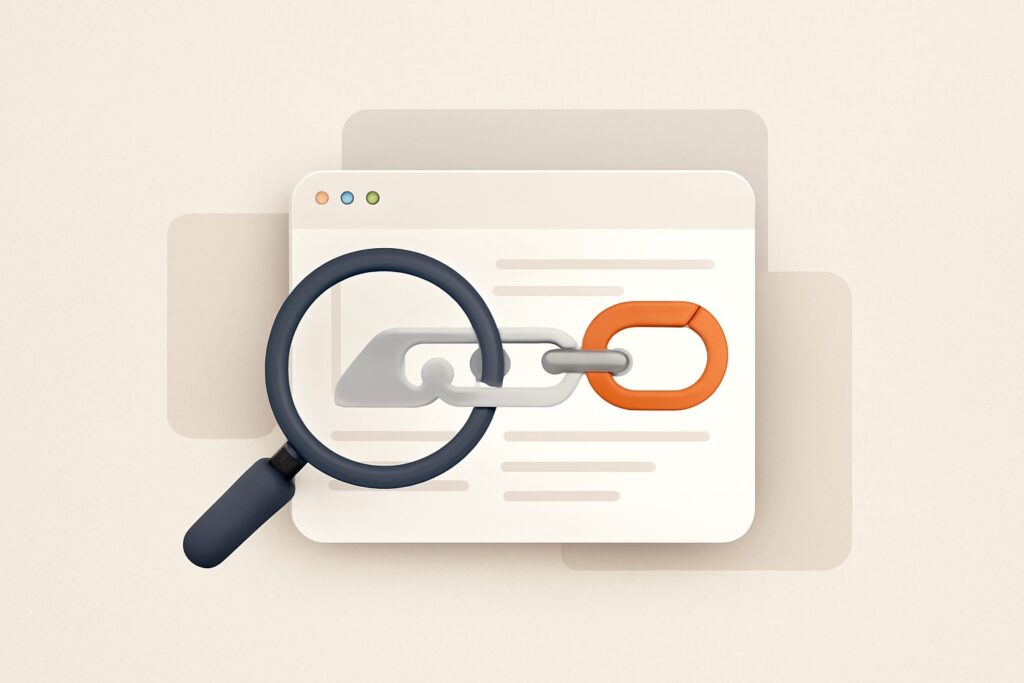
Before you build a single new link, know what you already have. Pull your referring domains (the count of unique linking sites matters far more than total link count) and sort by relevance and authority, not volume. Flag three things: the anchor-text distribution (a healthy profile is mostly branded and naked-URL anchors, not exact-match keywords), any sudden spikes from irrelevant domains, and your strongest existing links so you can point internal links from those pages toward the URLs you want to rank. This last move — internal link sculpting from your best-linked pages — is the most underused free ranking lever most sites have. SEO Rocket’s site audit and competitor analysis surface referring domains, anchor distribution, and the pages sitting on wasted internal equity, so you can fix distribution before spending a dollar on outreach.
Finding the Gap Between You and Page One
The fastest link strategy isn’t inventing targets from scratch — it’s copying the ones that already work for the pages beating you. A link-gap analysis compares your referring domains against four or five ranking competitors and surfaces the sites linking to several of them but not to you. Those domains have already demonstrated they’ll link to something in your niche, which makes them the highest-probability outreach targets you’ll find. SEO Rocket runs this gap analysis on real Ahrefs index data — content gaps and backlink gaps across your actual page-one rivals — so your outreach list is grounded in links that provably move rankings for pages already outranking you, rather than a scraped list of “high DA” sites that never convert. It’s the same approach behind a playbook proven across 1,000,000+ ranking pages: build to beat the real competitor, not an imagined one.
Honest Caveats Most Guides Skip
A few truths the link-building industry underplays. Correlation between domain-authority scores and rankings is real but partly circular — sites that rank well attract links, not only the reverse — so links are one input, not the whole engine. Backlinks are necessary but insufficient: pointing strong links at thin content that doesn’t match search intent stalls on page two, sometimes within weeks. The disavow tool, once standard advice, is rarely needed today because Google mostly just ignores spammy links rather than penalizing you for them — reach for it only after a confirmed manual action. And no honest practitioner can promise a specific ranking from a specific link; you’re improving probability across a portfolio, not buying a guaranteed position.
Frequently Asked Questions
How many backlinks do I need to rank?
There’s no fixed number — it depends entirely on keyword competition and content quality. For a low-competition long-tail keyword you might rank with zero external links and strong internal linking. For a competitive head term you may need dozens of relevant referring domains plus content that genuinely beats page one. Count referring domains, not links, and benchmark against the weakest page currently ranking, not the market leader.
Are nofollow backlinks worthless?
No. Since 2019 Google treats nofollow as a hint, and nofollow links from authoritative, relevant sources still drive referral traffic, brand signals, and page discovery. A natural profile contains a healthy mix of dofollow and nofollow links — an all-dofollow profile actually looks manufactured.
Can I buy backlinks safely?
Buying links to pass ranking equity violates Google’s guidelines and risks a link-spam demotion or manual action. Paying for placement is only safe when the links are marked sponsored or nofollow. The links that actually move rankings — editorial, contextual, relevant — are earned, not purchased, which is exactly why they work.
How long do backlinks take to affect rankings?
Google has to crawl the linking page, process the link, and recompute signals — typically days to a few weeks for discovery, but the full ranking effect often takes one to three months to settle, longer in competitive niches. Links are a compounding investment, not an instant switch.
Where to Start This Week
Now that you can answer what are backlinks with a mechanism instead of a metaphor, the sequence is simple. Audit your existing referring domains and fix internal linking from your strongest pages first — that’s free ranking equity you already own. Then run a link-gap analysis against your real page-one competitors to build an outreach list grounded in links that provably work. Finally, create one linkable asset worth citing, because the durable links clear the value equation on their own. Skip the vanity-metric chase, ignore the velocity myths, and remember that a handful of relevant, in-content, editorially given links will out-rank a thousand of the kind you can buy.