Every figure below is pulled from a named, dated study — SparkToro, Semrush, Ahrefs, and Search Engine Land — and cited inline so you can verify it yourself. If a number couldn’t be traced to a real source, it was left out rather than estimated.
How Common Are Zero-Click Searches Now?
A zero-click search is one where the searcher gets their answer directly on the results page and never clicks through to a website. According to SparkToro’s most recent analysis, published in June 2026 by Amanda Natividad using Similarweb clickstream data, 68% of U.S. Google searches ended without a click at all during the first months of 2026 — the fastest jump SparkToro has recorded, up from 60% in 2024. SparkToro’s tracking of this metric goes back further: zero-click searches sat at just 45% in 2016 and 49% in 2019, according to the same SparkToro research series.
A separate, earlier SparkToro study led by founder Rand Fishkin — published July 2, 2024 and built on Datos (a Semrush company) clickstream data covering September 2022 to May 2024 — put the U.S. zero-click rate at 58.5% and the EU rate at 59.7%. That same study found that for every 1,000 U.S. Google searches, only 360 clicks made it to a non-Google-owned, non-ad-paying website (374 per 1,000 in the EU), while almost 30% of all clicks went to Google’s own properties (Maps, YouTube, Images, etc.) and only about 1% of clicks went to paid ads. Search Engine Land, reporting on this same 2024 SparkToro/Datos study on July 2, 2024, corroborated the 58.5% (U.S.) and 59.7% (EU) zero-click figures.
AI Overviews Are Accelerating the Trend
The jump from a 60% zero-click rate in 2024 to 68% in early 2026 lines up with the wider rollout of Google’s AI Overviews. SparkToro’s 2026 research attributes the surge primarily to AI Overviews rather than direct AI chatbot use — the study notes that standalone AI chatbot visits accounted for roughly 0.3% of search-like queries, while AI Overviews had reached more than 20% of all searches and were cutting click-through rate on the results they appeared on by nearly 60%, according to SparkToro’s June 2026 report.
Ahrefs has independently tracked this same effect through two rounds of its own research. In an April 2025 study, Ahrefs found that pages ranking in the top organic positions saw a 34.5% reduction in clicks when an AI Overview appeared above them. A follow-up Ahrefs study, published February 4, 2026 by Ryan Law and Xibeijia Guan and based on Google Search Console data across 300,000 keywords (150,000 with an AI Overview present, 150,000 without) comparing December 2023 to December 2025, found the average clickthrough-rate reduction for the #1 organic position had worsened to 58%. The same Ahrefs study found the CTR hit varied by position — a 50.8% reduction at position 2 versus a 19.4% reduction at position 10.
Zero-Click Rates Aren’t Rising Everywhere the Same Way
Not every dataset shows AI Overviews making zero-click behavior worse across the board. Semrush’s AI Overviews study, refreshed December 15, 2025 (originally published March 2025) by Jana Garanko and contributors, analyzed over 10 million keywords and found AI Overview trigger rates swinging significantly month to month — from 6.49% of tracked queries in January 2025 up to 24.61% in July 2025, then back down to 15.69% in November 2025. When Semrush partnered with Datos to study zero-click behavior on over 200,000 keywords (each with search volume above 100) from January to October 2025, it found that for keywords that newly started showing an AI Overview between May and October, the zero-click rate actually fell over that window, from 33.75% to 31.53% — evidence that AI Overviews alone don’t automatically push a keyword’s zero-click rate higher.
Where the Clicks That Remain Are Going
Of the clicks that do leave the search results page, SparkToro’s 2024 Datos-based study found nearly 30% went to Google-owned destinations rather than independent websites. That leaves the shrinking pool of “open web” clicks even smaller than the headline zero-click number suggests. Ahrefs’ February 2026 update also noted that the CTR decline has compounded over time rather than plateauing, warning that “assuming AI Overviews stay in this current form, this is also likely the highest the CTR will be” — implying further declines are plausible as the format matures.
Zero-Click and AI Overview Data at a Glance
| Metric | Figure | Source |
|---|---|---|
| U.S. zero-click search rate, early 2026 | 68% | SparkToro (June 2026) |
| U.S. zero-click search rate, 2024 | 58.5% (SparkToro cites 60% in its 2026 trend chart) | SparkToro / Datos (July 2024); Search Engine Land |
| EU zero-click search rate, 2024 | 59.7% | SparkToro / Datos (July 2024) |
| Open-web clicks per 1,000 U.S. searches, 2024 | 360 | SparkToro / Datos (July 2024) |
| Clicks going to Google-owned properties | ~30% | SparkToro / Datos (July 2024) |
| CTR reduction, position 1, with AI Overview present | 58% | Ahrefs (Feb 2026) |
| CTR reduction, position 1, earlier measurement | 34.5% | Ahrefs (Apr 2025) |
| Zero-click rate, 2016 | 45% | SparkToro (June 2026 trend data) |
| AI Overview trigger rate, peak 2025 | 24.61% of queries (July 2025) | Semrush (Dec 2025) |
Why This Matters for SEO Strategy
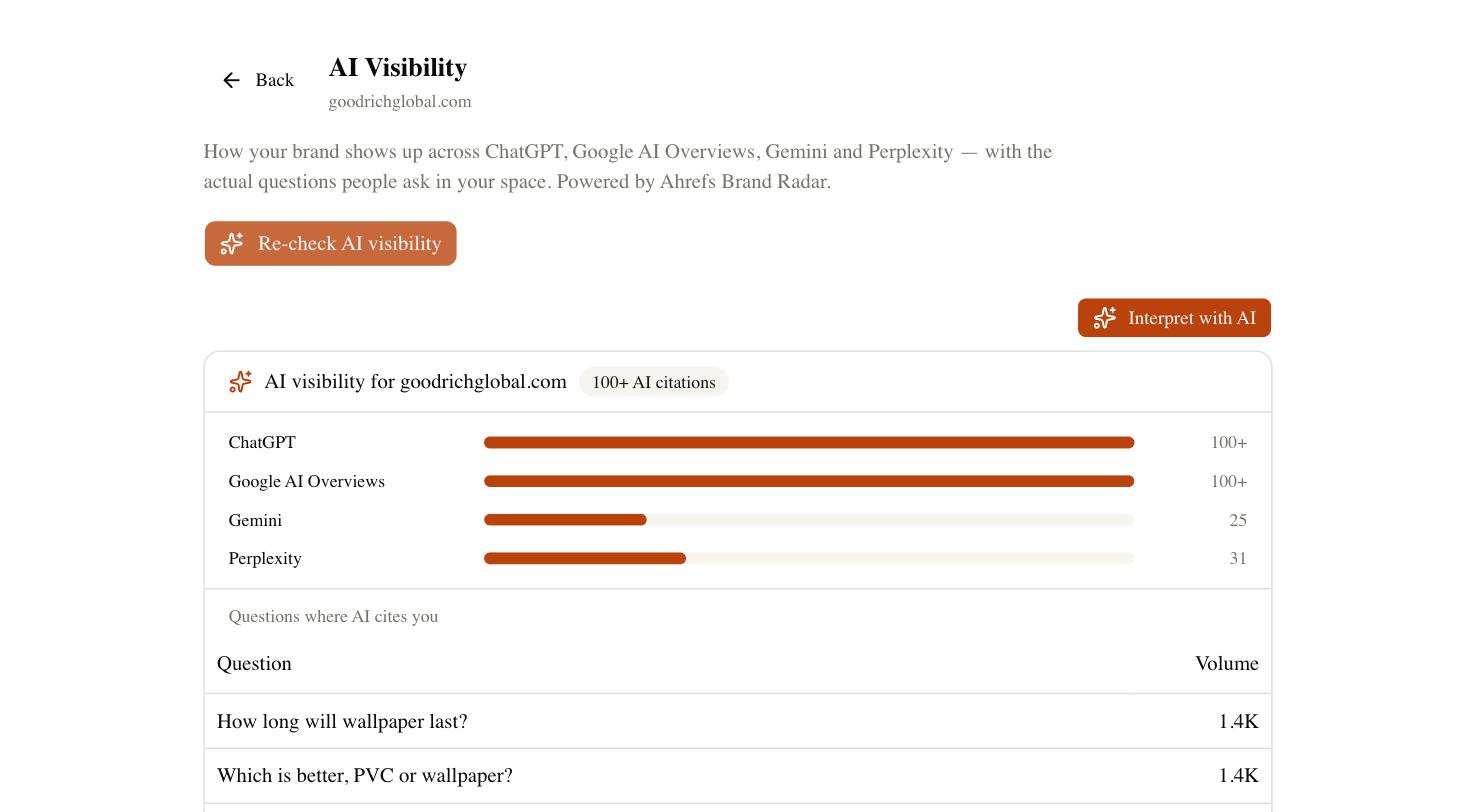
The consistent thread across SparkToro, Ahrefs, and Semrush data is that fewer searches are converting into a click to your website, and the pages most likely to get squeezed are the ones sitting in the top organic positions right below an AI Overview — exactly where brands have historically invested the most SEO effort. That doesn’t mean organic search traffic is disappearing; SparkToro’s own research still finds hundreds of open-web clicks per thousand searches, and Semrush’s data shows zero-click rates can fall on individual keyword sets even as AI Overviews spread. It does mean that ranking #1 no longer guarantees the traffic it used to, and that visibility inside AI Overviews and other SERP features is becoming a metric worth tracking in its own right, alongside traditional rankings.
Worth noting as a caveat: these figures come from different research firms, different data panels (Datos/Semrush clickstream, Similarweb clickstream, Google Search Console samples), different time windows, and different methodologies for defining a “zero-click” or “AI Overview-affected” query. None of them are a full census of Google’s traffic, and the exact percentages will not match perfectly from study to study — but the direction of the trend (rising zero-click rates, falling organic CTR near AI Overviews) is consistent across every source cited here.
Track Your Own Numbers, Not Just Industry Averages
Industry-wide averages are useful for context, but they can’t tell you how your own pages are performing next to an AI Overview or a shrinking SERP. SEO Rocket lets you track your own rankings, local visibility, and AI-search citations on real data rather than relying on industry averages; there’s a free plan to start, with paid plans from $49/month: app.seorocket.ai.
Sources
- SparkToro — “When Google Stops Sending Clicks, What Still Works?” (June 2026)
- SparkToro — 2024 Zero-Click Search Study (July 2024)
- Search Engine Land — “Nearly 60% of Google searches end without a click” (July 2024)
- Ahrefs — AI Overviews Reduce Clicks (updated study, Feb 2026)
- Ahrefs — AI Overviews Reduce Clicks (original study, Apr 2025)
- Semrush — AI Overviews’ Impact on Search (updated Dec 2025)