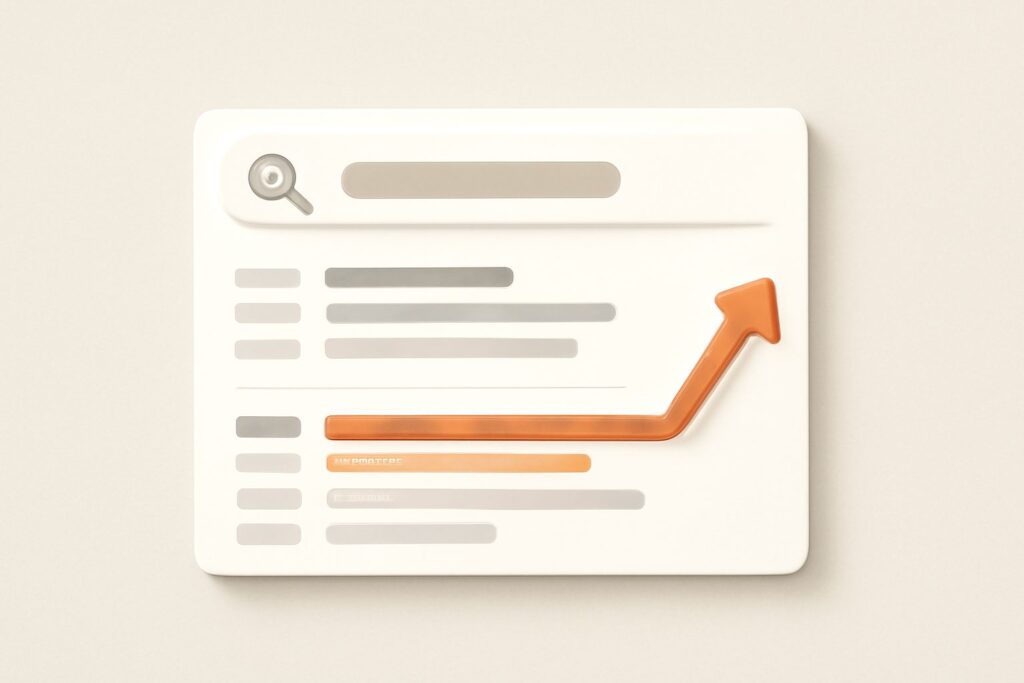
A SERP is the page you see right after you type something into Google and press enter — the “search engine results page,” the ranked mix of links, ads, and answer boxes the engine assembles to respond to your query. If you just searched what is a serp and landed here, that one sentence is the entire definition; everything below is about why the page matters and how to actually read one.
The acronym trips people up because it sounds technical, but a SERP is something you’ve looked at thousands of times without naming it. Every Google search you have ever run returned one. What changes — and what makes the term worth understanding — is that no two SERPs are identical, and the shape of the page tells you a great deal about what the searcher wanted.
Why the SERP matters more than any single ranking
People obsess over “ranking number one,” but a position only means something in the context of the page it sits on. Being first on a clean, ten-link SERP is a very different prize from being first on a page topped by four ads, a map pack, and an AI-generated answer that resolves the question before anyone scrolls. The ranking is the same number; the traffic behind it is not.
That is the practical reason to care about SERPs. The page, not the position, decides how much attention actually reaches you. If you plan content or judge an opportunity without looking at the real results page for that query, you are guessing at how many clicks a top spot is even worth.
There is a second reason, and it is getting louder. Search itself is splitting. Some of the people who used to type a question into Google now ask it in an AI assistant, and Google has responded by putting generated answers on its own results pages. A SERP is no longer just a place to earn a click — increasingly it is a place to earn a mention, where the win is being the source an answer box quotes rather than the tenth link nobody scrolls to. You cannot reason about that shift without first understanding the page it is happening on.
What actually appears on a search results page
A modern SERP is rarely just a list of blue links. Google layers in different result types depending on what it thinks you’re trying to do. On a single page you might see any combination of the following.
- Organic results — the “earned” links ranked by relevance and authority. This is what most SEO work targets.
- Paid results (ads) — labeled listings at the top or bottom that advertisers bid on. They can push organic results well down the page.
- Featured snippet — a boxed answer pulled from a page, shown above the normal results to answer the query directly.
- AI Overview — a generated summary that stitches together several sources at the very top of many informational searches.
- Local pack — a map with three nearby businesses, triggered by anything with local intent.
- People Also Ask — an expanding list of related questions.
- Image, video, news, and shopping blocks — media results woven in when the query calls for them.
The important takeaway is that these features occupy space the organic links used to own. On some queries the first genuine organic result now sits below the fold, after a searcher has already scrolled past an ad block, a snippet, and a row of related questions. Understanding that layout is the first job when you evaluate a keyword, because it changes what a top ranking is actually worth. Two keywords can both offer a “number one” spot and deliver wildly different traffic depending on how much of the page sits above that link.
The SERP is not a fixed list
One of the biggest mental shifts is realizing there is no single, universal SERP for a query. Google builds the page fresh for each search, and it varies with the searcher and the moment.
Location changes it — the same three words return different local businesses in different cities. The device changes it, because mobile pages show fewer results and lean harder on features. Search history, language, and the time of day can all nudge the order. Even querying twice from two accounts can surface small differences. So when someone says they “rank third,” the honest question is: third where, on what device, for whom? Rankings also jitter a few positions day to day on their own, which is normal and not worth panicking over.
This is why any serious rank-tracking treats a position as an estimate rather than a fact. A good tool pins down the variables — a fixed location, a chosen device, a specific search engine — and then measures consistently against that baseline over time. What you are watching for is the trend, not the exact number on any given morning. A page that drifts from position eight to five across a month is winning even if it bounced to seven yesterday.
How search intent shapes the page
The layout of a SERP is Google’s read on why you searched, and you can reverse-engineer that intent just by looking. A page dominated by shopping results and ads is a buying query. A page led by a featured snippet and People Also Ask is an informational one. A local pack means the engine thinks you want somewhere nearby.
This matters because the intent baked into a SERP tells you what kind of content can win there. If every top result for a term is a product category page, publishing a long explainer won’t rank no matter how good it is — the page is telling you buyers, not readers, are searching. The reverse is just as true: try to sell on a query where Google is only surfacing how-to guides and forum threads, and you’ll be the odd result the engine has no slot for. Reading intent off the results is faster and more reliable than assuming it, and it saves you from writing the right thing for the wrong query.
SERP features and what they signal
It helps to keep a rough mental map of the common features and what each one tells you about the opportunity.
| Feature | What it is | What it signals for you |
|---|---|---|
| Featured snippet | A boxed direct answer above results | A clear, well-structured answer can win position zero |
| AI Overview | A generated multi-source summary | Clicks may drop; being cited matters as much as ranking |
| Local pack | Map with three nearby businesses | Local SEO and a Google Business Profile drive results here |
| People Also Ask | Expanding related questions | A map of subtopics your content should cover |
| Shopping / ads-heavy | Product listings and paid slots up top | High commercial intent; organic clicks are scarcer |
None of these features are permanent. Google adds, removes, and redesigns them constantly, and a keyword that shows a snippet today may not next quarter. Checking the live page beats relying on what you remember seeing.
Common misconceptions about SERPs
A few myths are worth clearing up, because they lead people to make bad calls.
- “There’s one SERP per keyword.” There isn’t — it changes by location, device, and searcher, so your “position” is always an average, not a fixed fact.
- “Ranking first means most of the clicks.” Not when ads, a snippet, or an AI Overview sit above you. Layout can quietly hand your click away.
- “SERP just means the organic links.” The whole page is the SERP — ads and features included. Ignoring them hides where the attention really goes.
- “The order is random or pay-to-win.” Organic order is earned through relevance and authority; paid slots are clearly labeled and separate.
How to read a SERP like an SEO
Turning all of this into a habit is simple. Before you target any keyword, search it yourself and look at the whole page: what features appear, how far down the first organic result sits, whether the top pages are guides, products, or forum threads. That five-second look tells you the intent, the competition, and the real click opportunity at once.
Doing it by hand works for one query. At scale, a tool that reports which SERP features a keyword triggers — snippets, AI Overviews, local packs — and tracks how the page shifts over time turns that instinct into data you can plan around. Either way, the discipline is the same: judge the opportunity by the page, not the position. The full answer to what is a serp comes down to this: it’s the results page the search engine builds for a query — an answer shaped for the person who asked, which is exactly how you should learn to read it.