The Google Hummingbird update, announced in late August 2013 around Google’s 15th anniversary, was not a penalty and not a crackdown on spam — it was a rewrite of the core algorithm itself, aimed at understanding the meaning behind a search query rather than just matching the keywords in it. Hummingbird is widely considered one of the most significant architectural shifts in Google’s history, because it laid the groundwork for conversational search, question-based queries, and the intent-driven ranking systems that followed. This guide covers what Hummingbird actually changed, why it’s different in kind from updates like Panda or Penguin, and how to align content with the semantic-search era it introduced.
What made Hummingbird different from Panda and Penguin
It’s worth being precise about this distinction, because Hummingbird is frequently misunderstood as a quality or spam update in the same category as Panda or Penguin. It wasn’t. Panda targeted thin and duplicate content. Penguin targeted manipulative backlinks. Both were, in effect, filters applied to an existing ranking process — identifying and demoting specific bad patterns. Hummingbird was different: it was a rebuild of the core algorithm’s query-processing engine, changing how Google parsed and interpreted a search query in the first place, before ranking even began. Nothing was being “penalized” by Hummingbird — sites weren’t punished for doing something wrong; the entire basis for matching queries to content was upgraded.
What Hummingbird actually changed
Prior to Hummingbird, Google’s ranking systems leaned heavily on matching the literal words in a query against the words on a page — a largely keyword-based approach. Hummingbird moved Google toward semantic search: interpreting the meaning and likely intent behind a query, including how words relate to each other in context, rather than treating a query as a simple bag of keywords to match. This mattered enormously for a few reasons:
- Conversational and natural-language queries. As voice search and more conversational typed queries became common, Hummingbird made it possible for Google to interpret longer, more natural questions — like “where can I get the best pizza near me” — rather than requiring users to type stilted keyword strings like “pizza best near.”.
- Query intent over literal wording. Google could better infer what a searcher actually wanted, even when the exact words on a high-quality page didn’t precisely match the query’s phrasing.
- Contextual relationships between words. Understanding phrases and their relationships, not just individual keyword frequency, allowed more nuanced matching between queries and content.
- A foundation for later language systems. Hummingbird’s semantic groundwork set the stage for later advances like RankBrain (2015) and BERT (2019), both of which built further on understanding query meaning and nuance.
Who was affected — and why “affected” is the wrong frame
Because Hummingbird wasn’t a penalty, there wasn’t a category of “sites hit by Hummingbird” the way there was for Panda or Penguin. Instead, the shift was felt broadly across search behavior: sites that relied heavily on narrow, exact-match keyword targeting — for instance, creating separate near-duplicate pages for minor keyword variations — tended to see less benefit from that approach going forward, since Google could now recognize those variations as expressing the same underlying intent. Sites with genuinely comprehensive content that naturally covered a topic’s full context, even without matching every possible keyword phrasing exactly, were generally better positioned after the shift, because that kind of content is exactly what semantic matching is built to reward.
Table: Hummingbird at a glance
| Aspect | Detail |
|---|---|
| Announced | Late August / September 2013 |
| Type of change | Core algorithm rewrite (not a penalty or spam filter) |
| Primary focus | Semantic search and understanding query intent |
| Key enabler for | Conversational search, natural-language and voice queries |
| Related later systems | RankBrain (2015), BERT (2019), MUM (2021) — all deepened language/intent understanding |
| Current status | Foundational to how Google still parses and matches queries today |
Hummingbird’s connection to keyword strategy and content depth
One of the most lasting practical effects of Hummingbird was on how SEO practitioners approached keyword research and content structure. Before Hummingbird, it was common practice to build separate, narrowly-targeted pages for slight keyword variations of essentially the same topic — for example, distinct pages for “affordable web design,” “cheap web design,” and “budget web design,” each targeting a nearly identical intent. That practice made much less sense once Google could recognize those variations as expressing the same underlying intent. After Hummingbird, the more effective approach shifted toward building comprehensive content that addressed a topic and its related questions thoroughly on a single, authoritative page, rather than fragmenting coverage across many thin, near-duplicate pages targeting slightly different phrasings. This is also part of why “keyword stuffing” — repeating an exact phrase unnaturally throughout a page — became not just ineffective but actively counterproductive; semantic systems reward natural coverage of a topic’s full context far more than mechanical repetition of one phrase.
Why the name “Hummingbird”
Google explained the name at the time as a reference to being “precise and fast” — much like the bird itself. It was a deliberate signal that this was meant to be a foundational, structural upgrade rather than a narrow fix, and the name has stuck in SEO history as shorthand for the moment search stopped being purely about keyword matching. Unlike Panda or Penguin, which are commonly discussed in terms of “recovery,” Hummingbird is discussed almost entirely in terms of strategy shift — a reminder that not every major update in Google’s history was a penalty to survive; some were simply new capabilities that changed what good SEO looked like going forward.
How to align content with semantic search today
Hummingbird’s principles are now over a decade old but remain directly relevant, especially as search behavior continues shifting toward natural, conversational, and AI-assisted queries:
- Research intent, not just keywords. Understand what a searcher is actually trying to accomplish with a query — informational, navigational, or transactional — and structure content around that goal.
- Cover topics comprehensively. Address the related questions and subtopics a reader would naturally have, rather than narrowly targeting one exact phrase.
- Write naturally. Content written in clear, natural language tends to match semantic search intent better than content stuffed with exact-match keyword variations.
- Consolidate near-duplicate pages. If a site has multiple thin pages targeting slight keyword variations of the same topic, merging them into one strong page is usually better aligned with how Google matches intent now.
- Anticipate conversational and question-based queries, including how a topic might be asked aloud or as a full question, not just as a short keyword phrase.
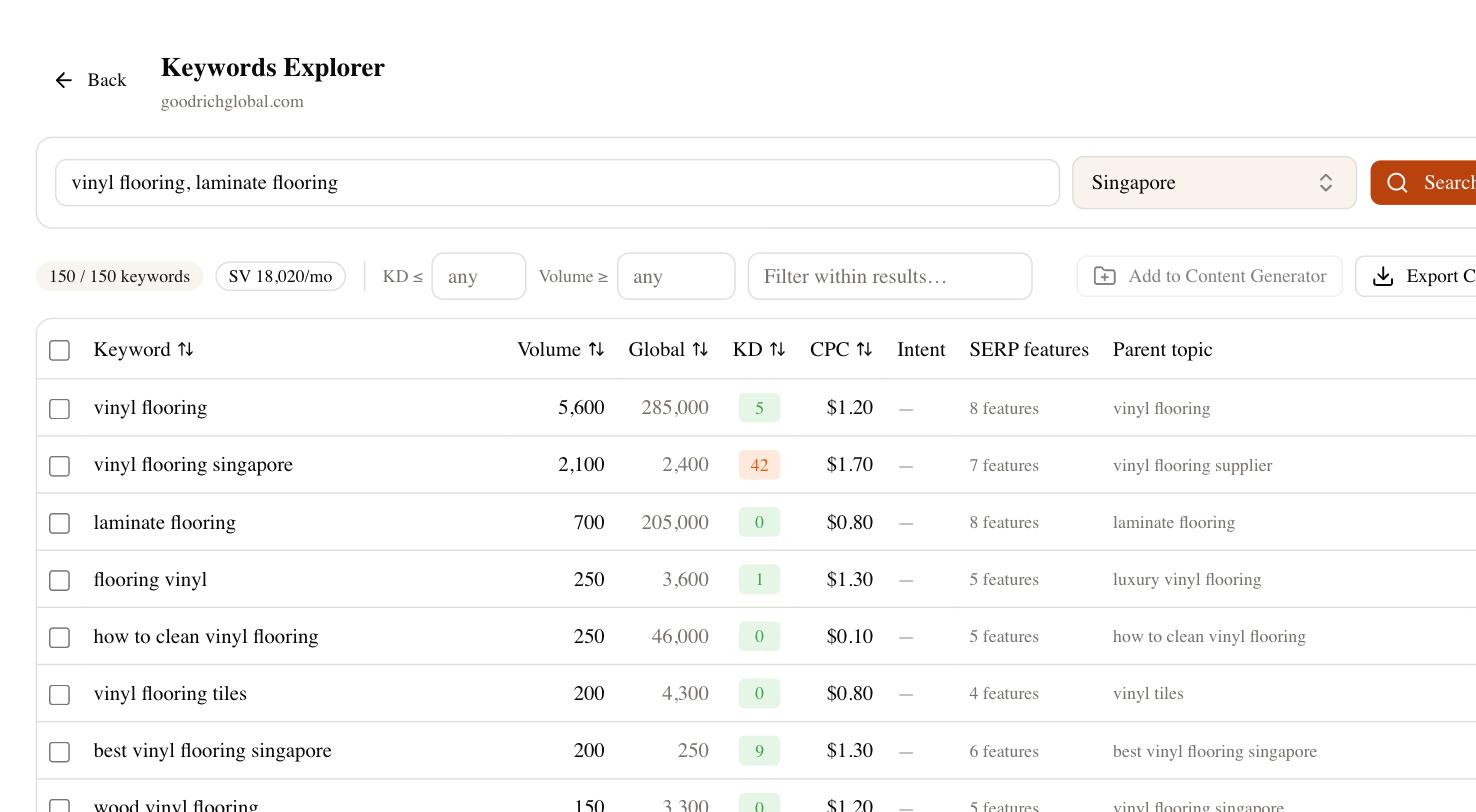
Understanding true search intent behind a keyword — rather than just its raw search volume — is exactly the kind of research that benefits from good tooling. SEO Rocket‘s keyword and intent research helps map what searchers actually want for a given query, so content can be built around genuine intent rather than guesswork, with a free plan available and paid plans from $49/month.
Why Hummingbird still matters
Hummingbird rarely gets the same attention as headline-grabbing updates like Panda or Penguin, partly because it wasn’t a penalty anyone had to recover from. But in terms of long-term impact on how search actually works, it may be the more consequential update of the two. It marked the moment Google’s ranking systems stopped being primarily about matching words and started being about matching meaning — a trajectory that has only continued with every major language-understanding advance since, and one that remains directly relevant to how content should be researched and written today.