Google RankBrain is a machine-learning system that Google introduced in 2015 to help its search engine better interpret the meaning behind search queries. It was one of the first major uses of machine learning inside Google’s core ranking system, and it remains part of how Google processes queries today. Despite years of speculation, RankBrain was never a “penalty” or an algorithm update that punished websites — it is a query-understanding tool, and understanding that distinction is the key to understanding how to align your site with it.
This guide walks through what RankBrain actually does, when it launched, who it affects, and the practical (and often misunderstood) ways site owners can work with it rather than trying to “optimise” directly for it.
What is Google RankBrain?
RankBrain is a machine-learning component that Google uses to help process and understand search queries, particularly ones it has not seen before or that are ambiguous, vague, or written in unusual phrasing. Rather than relying purely on exact keyword matching, RankBrain helps Google map a novel query to concepts and related queries it already understands, so it can return relevant results even when the wording is unfamiliar.
Google confirmed RankBrain’s existence in 2015, and it was notable at the time as one of the first machine-learning signals folded directly into how Google ranks pages. Google has described it as one of several signals used in the ranking process — not a standalone ranking factor you can tune for, and not a separate filter applied on top of results.
When did RankBrain launch and why did it matter?
RankBrain became public knowledge in 2015. At the time, a notable detail reported by Google was that RankBrain played a significant role in handling the portion of searches Google had never encountered before — a meaningful share of daily search volume consists of queries that are effectively new. Traditional keyword-matching approaches struggled with these queries, especially long, conversational, or oddly-worded ones. RankBrain gave Google a way to interpret intent even without an exact precedent for the phrasing.
This mattered because it marked a shift in direction for Google’s ranking systems: instead of only expanding hand-built rules and synonym lists, Google began using machine learning to generalise from patterns in language and behavior. That direction continued in later years with systems like BERT and MUM, which built on the same underlying idea of understanding queries and content more like a human reader would.
How does RankBrain actually work?
In broad terms, RankBrain helps with two related jobs:
- Interpreting unfamiliar or ambiguous queries. It can relate a new or oddly-phrased query to concepts and similar queries Google already understands, helping it infer what the searcher is actually looking for.
- Weighing ranking signals for a given query. Google has indicated that RankBrain also plays a role in how various ranking signals are weighted for different types of searches, since the most useful signals can vary from query to query.
It’s worth being precise here: RankBrain is not a content-scoring algorithm that crawls your page and assigns a “RankBrain score.” It sits earlier in the pipeline, helping Google understand what a searcher means, and helping the broader ranking system apply signals appropriately once that meaning is established. Google has not published the technical details of how it weighs signals, and no external tool can measure “RankBrain performance” directly.
Who was affected by RankBrain?
Because RankBrain is a query-understanding system rather than a targeted update, it did not single out particular industries, site types, or link profiles the way updates like Penguin or Panda did. Its effects were felt broadly and gradually, mostly in the form of Google getting better at matching long-tail, conversational, and ambiguous searches to genuinely relevant pages — including pages that didn’t contain the exact words in the query.
Sites that relied heavily on exact-match keyword stuffing sometimes saw a relative disadvantage over time, simply because Google no longer needed literal keyword matches to understand relevance. But this was a gradual shift in how relevance was assessed, not a sudden ranking event tied to a specific date, and there was no single “RankBrain update” that produced a visible before-and-after in ranking data the way named core updates do.
Common misconceptions about RankBrain
| Misconception | Reality |
|---|---|
| RankBrain is a penalty that demotes low-quality sites | It’s a query-interpretation system, not a punitive filter |
| You can optimise a page specifically “for RankBrain” | There’s no RankBrain-specific tactic; it responds to genuinely relevant, well-matched content |
| RankBrain launched as a single dated “update” | It was disclosed in 2015 and operates continuously as part of ranking, not as a periodic rollout |
| Tools can measure your “RankBrain score” | Google has not published a scoring mechanism; no third-party tool can measure this directly |
| RankBrain replaced other ranking signals | It works alongside existing signals, helping determine which ones matter most for a given query |
How should site owners actually respond to RankBrain?
Since RankBrain is about interpreting intent rather than scoring pages, the most useful response isn’t a technical trick — it’s writing content that genuinely satisfies the range of ways people search for a topic. A few practical habits line up well with how RankBrain (and Google’s broader query-understanding systems) behave:
- Cover topics comprehensively, not just a single keyword. Address the related questions, synonyms, and sub-topics a searcher with that intent would want answered, rather than repeating one exact phrase.
- Write for the searcher’s underlying intent. Ask what someone typing a given query is actually trying to accomplish — buy, learn, compare, troubleshoot — and structure the page to serve that goal.
- Avoid keyword stuffing. Because Google no longer depends on literal matches to understand relevance, unnatural repetition adds no benefit and can hurt readability.
- Use natural language and clear structure. Headings, plain explanations, and logically organised sections help both readers and Google’s language-processing systems understand what a page covers.
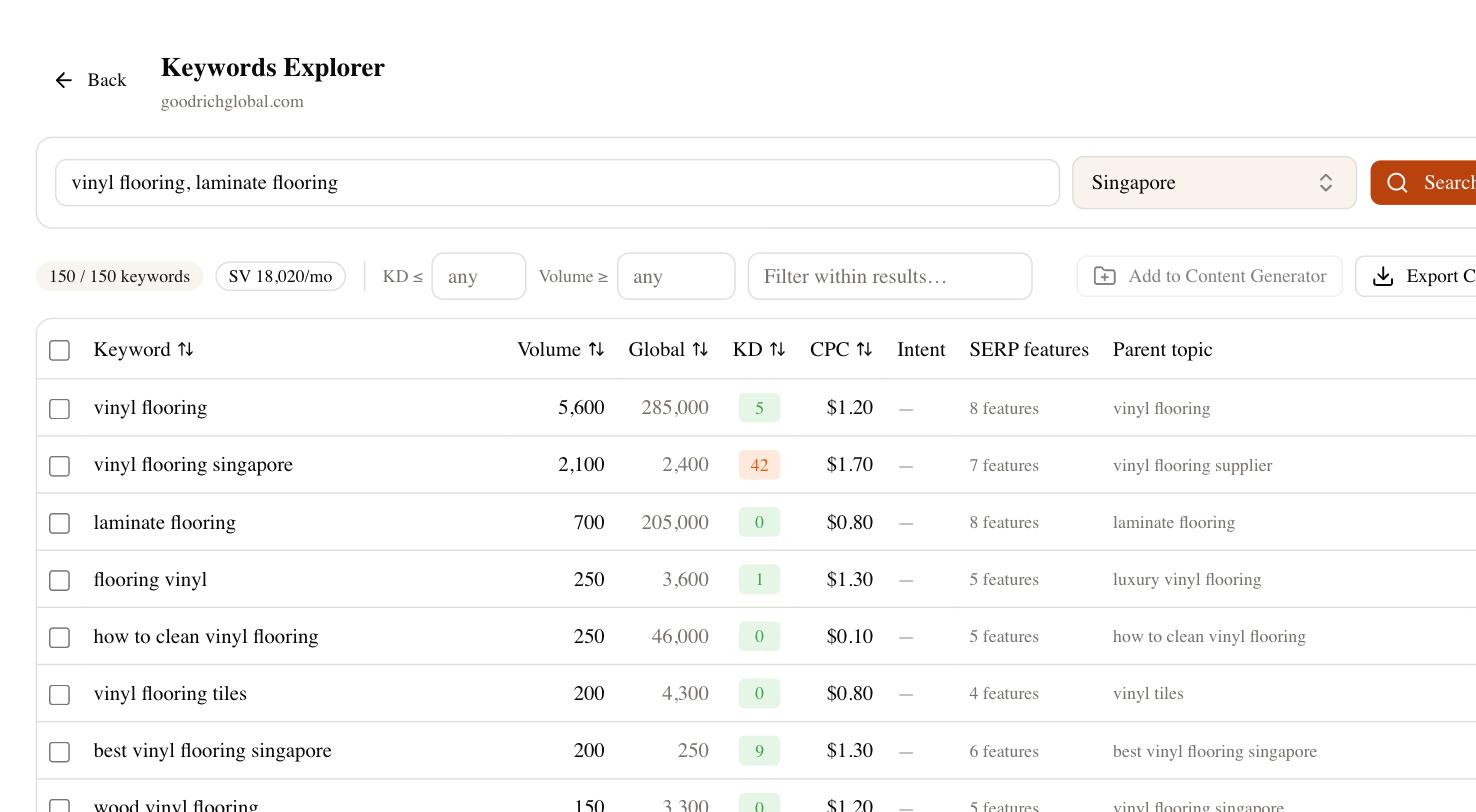
- Study real long-tail and question-based queries. Looking at the actual variety of ways people search for a topic — including conversational and question-style queries — reveals gaps that exact-match keyword lists miss.
How keyword and intent research fits in
Because RankBrain’s job is interpreting the many different ways people phrase a query, keyword research today needs to go beyond a single head term. Understanding the cluster of related searches, questions, and phrasing variants around a topic gives you a much better picture of what “comprehensive” actually looks like for that intent. This is one of the areas where a chat-first tool like SEO Rocket is useful in practice — you can ask it to pull keyword and intent research for a topic conversationally, see how a query cluster breaks down, and use that to shape content that answers the full range of what searchers actually mean, rather than guessing at a single exact-match phrase. SEO Rocket has a free plan, with paid plans starting from $49/mo for teams that want deeper research and tracking.
RankBrain in context: how it relates to BERT and MUM
RankBrain is best understood as the first step in a longer trajectory of Google using machine learning to understand language. In 2019, Google introduced BERT, a natural-language model focused on understanding context, prepositions, and nuance within a query more deeply than RankBrain’s original approach. In 2021, Google introduced MUM (Multitask Unified Model), a far more capable multimodal and multilingual system rolled out gradually to specific search features. Each of these systems built on the same underlying goal RankBrain established: understanding what people actually mean, not just matching the words they typed.
None of these systems are things you optimise for directly in a technical sense. There’s no meta tag, schema markup, or keyword density that “activates” RankBrain, BERT, or MUM. What actually helps is producing genuinely useful, well-organised, naturally written content that answers real searcher intent — which is exactly what these systems are designed to reward when they interpret a query correctly.
Key takeaways
- RankBrain launched in 2015 as a machine-learning system that helps Google interpret queries, especially novel or ambiguous ones.
- It is part of Google’s core ranking system, not a separate penalty or standalone update.
- It also helps weigh which ranking signals matter most for a given query.
- You cannot optimise directly “for RankBrain” — the best response is writing comprehensive, naturally-phrased content that matches real searcher intent.
- It set the direction for later language-understanding systems like BERT and MUM.