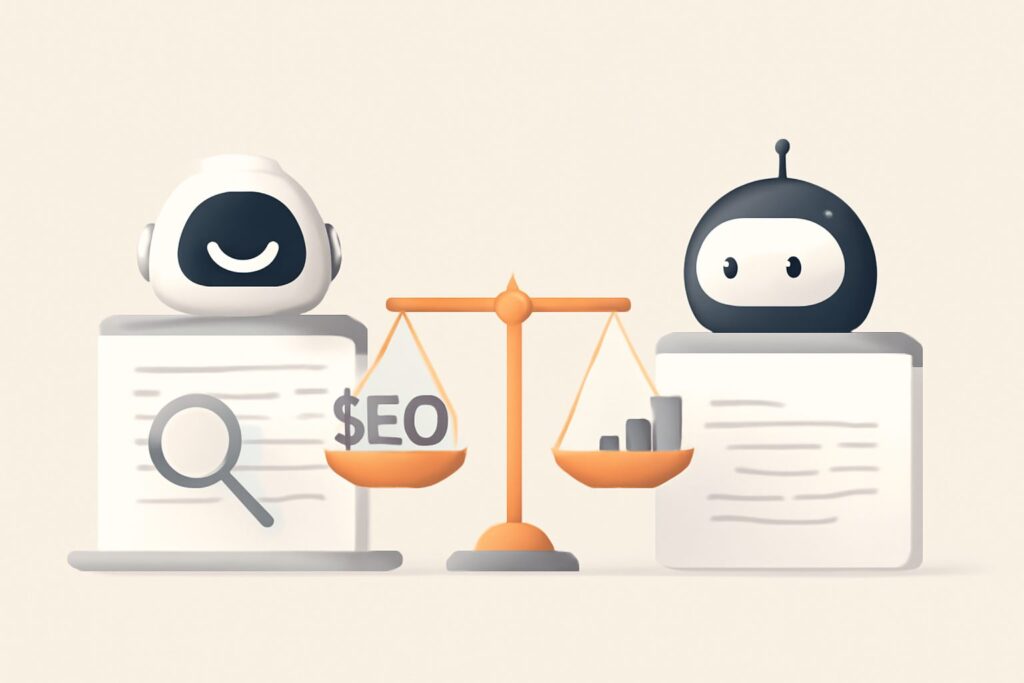
If you’re weighing Jasper vs Writesonic, you’ve already narrowed the field to two of the better-known AI writing tools — and you’ve probably noticed they’re aimed at different buyers. Jasper leans toward marketing teams and brand consistency; Writesonic leans toward volume, SEO content, and a lower bill. Neither is a scam, and neither wins outright, so the real question in the Jasper vs Writesonic debate is which one fits how you actually work.
This is a segment-by-segment breakdown, not a coin flip. Below you’ll find where each tool genuinely pulls ahead, where the difference is marketing noise, and — because it’s the honest answer for a lot of readers — when neither is the right call.
What Jasper and Writesonic actually are
Jasper started life as a copywriting assistant and has spent the last few years moving upmarket. Today it positions itself as an AI platform for marketing teams: brand voice controls, a knowledge base, campaign generation, templates, a browser extension, and image generation all sit under one roof. The pitch is consistency at scale — get everyone on the team producing on-brand copy without a style guide fight every week.
Writesonic went the other direction. It began as a template-driven copy tool and has increasingly bet on SEO and AI-search content — long-form article generation, bulk workflows, and features aimed at getting cited in AI answers, alongside its chatbot products. The pitch is output: more content, tuned for search, at a friendlier price than the enterprise crowd.
Jasper vs Writesonic at a glance
Start with the shape of the two tools, then read the verdicts below for the dimension that matters most to you.
| Dimension | Jasper | Writesonic |
|---|---|---|
| Primary strength | Brand voice & marketing campaigns | SEO content at volume |
| Best for | Marketing teams, brand-led orgs | Solo marketers, SEO content shops |
| Long-form writing | Strong, template-guided | Strong, SEO-oriented |
| Built-in SEO / AI-search | Light; leans on integrations | More native, still maturing |
| Brand voice & knowledge base | A core strength | Present, less deep |
| Learning curve | Moderate; feature-heavy | Gentle; fast to start |
| Rough price band | Higher $$ per seat | Lower $ / freemium entry |
Writing quality: closer than the marketing suggests
Both tools produce clean, publishable first drafts, and both ride the same underlying wave of large language models — so the raw prose gap is narrower than either brand would like you to believe. In practice, Jasper’s advantage shows up in tone control: with a configured brand voice and knowledge base, its output needs less rewriting to sound like you. Writesonic’s advantage shows up in structure for search — its long-form flows nudge you toward headings, intros, and coverage that read well for organic traffic.
The honest verdict here is a tie that depends on your goal. If your bottleneck is keeping ten writers on-message, Jasper edges it. If your bottleneck is shipping SEO articles quickly, Writesonic edges it. Either way, plan to edit — no AI writer, at any price, hands you a finished expert article without a human pass.
SEO and AI-search features
This is where the two split most clearly. Writesonic has invested in SEO as a first-class use case, with article workflows built around search intent and a growing focus on getting content surfaced in AI answers. It’s not a full backlink-and-rank-tracking suite, but for the writing side of SEO it does more out of the box.
Jasper treats SEO as something you bolt on. Its historical answer has been integrations — pairing with a dedicated optimization tool so writers can hit content scores inside the editor. That works, but it means another subscription and another login. If deep SEO is central to your job, Writesonic is the more complete single tool of the two, and it’s fair to say so.
Brand voice, templates and team workflow
Jasper is built for teams, and it shows. Brand voice profiles, a shared knowledge base, campaign tooling, and role-based collaboration make it the stronger pick when several people publish under one identity and consistency is the whole game. That depth is also why it carries a heavier learning curve and a higher per-seat cost — you’re paying for infrastructure a solo operator may never touch.
Writesonic is faster to pick up and cheaper to run, which suits a freelancer or a small content shop that wants drafts today, not an onboarding project. Its brand-voice and templating features exist, but they’re not as deep. Match the tool to your team size: Jasper for coordinated teams, Writesonic for lean operators who value speed and price.
Pricing and who each suits
Prices move, so treat these as bands rather than quotes. Jasper sits in the higher tier, billed per seat, with enterprise plans on request — the cost makes sense for a marketing team but stings for a single user. Writesonic is the budget-friendlier option, with a freemium entry point and lower paid tiers that scale with usage.
So the pricing verdict tracks the audience. Pick Jasper if a team and brand governance justify the spend. Pick Writesonic if you’re cost-conscious and want to start producing without a big commitment. Neither should be judged on the headline number alone — factor in the second tool you may still need for SEO data or optimization.
Where SEO Rocket fits — the AI-native SEO option
Both Jasper and Writesonic are writing tools first. That’s the gap worth naming: neither gives you the Ahrefs-grade keyword, competitor, and backlink data that decides what to write before you draft it, and neither closes the loop by tracking whether the article actually ranks or gets cited in AI search. You end up stacking an AI writer on top of a separate SEO suite.
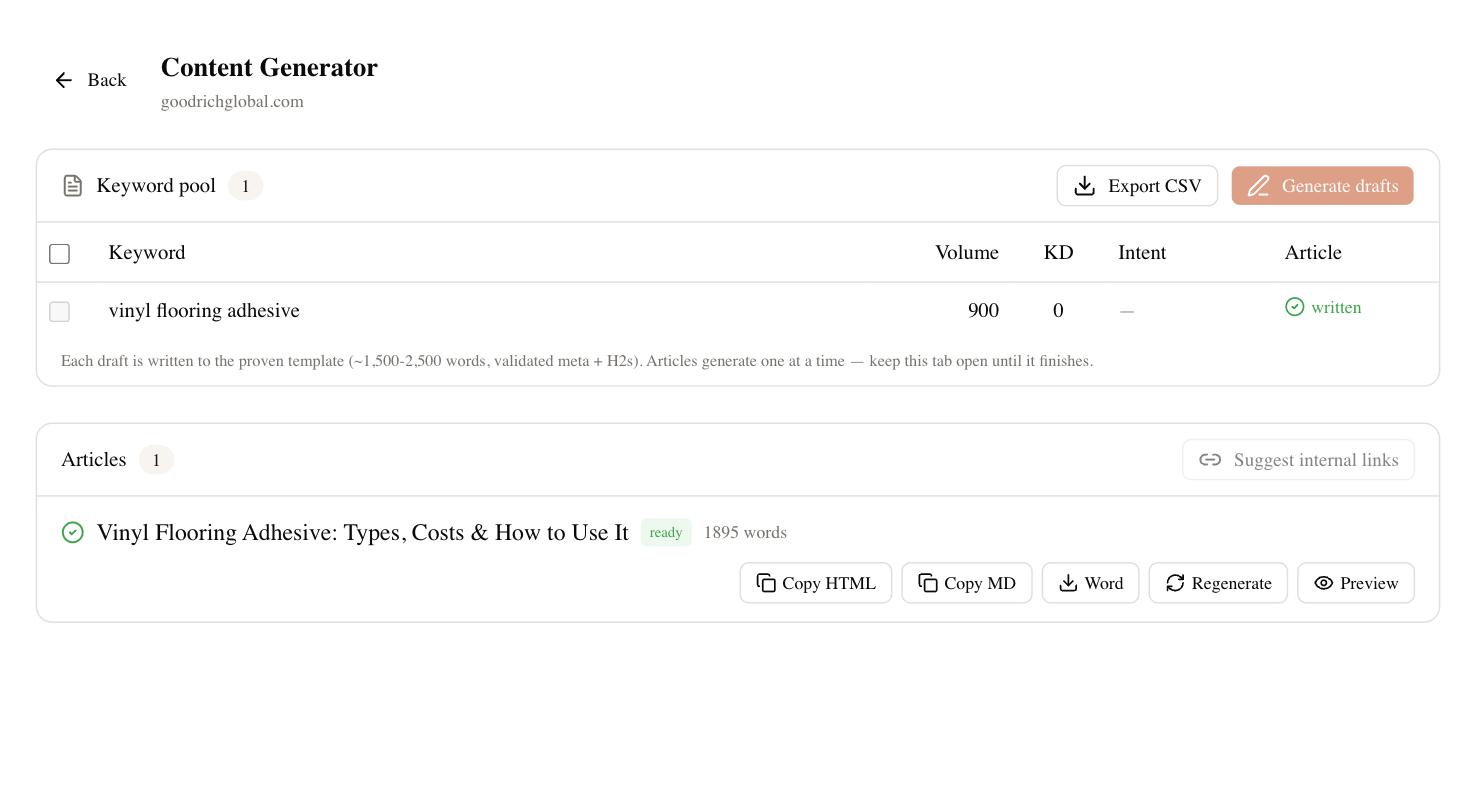
SEO Rocket is built for that whole loop in one chat-first workflow. You ask in plain language for keyword research or a competitor gap, it runs the lookup on real SEO data, then drafts the article — title, meta, and heading structure included — with Claude. The same tool then tracks your rankings and, through Brand Radar, shows whether you’re being cited in ChatGPT, Perplexity, and Google’s AI Overviews. It won’t replace Jasper’s brand-voice depth for a big marketing team, but for anyone whose goal is content that ranks, it collapses a two- or three-tool stack into one and prices at an entry-friendly band.
How to choose between them
Match the tool to your real constraint. Choose Jasper if you run a marketing team and brand consistency across many writers is the problem you’re solving — its voice controls and campaign tooling earn the higher seat price. Choose Writesonic if you’re a solo marketer or small shop that wants SEO-shaped content fast and cheap, and you’re fine editing the output.
But be honest about the job. If what you actually need is content that ranks and shows up in AI answers — not just words on a page — a pure AI writer leaves the SEO half of the work in a second tool. In that case, an AI-native SEO platform like SEO Rocket does more of the whole task in one place. Write down the three things you did last week: if they were “research a keyword, check a competitor, publish a piece,” you’re buying a writer when you need a workflow. Trial your shortlist on one real article each, and keep the one that gets you from question to published, ranking page with the fewest tabs open.