
On-page SEO is everything you do on a page to help it rank — the parts you fully control. Unlike backlinks, which you earn slowly, on-page wins are immediate: fix a title, tighten your headings, add internal links, and you can see movement within days. It’s the highest-leverage SEO a beginner can do.
Here’s the complete checklist, in order, with the tool that makes each step painless.
Key takeaways
- On-page SEO is what you control on the page — content, titles, headings, links, images.
- One page, one primary keyword, matched to search intent.
- Your title tag and first paragraph carry the most weight — get them right first.
- Internal links spread authority and are the most underused on-page win.
- Comprehensive, well-structured content beats keyword stuffing every time.
What is on-page SEO?
On-page SEO covers all the signals on the page itself that tell search engines what it’s about and how helpful it is: the content, the title tag, the meta description, headings, keyword usage, internal links, images, and URL. Off-page SEO (mostly backlinks) happens elsewhere; on-page is entirely in your hands — which is why it’s the best place to start.
Step 1: Target one keyword and match the intent
Each page should target one primary keyword and satisfy what that search wants. If people searching your term want a how-to and you publish a product page, you won’t rank. Decide the keyword and the intent before you write a line.
Step 2: Write a compelling title tag
The title tag is your headline in search results — the single biggest on-page factor for clicks and relevance. Rules that work:
- Keep it under ~60 characters so it doesn’t get cut off.
- Put the keyword near the front.
- Make it click-worthy — a benefit, a number, or the year.
Example: instead of “Vinyl Flooring,” write “Vinyl Flooring: Costs, Types & How to Choose (2026).”
Step 3: Write an engaging meta description
The meta description is the snippet under your title. It doesn’t directly affect rankings, but a good one lifts your click-through rate — which does. Keep it to 140–155 characters, include the keyword naturally, and give the reader a reason to click.
Step 4: Structure the page with header tags
Headings organize your content for readers and tell Google how the page is structured. Use exactly one H1 (the main title), then H2s for main sections and H3s for sub-points. Descriptive, benefit- or question-led headings beat generic ones like “Overview” — and question headings can win People-Also-Ask spots.
Step 5: Use your keyword naturally
Include your primary keyword in the title, the first 100 words, at least one heading, and a couple of times through the body — wherever it reads naturally. Then use related terms and synonyms freely. Never stuff: modern Google understands topics, and keyword stuffing reads as spam to both the algorithm and your reader.
Step 6: Add internal links
Internal links — links from one page of your site to another — are the most underused on-page lever. They spread authority around your site, help Google discover pages, and keep readers moving. Link every new page to a few relevant existing ones, using descriptive anchor text.
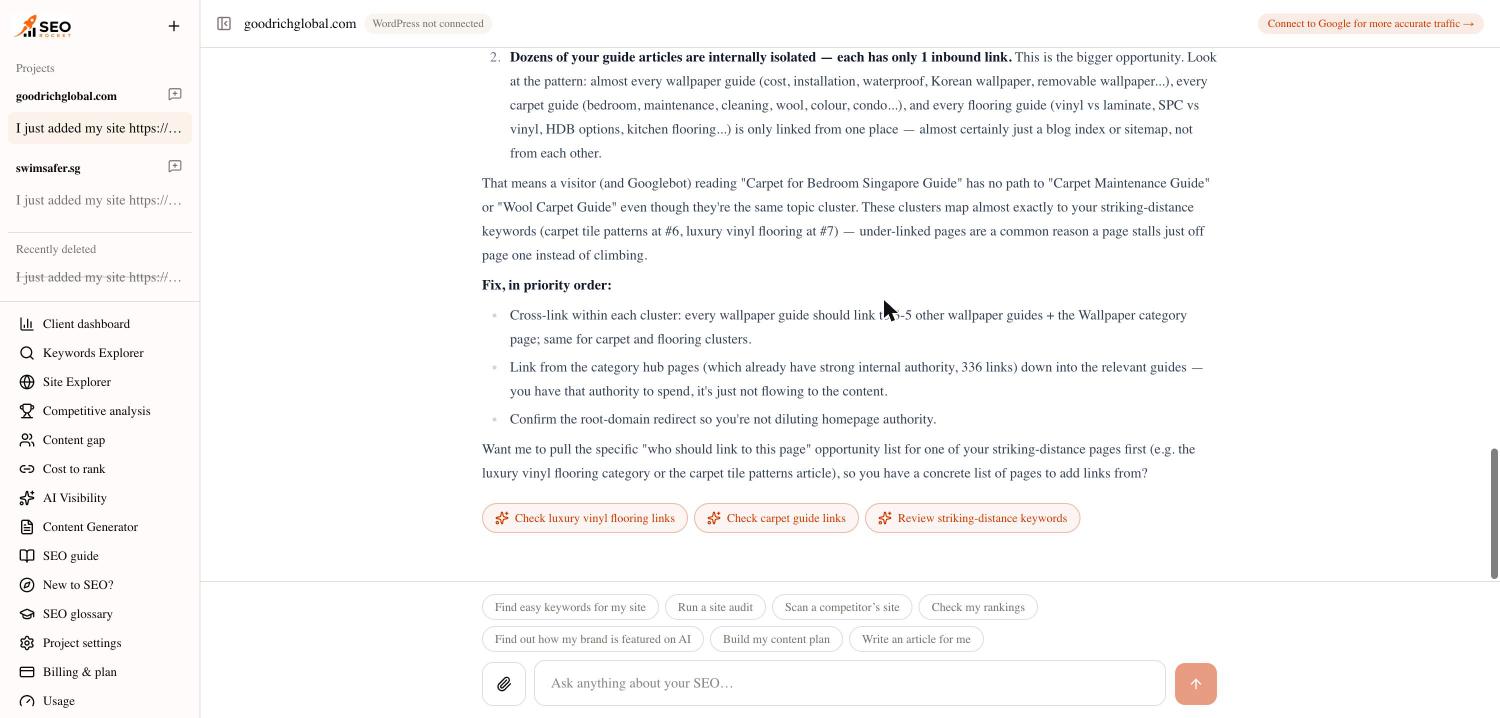
SEO Rocket can crawl your live site and show exactly which pages link to a given page — and which relevant ones don’t yet — so you spot orphaned pages and internal-link opportunities instead of guessing.
Step 7: Make the content genuinely comprehensive
Thin content doesn’t rank. Cover the topic completely: answer the main question, the obvious follow-ups, and the objections. Add examples, a comparison table where useful, and a short FAQ for related searches. The goal is that a reader needs no other page.
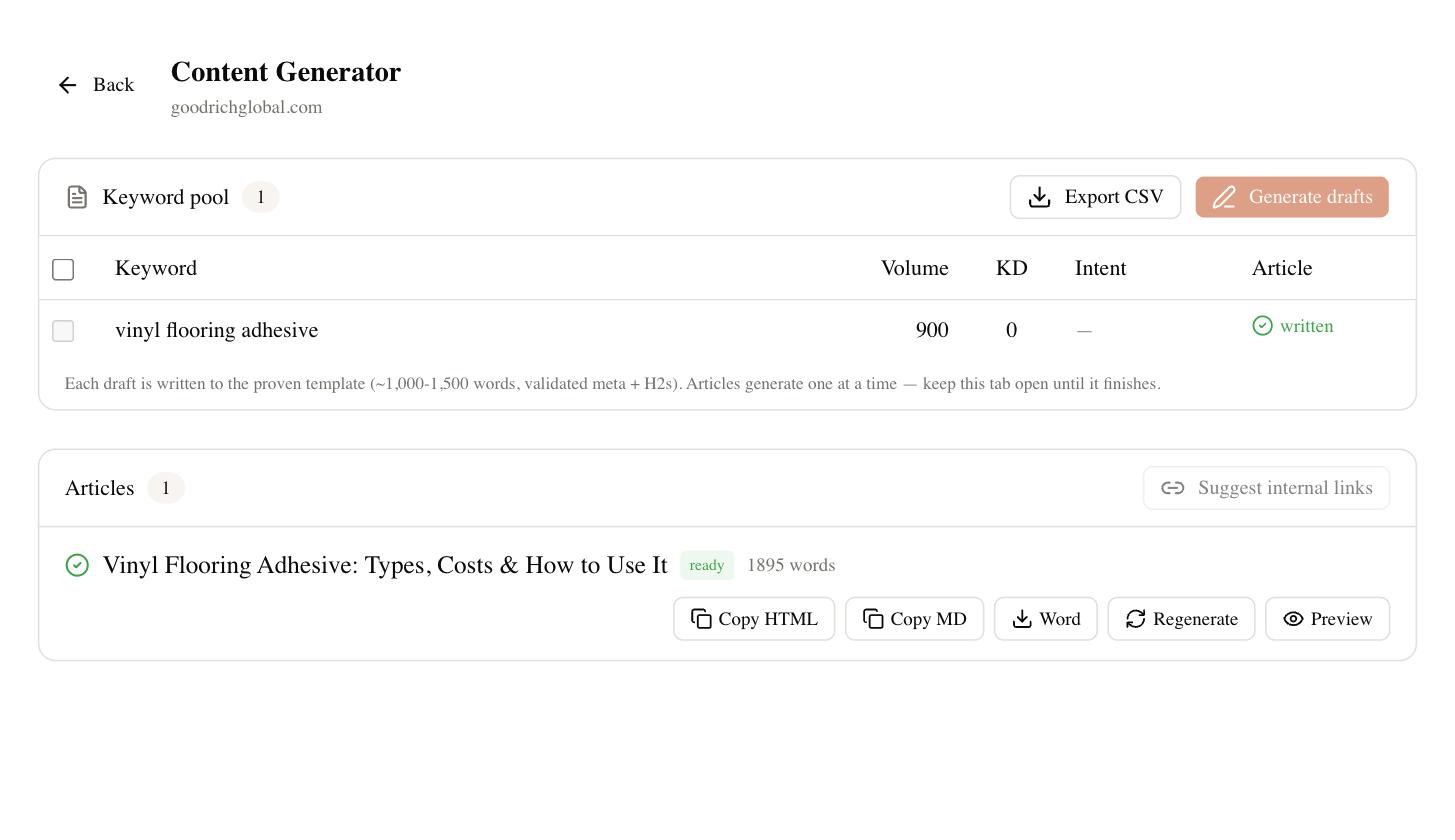
SEO Rocket’s Content Generator drafts SEO-ready articles with the title, meta, headings and structure already in place — a strong first draft you refine with your own expertise.
Step 8: Optimize your images
Add descriptive alt text to every meaningful image — it helps accessibility, image search, and gives Google more context. Compress images so they load fast, and use descriptive file names (“vinyl-flooring-kitchen.jpg”, not “IMG_4821.jpg”).
Step 9: Check the technical basics
Finally, make sure nothing on-page is broken: unique titles and metas, one H1, no broken links, a clean URL, and the page actually indexable. A quick audit catches these before they cost you rankings.
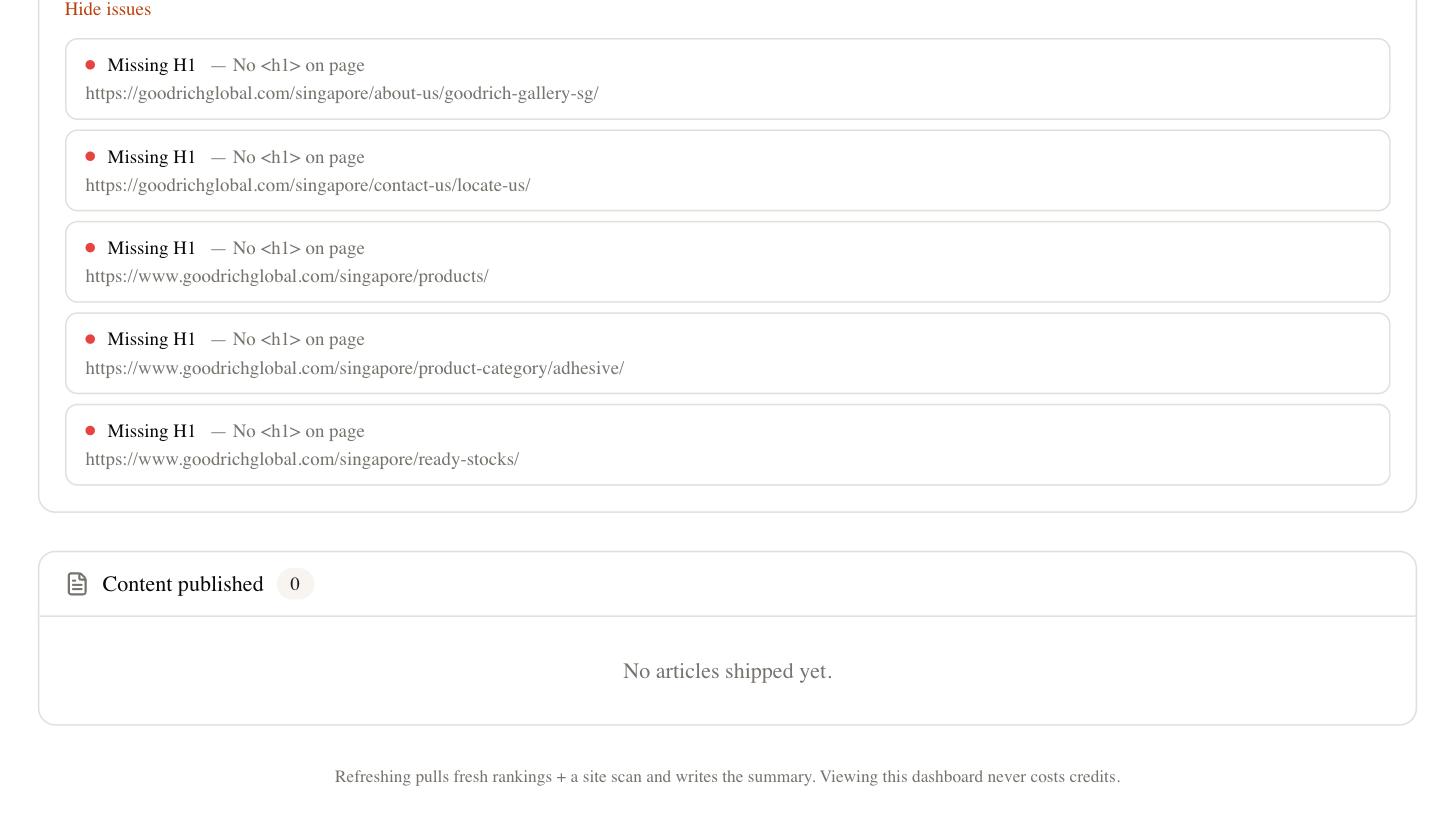
Ask SEO Rocket to run a site audit, or check your Dashboard → Site health, and you’ll see the exact on-page issues and which pages have them — ready to fix one by one.
The on-page SEO checklist
| Element | Do this |
|---|---|
| Title tag | Keyword near front, under 60 chars, click-worthy |
| Meta description | 140–155 chars, keyword, compelling |
| Headings | One H1, descriptive H2/H3 structure |
| Keyword | In title, intro, a heading, body — naturally |
| Internal links | Link to relevant pages, descriptive anchors |
| Content | Comprehensive, scannable, examples + FAQ |
| Images | Alt text, compressed, descriptive file names |
| Technical | Indexable, no broken links, clean URL |
Pro tip: Work top-down. The title tag and opening paragraph carry the most weight, so perfect those first — they deliver the biggest gain for the least effort.
Frequently asked questions
What’s the difference between on-page and off-page SEO?
On-page SEO is everything on your own page — content, titles, headings, internal links, technical health. Off-page SEO is authority earned elsewhere, mainly backlinks from other websites.
How long is a good title tag?
Under about 60 characters, so Google doesn’t truncate it in results. Lead with the keyword and make the rest earn the click.
Does keyword density still matter?
Not as a target. Use your keyword naturally where it fits and cover the topic thoroughly with related terms. Chasing a specific density reads as spam and can hurt you.
How many internal links should a page have?
There’s no magic number — link to every genuinely relevant page. For a blog post, a handful of contextual internal links is healthy. Prioritize linking to important pages you want to rank.
Putting it all together
Master these on-page basics — intent-matched targeting, a sharp title and meta, clean heading structure, natural keyword use, internal links, comprehensive content, optimized images, and a clean technical foundation — and you’ve done the highest-leverage SEO there is, entirely within your control.
SEO Rocket handles the tedious parts — auditing on-page issues, mapping internal links, and drafting well-structured content — from one chat, so you can ship optimized pages faster. Analyze your site free and see what to fix first.