Most people looking for a Semrush review already know it’s one of the biggest names in SEO — what they want to know is whether the breadth is worth the bill. That’s the right question, because Semrush is genuinely capable across a huge surface area, and it’s also one of the more expensive ways to do SEO once you add the parts that make it worth buying. This review is written from daily use, not a feature list: what it does well, where it frustrates, roughly what it costs, and who should buy it versus who’s paying for a suite they’ll never fully open.
The short version: Semrush is excellent if you run a whole marketing channel and want one login for it. If you only do SEO, you’re renting a lot of platform you won’t touch. Let’s get specific.
What Semrush does well
The keyword database is the headline strength, and it earns it. Semrush’s index is enormous, its keyword difficulty scoring is dependable, and the related-keyword and question data give you more angles per seed term than most tools bother to surface. For competitive research it’s excellent — drop in a rival domain and you get their top pages, their paid keywords, their ad copy history, and a credible estimate of where their traffic actually comes from. That last part matters, because knowing a competitor’s best page is more useful than knowing their total traffic.
Breadth is the other real advantage. Beyond core SEO you get PPC research, display advertising data, social scheduling, PR and brand monitoring, and a content toolkit, all under one subscription. A marketing team that owns paid, organic, and social at once gets genuine value from not stitching four tools together. The Position Tracking and Site Audit tools are mature and reliable, the interface — while dense — is well organized once you’ve learned it, and the reporting is polished enough to hand to a client with minimal cleanup.
Where Semrush falls short
Price is the honest headline weakness, and it compounds. The entry tier looks reasonable on the pricing page, but the limits bite fast: keyword and domain lookups are capped, historical data and some competitive features sit on higher tiers, and adding seats or extra projects pushes you up quickly. Then come the add-ons. Several of the things people assume are included — deeper local SEO, agency reporting at scale, extra AI features — are priced on top. The number you budget for and the number you pay are rarely the same.
The learning curve is the second real cost. Semrush does so much that most users genuinely use a fraction of it, and finding the one report you need can mean three menus and a guess. That’s the tax of an all-in-one: the surface area that justifies the price is the same surface area you have to learn.
The third gap is newer and matters more each quarter. Semrush was built for a search world that ran through ten blue links, and while it has bolted on AI writing help and some AI-search visibility tracking, those still feel like features added to a legacy suite rather than a workflow designed around how search works now. If your buyers increasingly ask ChatGPT or Perplexity instead of Google, you want that visibility woven through the tool, not tucked in a tab.
Semrush at a glance
Here’s the honest balance sheet before we get to price and fit.
| Area | Strength | Weakness |
|---|---|---|
| Keyword data | Huge index, reliable difficulty scoring | Lookups capped on lower tiers |
| Competitive research | Excellent — paid, organic, ads, top pages | Best features gated to higher plans |
| Breadth | SEO, PPC, social, PR in one login | You pay for a lot you won’t use |
| Site audit & tracking | Mature, dependable, client-ready reports | Project and seat limits add up |
| AI content & AI search | Present, improving | Bolted on, not native to the workflow |
| Overall cost | Fair for full-channel teams | Expensive if you only do SEO |
What Semrush roughly costs
Exact plans shift, so treat this as a band rather than a quote. Semrush’s entry plan runs into the low hundreds a month, its mid tier climbs from there, and the top individual tier lands well above that before you touch add-ons. That puts it at the premium end of the market — noticeably above lighter keyword tools, and in the same neighborhood as the other big all-in-one suite.
The important nuance is per-seat and per-project cost. A single user auditing one or two sites gets by on the entry plan. An agency running fifteen clients, or a team that needs several logins, moves up tiers and into add-ons fast, and the effective monthly cost can multiply. Before you commit, list the exact tasks you’ll run each week and check them against the tier limits — that’s where the sticker price and the real price diverge most.
Who Semrush is right for
Semrush is the correct choice for a few clear profiles. If you own an entire marketing channel — running paid alongside organic, scheduling social, watching brand mentions — the one-login breadth is worth real money and there’s no cheaper way to get all of it in one place. If competitive and PPC research is central to your work, the depth here is hard to beat. And if you’re a larger team that can absorb the cost and wants a single, well-supported platform of record, Semrush is a safe, mature bet that won’t embarrass you in front of a client.
It’s the wrong choice if you only do SEO on a modest budget, if tool-sprawl and cost are your actual pain, or if a big part of your job now is producing content and tracking whether AI answers cite your brand. In those cases you’re paying enterprise, full-suite pricing for maybe a fifth of the platform — and a leaner, AI-native tool will cover that fifth faster and for less.
The AI-native alternative worth weighing
If your real constraint is doing more with fewer tools, SEO Rocket is built for exactly that gap. Instead of learning a dense suite, you ask for what you need in plain language and it runs the lookup on real, Ahrefs-grade data underneath — keyword research, competitor gaps, backlink profiles, rank tracking. The data isn’t the differentiator; the workflow is. The same tool then drafts the article with Claude and shows you whether your brand is being cited in ChatGPT, Perplexity, and Google’s AI Overviews through its Brand Radar view.
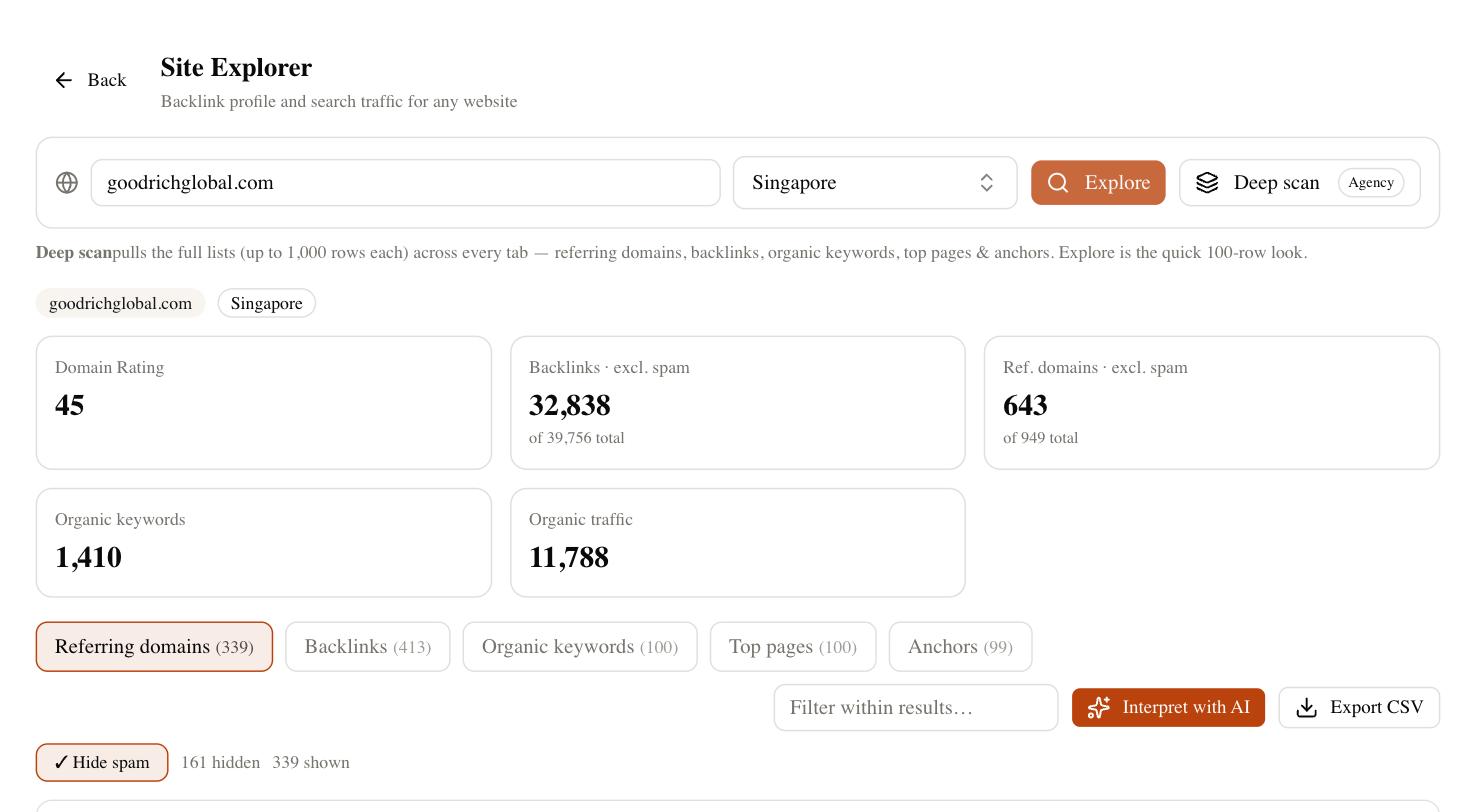
That consolidation is where the saving lands. The typical stack — a big suite for data, a separate AI writer, and a third tool to track AI-search visibility — collapses into one subscription at entry pricing that’s a fraction of a comparable Semrush plan. For consultants and agencies, the client-dashboard side means you hand a read-only report straight to a client without exporting anything. It won’t replace Semrush’s PPC and social breadth, and if that breadth is why you’d buy Semrush, this isn’t your tool. But if your week is really “check what I rank for, see what a competitor’s doing, and publish something,” SEO Rocket covers that loop with less friction and a smaller bill.
The verdict
Semrush is a genuinely strong platform that is easy to overpay for. It wins decisively when you use the whole thing — full-channel marketing teams and agencies with real competitive and PPC needs get their money’s worth and then some. It loses when you’re an SEO paying suite prices for a keyword-and-rank workflow, or when AI content and AI-search visibility are becoming core to your job and you’d rather not run three subscriptions to cover them.
So do the honest audit before you subscribe: write down the three things you actually did in an SEO tool last week. If they span paid, organic, and social, Semrush earns its price. If they’re all SEO — and especially if one of them was “write a piece of content” — you’re a strong candidate for a leaner, AI-native tool, and Semrush’s breadth is budget spent on doors you’ll never open. Whatever you choose, run your own site and two competitors through it for a full ranking cycle before you judge it; positions jitter a few spots day to day, every tool’s estimates are approximate, and the right pick is simply the one that answers your real questions fastest.