
SEO for window companies is not the same game as ranking a blog or an ecommerce store. Your buyer is a homeowner with a drafty living room or a foggy sealed unit, and they are ready to spend four or five figures. They search once or twice, call two or three companies, and book. Getting found in that narrow window is the whole job.
That buying pattern changes everything about how you should approach SEO for window companies. You are competing on local intent, on trust signals, and on a handful of high-value keywords — not on publishing volume. This guide covers what makes this niche specific, the money keywords, the highest-leverage moves, and the mistakes that quietly cost installers jobs every month.
Why window company SEO is its own thing
Most window searches carry local intent even when the searcher does not type a city. When someone searches “window replacement,” Google assumes they want an installer near them and serves a local pack plus nearby company pages. That means your Google Business Profile and your city-level service pages often matter more than any blog post you could write.
The second difference is money. A single replacement job can be worth several thousand dollars, so a keyword with modest search volume can still be your most profitable page. A term like “casement window replacement cost” might get a few hundred searches a month in your metro, but the person typing it is deep in the buying process. Volume is the wrong metric here; intent is everything.
Third, there is a split between national and local players. Manufacturers and franchise brands chase national terms like “vinyl windows” or “energy efficient windows.” A local installer almost never wins those and should not try. Your battlefield is “[service] + [city]” and “near me” searches, where a well-optimized local business beats a national brand’s generic page.
Seasonality is the fourth quirk. Replacement demand swings with the weather — spring and fall spikes, a storm-damage surge after bad weather, a slow midwinter. That does not mean you stop publishing; it means you get your storm-window and repair pages ranking before the season, because a page that goes live in October is too late for the October rush. Rankings take weeks to settle, so the work has to lead the demand.
The keywords that actually bring window buyers
Window buyers cluster into a few clear search patterns. There are product-type searches (double-hung, casement, bay, sliding, storm windows), material searches (vinyl, fiberglass, wood, aluminum), problem searches (foggy windows, drafty windows, condensation between panes), and the two that convert best: cost searches and local-service searches.
Cost keywords are gold because they signal a buyer comparing quotes, not just browsing. “Window replacement cost,” “cost to replace windows in a house,” and material-specific variants pull people who are budgeting a real project. Local-service keywords — “window installers near me,” “window replacement [city],” “storm window installation [city]” — pull people ready to call. Build a page for each service you offer in each area you serve, and you cover the searches that turn into booked estimates.
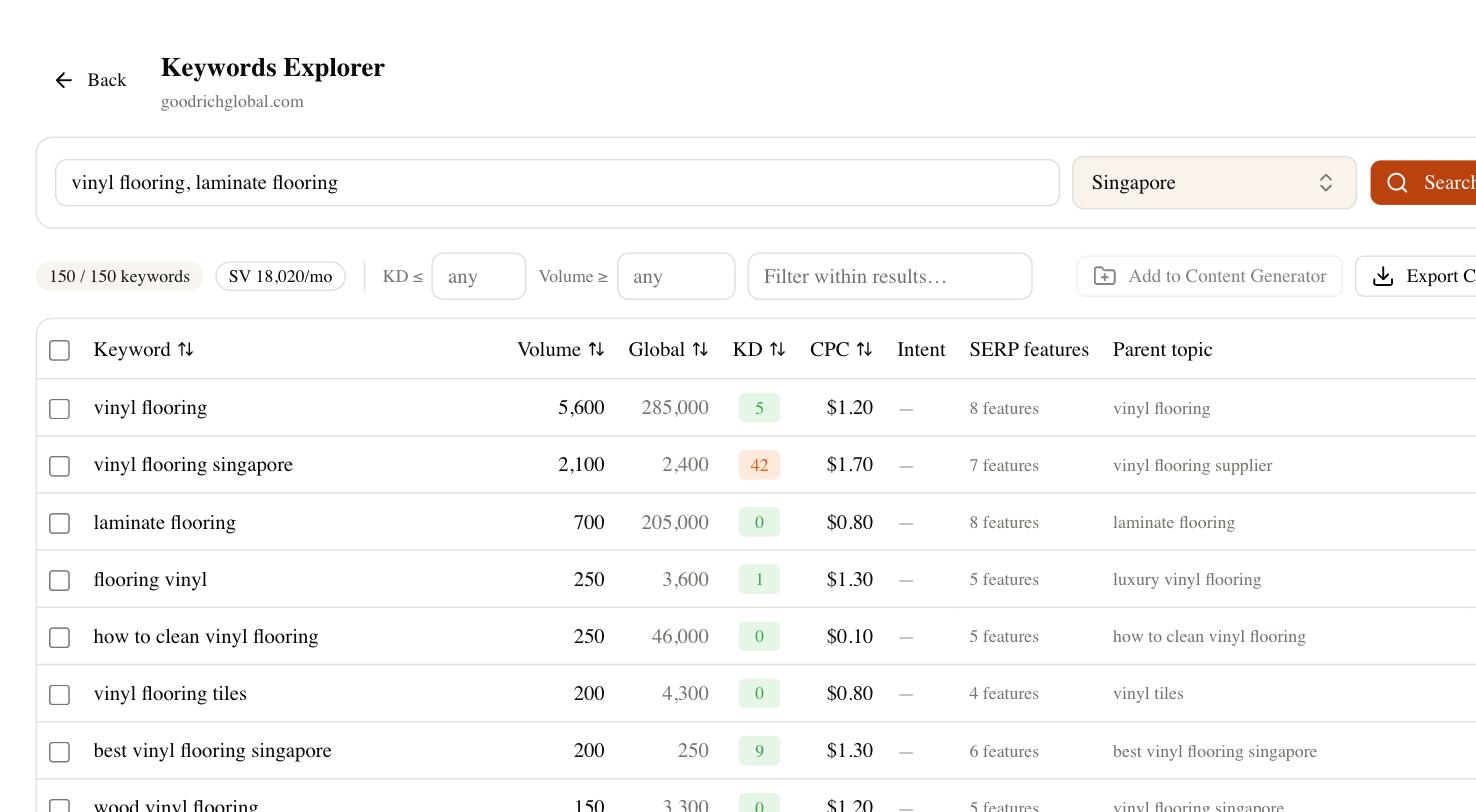
Window keyword examples by intent
Here is how a realistic window keyword map breaks down. Match the page type to the intent, and do not force a sales page onto an informational query.
| Example keyword | Intent | Page to build |
|---|---|---|
| window replacement [city] | Local buyer, high | City service page |
| window installers near me | Local buyer, high | Home + GBP + service pages |
| window replacement cost | Comparing quotes | Cost guide with quote CTA |
| vinyl vs fiberglass windows | Researching, mid | Comparison article |
| foggy windows fix | Problem-aware | Advice post linking to service |
| bay window installation | Product buyer | Product/service page |
| energy efficient windows | Broad, national | Skip or informational only |
The highest-leverage moves
Start with the money pages, not the blog. Build one strong page per core service — replacement, installation, repair, specific window types — and one page per city or suburb you serve. Write them for a person, not a crawler: real project photos, honest price ranges, the brands you install, and a clear way to request a quote. Thin, near-duplicate city pages get filtered out, so give each one genuine local detail.
Your Google Business Profile is the second lever, and often the first thing a buyer sees. Keep the category, service list, and service area accurate, post project photos regularly, and earn reviews steadily rather than in one suspicious burst. Reviews that mention the service and the neighborhood (“new casement windows in Riverside”) reinforce exactly the searches you want to rank for.
Cost content is the third lever. A genuinely useful “window replacement cost” guide — with ranges by material and window type, and what drives the price up or down — earns links, answers the question buyers actually have, and funnels them toward a quote. It is the rare informational page that pays for itself. Pair it with a few comparison pieces (“vinyl vs fiberglass windows,” “double-hung vs casement”) and you capture the research phase before your competitors get a call.
Common mistakes window companies make
The biggest one is chasing national keywords a local installer cannot win. Ranking for “vinyl windows” against manufacturers is a losing fight; ranking for “vinyl window replacement in [your city]” is very winnable. Aim where you can actually compete.
The second mistake is one giant “services” page that lists everything. Google needs a distinct, focused page per service and per location to rank you for those terms. Splitting that page into several targeted ones almost always lifts visibility. The third is neglecting reviews and the Business Profile while pouring effort into blog posts that never bring a buyer. The fourth is ignoring page speed on image-heavy sites — window companies love big galleries, and unoptimized photos push load times past the point where mobile searchers bounce.
How SEO Rocket fits window companies
SEO Rocket is built for exactly this kind of local, service-based SEO. Ask it in plain language for window keyword ideas in your metro and it pulls real search volumes and difficulty, so you can tell the “window replacement cost” pages worth building from the national terms worth skipping. The competitor gap feature shows which service and city pages nearby installers rank for that you do not — usually the fastest list of pages to build next.
From there, the same tool drafts the cost guides and service pages, tracks your local rankings so you can see which city pages are climbing, and runs a site audit that flags the slow, oversized gallery images and thin duplicate pages that hold window sites back. Its Brand Radar also shows whether AI search tools mention your company when someone asks for window installers in your area — a channel more buyers use every month. For a window company, that means one workflow from finding the right keyword to booking the job.