SEO for yoga studios is almost entirely a local game, and that changes everything about how you should approach it. Nobody drives across the city for a vinyasa class, so you are not competing with the whole internet — you are competing with the four or five studios inside your prospect’s comfortable travel radius. Win that small map and you win the booking.
That narrow focus is good news. It means SEO for yoga studios rewards a handful of specific, high-leverage moves rather than a bottomless content operation. This guide covers how your future students actually search, the keywords that turn into paying members, and the mistakes that keep good studios buried below aggregator directories.
How people actually search for a yoga class
Your buyers fall into two groups, and they search very differently. The first is ready to book: they type “yoga classes near me,” “hot yoga downtown,” or “beginner yoga [your city]” on their phone, and they choose within an hour. This is high-intent, local, and it is where your revenue lives. The second group is curious — “is hot yoga good for beginners,” “what to wear to first yoga class” — and they are worth capturing, but they book weeks later, if at all.
Most studios pour energy into the curious group with blog posts and ignore the ready-to-book searches, which are far fewer in number but worth ten times as much. Flip that priority. Nail the transactional local terms first, then add helpful content once the money pages are solid.
There is a seasonal rhythm worth planning around, too. January and early September are when class searches spike as people reset their habits, so your money pages need to be live and ranking before the wave, not built during it. Rankings take months to settle, which means the work you do in autumn pays off in the new-year rush. Treat SEO as something you plant a quarter ahead, not a switch you flip when the studio feels quiet.
The keywords that actually fill classes
Volume is a trap in this niche. A term like “yoga benefits” gets huge national searches and sends you nobody who can walk through your door. What you want are specific, local, style-based, and audience-based phrases — lower volume, far higher intent.
| Keyword example | Intent | Priority |
|---|---|---|
| yoga classes near me | Ready to book, local | Highest |
| hot yoga [city] | Ready to book, style-specific | Highest |
| prenatal yoga [city] | Ready to book, high-value niche | High |
| beginner yoga classes [city] | Ready to book, low-anxiety entry | High |
| yin yoga [neighborhood] | Ready to book, specific style | Medium |
| 200 hour yoga teacher training [city] | Considered purchase, high ticket | Medium |
| what to wear to first yoga class | Informational, top of funnel | Low |
Notice the pattern: style plus location, or audience plus location. Prenatal, restorative, and teacher training terms are gold because they carry both clear intent and higher lifetime value — a teacher-training lead is worth a hundred drop-in searches. Build one strong page for each style you actually teach.
Your Google Business Profile does most of the work
For a local studio, your Google Business Profile is not a nice-to-have — it is the single biggest ranking factor for those “near me” searches. The map pack sits above the regular results, and most people never scroll past it. If your profile is thin, you lose the booking before your website is even considered.
Get the fundamentals right: exact category (Yoga studio, plus secondary categories for the styles you offer), accurate hours including holiday changes, real photos of your actual space and classes, and a booking link. Then work reviews relentlessly. Ask every regular after a class they loved, and reply to each review — Google reads that engagement, and so do prospects deciding between you and the studio two blocks over.
Use the profile’s other features while you are there. Post updates about new class times or a fresh teacher-training intake, keep your services list current with each style you teach, and answer the questions people submit. None of this takes long, but studios that treat the profile as a living page consistently outrank those that set it up once and forget it. Consistency of effort beats a one-time burst almost every time.
Build pages around real searches, not your class grid
Most studio websites have one problem: a single “Classes” page listing every style in a schedule widget, with nothing for Google to rank against a specific search. Someone searching “restorative yoga [city]” lands on a generic timetable and bounces.
Think of each style as its own small business with its own audience. A prenatal student and a teacher-training applicant have almost nothing in common, so one blended page serves neither well. Give each the page it deserves.
The fix is a dedicated page for each style and each audience you serve — a hot yoga page, a prenatal page, a beginners page, a teacher-training page. Each one names the location in the title and first paragraph, answers the obvious questions (what to expect, what to bring, how hot the room gets, is it beginner-friendly), and links to booking. These pages match how people search and give you something concrete to rank. They also feed your AI visibility, since tools like ChatGPT increasingly answer “best beginner yoga studio in [city]” by reading pages exactly like these.
Common mistakes yoga studios make
A few errors show up again and again, and each one quietly hands business to a competitor.
- Chasing national keywords. Ranking for “types of yoga” feels productive and sends zero local bookings. Stay local and specific.
- Inconsistent name, address, and phone. If your details differ across your site, Google profile, Yelp, and ClassPass, Google trusts you less. Make them identical everywhere.
- A schedule app that hides your content. Many booking widgets load class info in a way search engines cannot read. Keep human-readable, indexable text on the page itself.
- Ignoring reviews. A studio with 30 reviews will usually outrank a better studio with 4, all else equal.
- No neighborhood language. “Serving Southbank and the CBD” helps you rank for the sub-areas people actually type.
Where SEO Rocket fits
The hardest part of SEO for yoga studios is knowing which specific phrases in your city are worth targeting and which are dead ends. SEO Rocket’s Keywords Explorer lets you enter a seed like “hot yoga” or your city name and see real search volume, difficulty, and dozens of related terms you would never guess — the exact style-plus-location combinations your neighbors are searching.
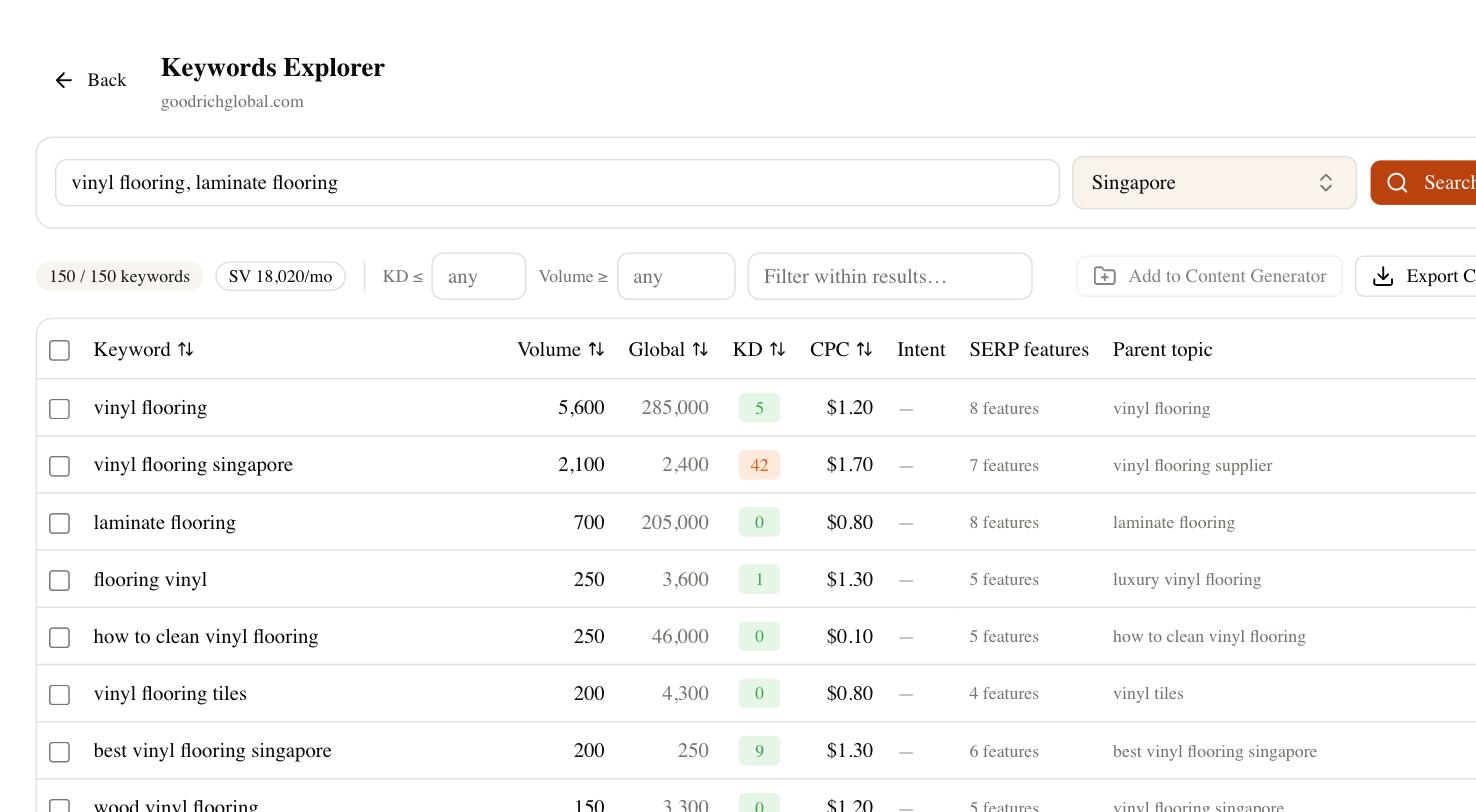
From there, the competitor gap tool shows which of those keywords the studio ranking above you already owns, so you know precisely which pages to build first. Rank tracking then confirms whether your new hot-yoga page is climbing, and Brand Radar shows whether AI search engines mention your studio when someone asks for a recommendation. It is one workflow instead of four tools, which matters when you are a studio owner, not a full-time marketer.
A simple priority checklist
If you do nothing else, do these in order. Each step builds on the last, and the first three will move the needle faster than any blog post.
- Claim and fully complete your Google Business Profile, correct category included.
- Make your name, address, and phone identical across every listing.
- Set up a simple, ongoing review request after favorite classes.
- Build one indexable page per style and audience, each naming your city.
- Research your local keywords properly before writing a word of copy.
- Track rankings monthly and give every change a full cycle before judging it.
None of this is fast — local rankings take a few months to settle, and positions jitter day to day. But the studios that win their map are rarely the biggest. They are the ones that got the basics right and kept showing up. Start with your profile, fix your pages, and let the compounding do the rest.