Most advice on writing for featured snippets stops at “answer the question in about 40 words.” That’s not wrong, but it’s the last 10% of the job dressed up as the whole thing. Google doesn’t hand out the snippet box to the most concise answer — it hands it to the page whose structure most cleanly matches the answer format the query implies, drawn almost exclusively from pages already ranking on page one. Miss the format and no amount of tight prose gets you there. Nail the format and a page sitting at position six can leapfrog everything above it into the box at the top of the results.
What a Featured Snippet Actually Is
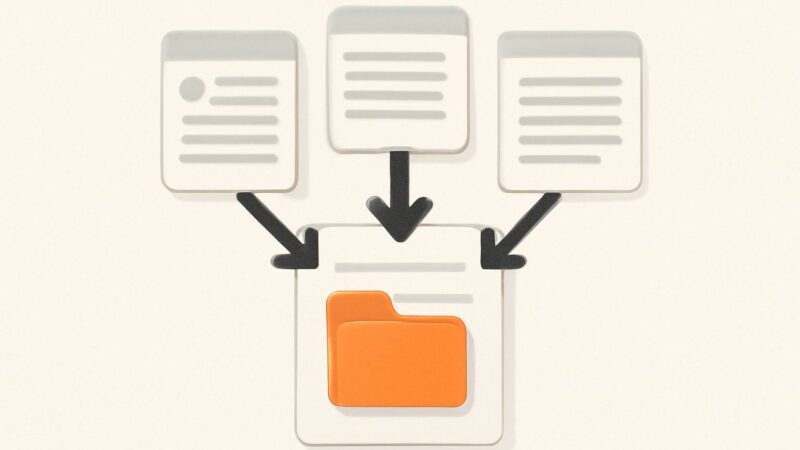
A featured snippet is the boxed answer Google lifts from a ranking page and displays above the standard results — the slot people call “position zero.” Google isn’t writing anything; it’s extracting a passage, list, or table from a page it has already indexed and deciding that fragment answers the query well enough to promote. That mechanical detail is the whole game. You are not persuading Google to feature you. You are making one specific block of your page so obviously the answer that its extraction algorithm can’t ignore it.
This is why writing for featured snippets is a formatting discipline as much as a writing one. The winning passage has to be self-contained: it has to make sense pulled out of context, because that’s exactly what happens to it. If your answer only reads correctly with the two paragraphs above it as setup, it will never be chosen.
The Three Formats — and Why Format-Matching Is Everything
Featured snippets come in three practical shapes, and each one maps to a different type of query. Diagnosing which shape a query wants is the single highest-leverage decision in the whole process:
- Paragraph snippets — the most common. Triggered by “what is,” “why,” “how does,” and definitional or explanatory queries. Google pulls a 40–60 word passage.
- List snippets — ordered (numbered) for process and “how to” queries, unordered (bulleted) for “types of,” “best,” or “examples of” queries. Google lifts the list markup directly.
- Table snippets — for comparison, pricing, specs, or data queries where the answer is inherently tabular. Google extracts genuine
<table>markup, not a paragraph describing numbers.
The mistake amateurs make is writing everything as prose. If the query is “steps to file a return” and you bury the steps in flowing paragraphs, you’ve handed the list snippet to the competitor who used an ordered list. Read the query, decide the format, then write to it.
Rule One: You Have to Rank in the Top 10 First
Here’s the constraint every snippet guide should lead with: Google draws featured snippets almost entirely from pages already ranking in the top ten for that query, with the large majority coming from the top five. Writing for featured snippets is therefore not an alternative to ranking — it’s a bonus you unlock after you rank. If your page isn’t on page one yet, snippet formatting is premature; your job is still to earn the ranking through relevance, coverage, and links.
The upside of this rule is what makes snippets worth chasing: because the box sits above the number-one organic result, a page at position four or six can effectively outrank three or five competitors by winning it. You don’t need to be first. You need to be top-ten and better-formatted than whoever currently holds the box.
The Paragraph Snippet Pattern
For definitional and explanatory queries, the reliable pattern is a header that restates the question, immediately followed by a direct answer of roughly 40 to 58 words that stands alone. Lead with the answer itself — not a windup, not “there are several factors to consider.” State the conclusion in the first sentence, then use the remaining words to qualify or add the one piece of context a reader genuinely needs.
A worked micro-example. For the query “what is a content brief,” a snippet-ready answer reads: “A content brief is a document that tells a writer exactly what to produce for a page — the target keyword, search intent, required subtopics, word-count range, internal links, and tone. It aligns writer and editor before drafting, reducing revisions and keeping the piece on-strategy.” That’s 44 words, self-contained, definition-first. Put that block right under an H2 phrased as the question and you’ve built a clean extraction target.
Winning List and Table Snippets
List snippets reward literal structure. If the query is procedural, use an ordered <ol> with short, parallel steps — Google frequently lifts the first several list items verbatim, sometimes with a “more items” link back to your page. Keep each item to a single action phrased consistently (“Audit the page,” “Update the data,” “Republish and resubmit”), because ragged, sentence-long items extract poorly.
Table snippets are underused and therefore easier to win. When a query compares options or asks for figures across categories, build an actual HTML table with a clear header row. Google can read and promote it; a paragraph that says “Plan A costs more than Plan B” cannot become a table snippet no matter how accurate it is. Match the visible answer format to the query’s implied answer format, every time.
Front-Load the Answer, Then Go Deep
Snippet-friendly pages follow an inverted pyramid: the direct answer sits near the top of the relevant section, and the depth follows. This isn’t only a snippet tactic — it mirrors how readers and AI systems both consume content, scanning for the answer and then reading down for justification. A page that makes Google hunt through three paragraphs of preamble to find the answer loses to one that leads with it.
Structure the page so that each major sub-question gets its own descriptive H2 or H3, with the crisp answer immediately beneath it. That does two things at once: it creates multiple clean extraction targets across the page, and it makes the page genuinely more useful to skim. Good snippet structure and good reader experience are the same structure.
Snippet Bait Without Keyword Stuffing
There’s a fine line between engineering an extractable answer and stuffing keywords, and the honest version stays on the right side of it. The technique is to mirror the query’s phrasing once, naturally, in the header and the opening sentence of the answer — not to repeat it five times. If someone searches “how to outline an article,” your H2 can be “How to Outline an Article” and your first sentence can begin “To outline an article, start by…” That single, natural echo of intent is enough for the extractor to lock on.
What you are optimizing is clarity of match, not keyword density. Over-repeating the phrase makes the passage read worse to humans without helping the machine — modern extraction understands paraphrase and synonyms. Say it once, cleanly, then answer.
Featured Snippets in the AI Overview Era
Be honest about the landscape: AI Overviews now sit above featured snippets on a growing share of informational queries, and on some searches the classic snippet box has been absorbed into that generative answer entirely. This has cut click-through on some snippet placements, and it’s a real shift, not a rounding error. But the underlying skill hasn’t lost value — it has changed jobs. The same structural traits that win a featured snippet (a self-contained, format-matched, front-loaded answer) are exactly what make a passage easy for an AI Overview to cite. Writing for featured snippets has quietly become training for AI citation.
So the play isn’t to abandon snippets; it’s to treat clean, extractable answers as the format that earns visibility in both systems. A page structured to be quotable wins the snippet where the snippet survives, and gets cited in the AI answer where it doesn’t. That dual payoff is why the discipline still earns its place in a content brief.
How to Find Snippet Opportunities Worth Chasing
Don’t format blindly — target queries where a snippet already exists and you already rank nearby, because those are the winnable ones. The workflow: pull the keywords your page ranks for in positions two through ten, filter to those that currently show a featured snippet in the results, and check whether the current holder’s answer is beatable — vague, dated, wrong format, or poorly structured. Those are your steal targets.
This is one place a tool earns its keep. Inside SEO Rocket, rank tracking on real Ahrefs data surfaces exactly which of your pages already sit in the top ten, and its keyword research flags the queries with snippet features — so you spend formatting effort only where you’re one clean rewrite away from the box, not on queries you can’t rank for yet. It turns “optimize everything” into a short, prioritized list.
A Repeatable Checklist for Writing Snippet-Ready Content
Bring the whole process down to a sequence you can run on any target page:
- Confirm you rank top-ten for the query — if not, fix the ranking before formatting.
- Read the SERP and identify the live snippet format (paragraph, list, or table) so you match it, not fight it.
- Restate the query in an H2 or H3 exactly where the answer will go.
- Front-load a self-contained answer — 40–58 words for paragraphs, parallel items for lists, real markup for tables.
- Echo the query phrasing once, naturally, then stop; add depth below the answer.
- Ship multiple extraction targets per page — one crisp answer under each sub-question.
- Re-check after a few weeks; snippet ownership shifts, and a small rewrite often reclaims a lost box.
SEO Rocket’s validation-gated AI writer bakes several of these in — it enforces descriptive section headers, a required section count, and complete coverage of subtopics, which is the same structure that produces extractable answers. The human editorial pass still decides which passage is the answer and whether it’s actually correct; the tool just makes producing snippet-shaped drafts the default instead of the exception.
Frequently Asked Questions
How long should a featured snippet answer be?
For paragraph snippets, aim for roughly 40 to 58 words — long enough to answer completely, short enough to fit the box. The bigger rule is that the passage must stand alone: it should make full sense lifted out of the page, because that’s precisely what Google does with it. Lead with the answer, then add a single clause of essential context.
Do I need to rank on page one to win a featured snippet?
Effectively, yes. Google draws featured snippets almost entirely from pages already in the top ten, with most coming from the top five. Writing for featured snippets is a bonus you unlock after ranking, not a shortcut around it. If your page isn’t on page one, invest in relevance and links first, then format for the box.
Are featured snippets still worth it with AI Overviews around?
Yes, with a shift in framing. AI Overviews have absorbed some snippet real estate and reduced clicks on certain queries, but the skill still pays off: the same self-contained, format-matched, front-loaded answers that win snippets are what AI systems cite. Structuring content to be quotable earns visibility in both the snippet box and the generative answer.