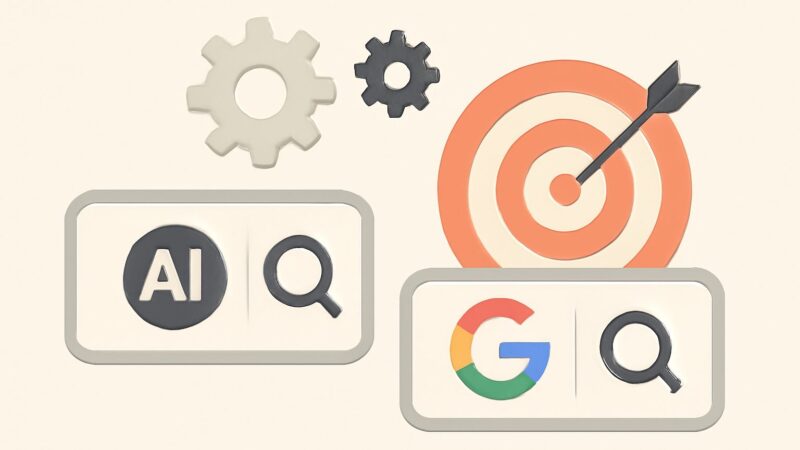
The fastest-moving corner of search is also the one drowning in confident nonsense, and most of the AI SEO myths circulating in 2026 are expensive to believe. Some tell you SEO is finished so you stop doing the work that still drives most of your traffic. Others sell you a magic file that fixes everything. Both are wrong in ways that cost real money. This is a debunking grounded in mechanisms, not vibes — what’s actually true about optimizing for ChatGPT, Gemini, AI Overviews, and Perplexity, and what’s marketing folklore you should ignore.
Myth: SEO Is Dead, Only GEO Matters Now
This is the loudest myth and the most self-serving, usually pushed by someone selling a GEO course. The reality is that generative engines are built on top of search infrastructure, not instead of it. AI Overviews draw from Google’s index. ChatGPT Search and Perplexity crawl and cite live web pages. The pages that get pulled into AI answers are overwhelmingly pages that already earn organic visibility, because the same signals — relevance, authority, clarity, corroboration — feed both systems. GEO isn’t a replacement for SEO; it’s a layer on top of it. The businesses winning AI visibility are almost never the ones who abandoned SEO. They’re the ones who did SEO well and then optimized the presentation for extraction.
Myth: Adding llms.txt Gets You Into AI Answers
The llms.txt file has been hyped as the robots.txt of the AI era — add one and the models will find and favor you. Be honest about what it is: a proposed, emerging convention for offering a clean, LLM-friendly map of your content. It is not an official Google ranking mechanism, and there’s no evidence the major generative engines treat its presence as a ranking boost. Adding one is low-cost and reasonable if you want to publish a tidy content index, but treating it as a shortcut into AI answers is magical thinking. What actually gets you cited is being a trustworthy, well-structured, corroborated source — the same unglamorous work llms.txt can’t substitute for.
Myth: AI-Generated Content Gets You Penalized
The opposite myth to “AI content is free traffic,” and equally wrong. Google’s stated position is that it rewards helpful content regardless of how it’s produced and penalizes unhelpful content regardless of how it’s produced. There’s no AI-detection penalty. What actually got punished in the 2024 core updates was thin, unedited, mass-produced content at scale — which happened to be AI-generated, but the problem was the thinness, not the tool. Human-edited, accurate, genuinely useful AI-assisted content ranks fine and gets cited. The failure mode is publishing raw model output with no editorial standard. This is exactly why SEO Rocket’s AI article writer runs hard validation gates — minimum word counts, structure requirements, a repair loop that catches thin output — before anything reaches a draft. The gate isn’t compliance theater; thin content loses whether a human or a model wrote it.
Myth: You Can’t Measure AI Visibility
A convenient myth for anyone who’d rather not be held accountable. It’s true that classic rank tracking is blind to AI answers — knowing you rank third organically tells you nothing about whether ChatGPT recommends you. But the surface is measurable; you just need the right instrument. AI-visibility tracking checks how often your brand gets surfaced and cited across ChatGPT, Gemini, AI Overviews, and Perplexity for the queries you care about, and how that moves over time. SEO Rocket built exactly this because “we can’t measure it” was becoming an excuse for flying blind. You can see your share of voice in AI answers, watch it change, and diagnose why — the surface is invisible only if you don’t look.
Myth: Structured Data Is a Magic AI Ranking Switch
Schema markup gets oversold in both directions. The myth is that piling on structured data is a lever that forces you into AI answers. The truth is more mundane and more useful: structured data helps models understand your entities and attributes accurately, which makes you easier to cite correctly, but it doesn’t manufacture authority you haven’t earned. Schema is clarification, not persuasion. It ensures a model gets your facts right — your product’s price, your business’s location, your article’s author — so when it does decide to cite you, it cites you accurately. Skip it and you risk being misrepresented or left out on ambiguity. Over-rely on it and you’ll wonder why perfect markup on a thin page still gets ignored.
Myth: More Content Always Means More AI Citations
Volume was a blunt instrument that sort of worked in classic SEO and works even less in AI search. Generative engines favor information gain — sources that add something not already in the answer — over the tenth rephrasing of the same advice. Publishing a hundred near-duplicate posts doesn’t multiply your citations; it dilutes your topical clarity and gives models redundant sources to ignore. What earns citations is distinctive, substantive coverage: original data, genuine expertise, a clearer explanation, a real point of view. One authoritative page that says something new beats ten that echo the consensus.
- Information gain beats volume — add something, don’t echo the answer.
- Corroboration beats self-promotion — third-party mentions carry more weight than your own claims.
- Clarity beats cleverness — extractable, answer-first passages get cited; buried insight doesn’t.
Myth: AI Search Is a Fad You Can Ignore
The last myth is the comfortable one: this will blow over, so keep doing exactly what you did in 2020. Generative answers are now embedded directly in Google’s results and in the assistants people reach for by reflex. Ignoring the channel doesn’t make it go away — it just means a competitor gets the recommendation slot while you wait for a rollback that isn’t coming. The rational stance isn’t panic and it isn’t denial. It’s treating AI visibility as one more measurable surface built on fundamentals you already know. Note too that AI search doesn’t cannibalize your traffic so much as change where the decision happens — a shopper who gets your name from ChatGPT still lands on your site to convert. The channel is additive if you’re in the answer and invisible if you’re not, which is a strong argument for engaging now rather than waiting to see whether it sticks.
The Bottom Line
Strip away the AI SEO myths and what’s left is reassuringly familiar: earn authority, publish content that adds real information, make your entities legible with clean structure, corroborate across trusted sources, and measure your presence instead of guessing. There’s no magic file, no penalty for using AI well, no reason to abandon SEO, and no excuse for flying blind. SEO Rocket’s AI-visibility tracking, validation-gated writer, and competitor gap analysis exist to run that unglamorous work at scale — the same discipline proven across 1,000,000+ ranking pages, now pointed at the AI answer.