This moz review is for the person deciding whether Moz Pro deserves a spot in their toolkit, not a spec sheet dressed up as an opinion. Moz has been around longer than almost anyone in this space, and that history cuts both ways — it built genuine trust, and it also means some of the product still feels like it was designed for how SEO worked a decade ago. This moz review walks through what the tool does well, where it quietly disappoints, and who should keep looking.
You will get the honest version here, including the parts where a cheaper or more modern tool is the smarter buy. Moz is a solid product with a real personality; the question is whether that personality matches your work.
What Moz Pro is, quickly
Moz Pro is an all-in-one SEO platform covering keyword research, rank tracking, site audits, and link analysis, wrapped in one of the friendlier interfaces in the category. It is the home of Domain Authority and Page Authority, the two metrics Moz popularized and that plenty of people still quote in outreach emails and pitch decks. If you have ever seen a site described as “DA 45,” that number came from Moz.
The pitch has always been approachability. Where some tools drown you in tabs and raw exports, Moz tries to hand you a clear next action. For a beginner or a marketing generalist who does SEO as one job among five, that clarity is worth real money.
What Moz does well
The interface is the standout. Moz is genuinely easy to learn, and the Keyword Explorer strikes a good balance between depth and readability — it surfaces difficulty, opportunity, and a priority score without making you feel like you need a data science degree. For someone new to the discipline, that on-ramp shortens the time between opening the tool and doing something useful.
MozBar, the free browser extension, is another quiet win. Being able to glance at authority metrics for any page while you browse is a habit a lot of SEOs never give up, even after they switch primary tools. The rank tracking is dependable and the reports are clean enough to send to a client without heavy editing.
Domain Authority itself, whatever you think of any single metric, is useful precisely because it is widely understood. When you tell a client their DA moved from 30 to 38, they know roughly what you mean. That shared vocabulary has value that a technically superior but obscure metric does not.
Where Moz falls short
The honest weaknesses start with the link index. Moz’s crawl of the web is real but smaller and slower to refresh than the largest competitors, so if backlink analysis is central to your work, you will notice gaps — referring domains that a rival tool shows and Moz misses, or freshness that lags by weeks. For link-building at scale or competitive link audits, that gap matters.
Keyword database size is the second soft spot. Moz covers the major markets well, but once you work in smaller countries or long-tail niches, the data thins out faster than it does on the biggest platforms. You will still find plenty to work with; you just may not find everything.
The bigger structural issue is that Moz, like most legacy suites, treats content writing and AI-search visibility as somebody else’s problem. There is no serious AI writing assistant built in, and nothing that tells you whether your brand gets cited in ChatGPT, Perplexity, or Google’s AI Overviews. In 2026 that is no longer a nice-to-have — a page that ranks first can still be invisible in an AI answer, and Moz simply does not look there.
Moz Pro at a glance
Here is the quick read before you decide. Treat the price band as directional; published pricing shifts, and third-party metrics like Domain Authority are estimates, not gospel.
| Area | Verdict | Notes |
|---|---|---|
| Ease of use | Strong | One of the gentlest on-ramps in SEO software |
| Keyword research | Good | Clear metrics; thinner in small markets and deep long-tail |
| Link index | Fair | Smaller and slower to refresh than the largest competitors |
| Rank tracking | Good | Dependable, clean client-ready reports |
| AI writing | Missing | No built-in content generation |
| AI-search visibility | Missing | No tracking of ChatGPT, Perplexity, or AI Overviews |
| Rough price band | Mid $$ | Entry plans in the low hundreds per month |
How Moz compares to the alternatives
Against Ahrefs and Semrush, Moz loses on raw data depth and wins on friendliness. Ahrefs has a larger, fresher link index and Semrush has the broader all-in-one feature spread, but both are denser to learn and price higher once you add seats. If your reason for considering Moz is that the big two felt overwhelming, that instinct is sound — Moz really is easier to live in day to day.
Where the comparison gets interesting is the newer, AI-native category. Tools like SEO Rocket approach the job from a different starting point: instead of a wall of dashboards, you ask for what you need in plain language and it runs the lookup on real, Ahrefs-grade data underneath. The same tool then drafts the article and shows you whether your brand is being cited across AI search — the exact two things Moz leaves you to solve with separate subscriptions.
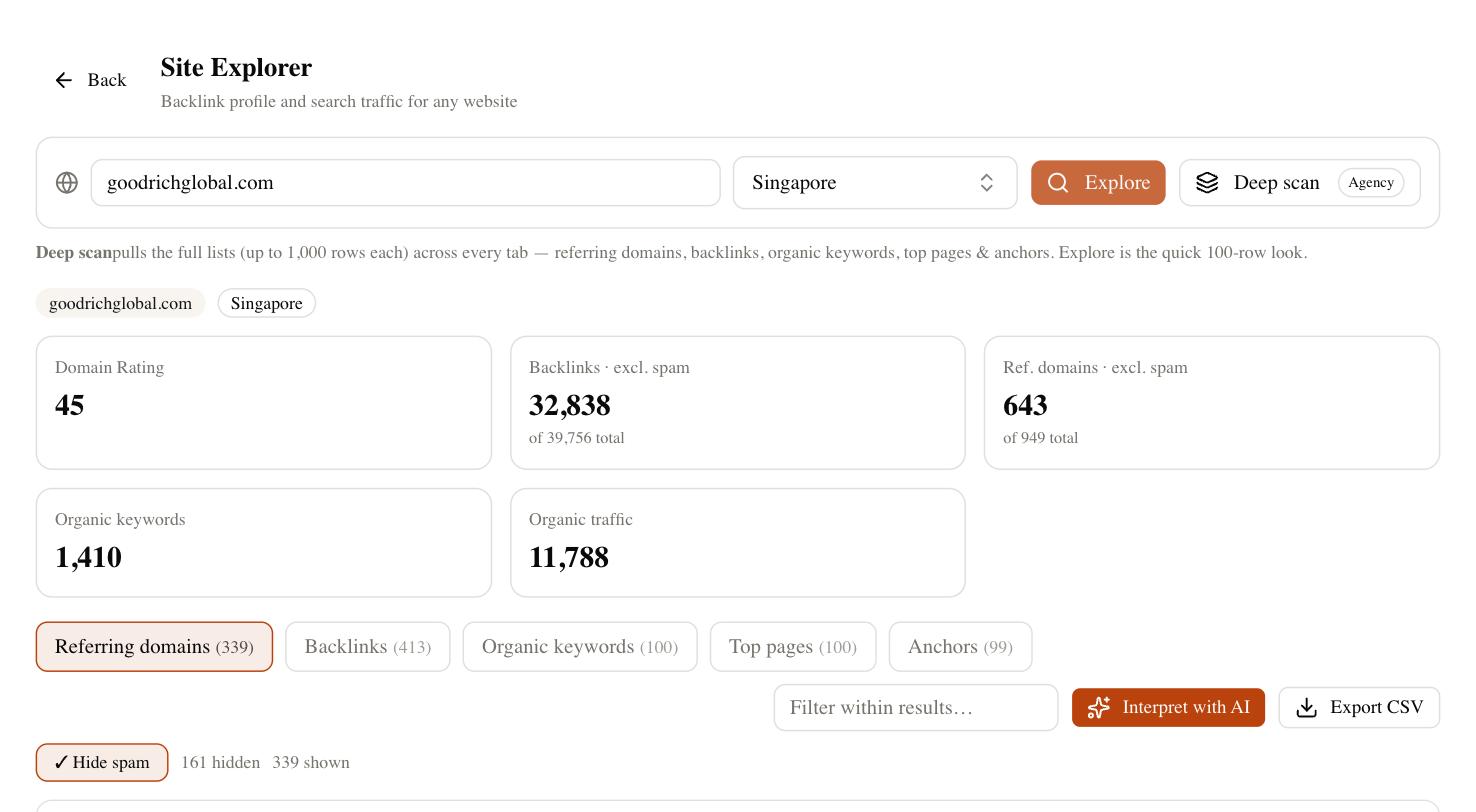
That is not a knock on Moz so much as a sign of where the work has moved. If you would otherwise pay for Moz plus a separate AI writer plus an AI-visibility tracker, folding all three into one workflow is a real saving, and the entry pricing tends to land friendlier than a comparable legacy stack. For a consultant or small agency juggling several clients, that consolidation is often the deciding factor.
Who Moz Pro is right for
Moz suits a specific person well. If you are early in your SEO journey, or you handle marketing broadly and want a tool that will not fight you, Moz’s clarity is a genuine advantage — you will be productive on day one instead of week three. In-house marketers at small and mid-size companies who mainly need keyword ideas, straightforward rank tracking, and clean reports get real value without the intimidation factor of the heavyweight suites.
It also suits anyone whose clients or stakeholders already speak in Domain Authority. Fighting that shared language rarely pays off, and Moz gives you the metric everyone already recognizes.
Moz is a weaker fit if your work is backlink-heavy, if you operate in smaller international markets, or if AI content and AI-search visibility are becoming part of your remit. In those cases you will outgrow the data or find yourself buying two more tools to cover the gaps — at which point the friendly price stops looking so friendly.
The verdict
The honest bottom line of this moz review: Moz Pro is a good, approachable SEO tool with a trusted metric and a genuinely gentle learning curve, held back by a mid-tier link index and a total absence of the AI features that increasingly define the work. It is a smart first tool and a comfortable long-term home for beginners and generalists.
Before you commit, do the simple test that cuts through any review, this one included. Write down the three tasks you actually did in an SEO tool last week. If they were “check what I rank for,” “get keyword ideas,” and “send a client a report,” Moz covers them comfortably and pleasantly. If any of them was a deep link audit, or “figure out why ChatGPT never mentions us,” Moz will leave you short — and a heavier data tool or an AI-native platform is the better place to spend your budget. Match the tool to how you actually spend Tuesday, not to the length of its feature page, and you will pick right.