
SEO for small business is a different game than SEO for a venture-backed brand, and most advice online forgets that. You don’t have a content team, a link-building budget, or six months to wait. You have a few hours a week, one website, and a real need for the phone to ring. The good news is that being small is often an advantage online — you can target the exact searches your buyers make locally, where the biggest players either can’t compete or don’t bother to.
This guide is about SEO for small business that respects that reality. No 40-item audit you’ll never finish. Just what makes small-business SEO different, the handful of moves that return the most for the least effort, and the mistakes that quietly cost people their first year.
Why small-business SEO is a different game
A national brand competes on domain authority and thousands of pages. You can’t win that fight, and you shouldn’t try. Your edge is specificity: intent, location, and trust. Someone searching “emergency plumber near me” or “bookkeeper for restaurants in Austin” is close to buying, and those searches are won by relevance and proximity far more than by raw link count. The weakest page ranking on the first result for those terms is usually beatable — often it’s a thin directory listing or a competitor who never updated their site.
That’s the mindset shift. Instead of chasing broad, high-volume keywords that established sites already own, you go after the narrower, high-intent searches where a focused local page can legitimately outrank a bigger, sloppier one. Fewer visitors, but a much higher share of them are ready to hire you.
Start with the searches your buyers actually make
Before you write a word, find out what people type when they want what you sell. Keyword research isn’t guessing — it’s checking real search volumes, how hard each term is to rank for, and whether the intent is commercial. A term like “how does plumbing work” is a bad target; “water heater replacement cost” is a great one, because the person searching it is pricing a job.
Group your findings into three buckets: money pages (the services you sell), local pages (service plus city or neighborhood), and helpful content (the questions customers ask before they buy). You don’t need hundreds of pages. Most small businesses win with fifteen to thirty well-targeted ones. This is where a research tool earns its keep — you want difficulty scores and volumes from a real index, not a hunch, so you spend your limited hours on terms you can actually rank for.
Win local before you chase national
If you serve customers in a place, local SEO is your highest-leverage channel, full stop. Two things drive it. The first is your Google Business Profile — claimed, fully filled out, correct category, real photos, and a steady trickle of reviews. That single free listing often sends more calls than the website in the early months. The second is a proper page for each service and each area you cover, so that “roof repair in [your town]” has a page built to answer exactly that.
Consistency matters more than most people realize. Your business name, address, and phone number should match everywhere they appear — your site, your profile, and the directories that list you. Search engines read those citations as trust signals, and mismatches quietly suppress your rankings. It’s unglamorous cleanup work, but it moves the needle.
The highest-leverage moves, in order
If you only do a few things this quarter, do these. They’re ordered by return on the time they cost, roughly from fastest payoff to slowest.
- Claim and complete your Google Business Profile — the fastest visibility you’ll get, and it’s free.
- Build one strong page per core service — clear, specific, written for the buyer, not stuffed with keywords.
- Add location pages for each area you serve — genuinely useful, not thin duplicates with the town name swapped.
- Fix the technical basics — fast loading, mobile-friendly, indexable, with a working sitemap.
- Earn a handful of relevant local links — a supplier, a chamber of commerce, a local sponsorship. Quality over count.
- Publish a few pieces answering buyer questions — the searches that happen before someone is ready to hire.
Notice what’s not on the list: chasing hundreds of backlinks, publishing daily, or obsessing over a single ranking. Those either don’t matter yet or don’t matter at your size. Links are necessary but not sufficient — a strong link won’t rescue a thin page, and a thin page won’t rank no matter how many links point at it.
The mistakes that cost small businesses their first year
The most common one is impatience. SEO is not a switch; new pages typically take a few months to settle, and rankings jitter a few positions day to day even after they do. People give up in week six, right before it starts working. Judge progress over a full ranking cycle, not on a Tuesday when you slipped two spots.
The second is spreading too thin — publishing lots of shallow posts instead of a few genuinely useful pages. One page that thoroughly answers “how much does X cost in [city]” beats ten 300-word posts that answer nothing. The third is ignoring what’s already working: most small sites have two or three pages doing all the heavy lifting, and improving those beats starting new ones from scratch. The last is paying for links or cheap bulk content — it looks like progress and quietly digs a hole that’s expensive to climb out of.
Tools that fit a small-business budget
You do not need an enterprise SEO suite, and you shouldn’t pay enterprise prices. What you need is real keyword and competitor data, a way to see where you rank, and help producing content — without stitching together three subscriptions to get it. Traditional tools like Ahrefs and Semrush have excellent data but were built for full-time SEO teams, and their entry plans run into the low hundreds a month, which is hard to justify when SEO is one of ten things you handle.
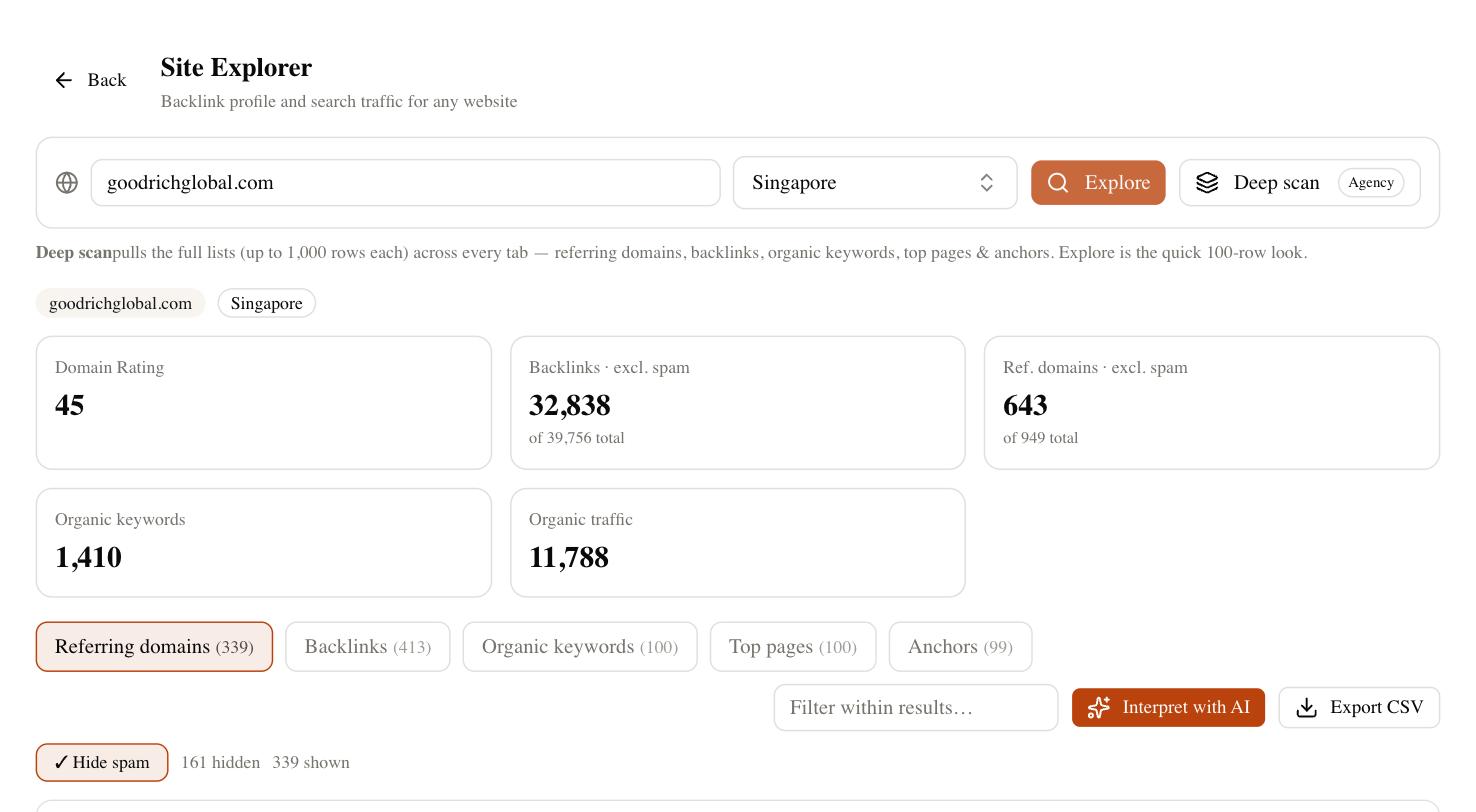
SEO Rocket was built for exactly this gap. You ask for what you need in plain language and it runs the lookup on real, Ahrefs-grade data — keyword research, competitor gaps, rank tracking, and a site audit — then drafts the content with Claude in the same place. For a small business that’s the whole difference: one tool covering research, writing, and tracking instead of three, at entry pricing you can actually justify. It also shows whether your business is being mentioned in AI answers from ChatGPT and Perplexity, which increasingly matters as more buyers ask an assistant before they open Google.
A realistic plan for the next 90 days
Here’s a schedule that fits around running an actual business. Month one: claim your Google Business Profile, do keyword research, and fix any glaring technical problems. Month two: build your core service and location pages, and start asking happy customers for reviews. Month three: publish two or three buyer-question articles, earn a couple of local links, and check your rankings to see what’s moving.
Don’t measure yourself against the biggest name in your industry — measure against the weakest competitor currently ranking for your money terms, because that’s who you’ll pass first. Small-business SEO rewards consistency over intensity. A few focused hours every week, aimed at high-intent local searches and backed by real data, will out-rank a competitor who spent more and did it randomly. Pick the two or three tasks above that fit this week, and start there.