
Most people who land on a spyfu review aren’t asking whether SpyFu works — they want to know if it’s the right tool for the one job they keep coming back to: seeing what their competitors are doing. SpyFu built its reputation on exactly that, and it still does that job at a price that undercuts most of the big suites. But it’s a specialist, not an all-in-one, and pretending otherwise is how people end up disappointed.
This spyfu review is written from the perspective of someone who uses these tools every week on real client accounts. You’ll get the honest version: what SpyFu does genuinely well, where it falls short, the rough price band you should expect, and who should buy it versus who should look elsewhere. No affiliate spin, no invented numbers.
What SpyFu is really for
SpyFu is a competitive-intelligence tool. Its whole premise is that you type in a competitor’s domain and immediately see the keywords they rank for organically, the terms they’re bidding on in Google Ads, and roughly how those positions have moved over time. It leans hard into paid-search research, which is unusual — most SEO tools treat PPC as an afterthought, while SpyFu treats it as a headline feature.
The other thing SpyFu is known for is history. It has been collecting keyword and ad data for well over a decade, and it surfaces that back catalog freely. If you want to see which ad copy a competitor ran two years ago, or how their keyword footprint has grown since 2015, SpyFu is one of the few tools that will just show you without charging extra for the archive.
Where SpyFu genuinely shines
The competitor keyword and PPC research is the real draw, and it holds up. You can pull a domain’s most valuable organic keywords, see the ads they’ve tested, and download the lot without hitting a credit wall on every export. For a paid-search manager trying to reverse-engineer a rival’s Google Ads strategy, that historical ad-copy view is legitimately useful and hard to find elsewhere at this price.
Cost is the second genuine strength. SpyFu’s entry plans sit in the low tens of dollars a month, which is a fraction of what Ahrefs or Semrush charge to walk in the door. For a freelancer or small business that mainly needs competitor snapshots rather than a full SEO command center, that price-to-value ratio is tough to argue with. Unlimited data access on most plans, rather than a credit meter, also means you can research aggressively without watching a counter tick down.
The interface deserves a fair word too. SpyFu is opinionated and fast — you’re not hunting through fifteen sub-menus to get a competitor overview. Type a domain, get a readable summary, drill into keywords or ads. For a tool at this price, the reporting is cleaner than you’d expect.
SpyFu’s real weaknesses
The biggest honest caveat is data coverage. SpyFu’s index is strongest in the United States and thins out noticeably in other markets. If your clients are in Singapore, the UK, or anywhere outside the core US-and-a-few-majors footprint, you’ll find the keyword volumes and competitor coverage patchier than what a global-first tool like Ahrefs gives you. Treat its numbers as directional estimates, not gospel — which is true of every tool, but more so here in secondary markets.
Backlink analysis is the other soft spot. SpyFu added link data, but its index and freshness don’t come close to Ahrefs or Semrush. If serious link auditing, disavow work, or link-building at scale is central to your job, SpyFu won’t carry that load, and you’ll end up paying for a second tool anyway.
Then there’s the modern gap that every legacy SEO tool shares: SpyFu has no real answer to AI. It won’t draft content for you, and it can’t tell you whether your brand is being cited in ChatGPT, Perplexity, or Google’s AI Overviews. Its rank tracking and site-audit features exist but feel bolted-on and basic next to dedicated tools. SpyFu is a competitor-research instrument, and the moment your workflow needs writing or AI-search visibility, you’re back to stitching tools together.
SpyFu pros and cons at a glance
Here’s the honest balance sheet before you decide.
| Area | SpyFu’s verdict | Strength or weakness |
|---|---|---|
| Competitor PPC research | Historical ad copy and bid keywords, easy to export | Strength |
| Price | Entry plans in the low tens of dollars a month | Strength |
| Historical data | Deep archive going back many years, no paywall | Strength |
| Ease of use | Fast, opinionated interface, quick domain overviews | Strength |
| International data | Strong in the US, thin outside major markets | Weakness |
| Backlink index | Present but smaller and less fresh than the leaders | Weakness |
| AI writing & AI-search visibility | Not offered | Weakness |
Rough pricing — what to expect
SpyFu’s positioning has always been affordability, and that hasn’t changed. Its cheapest plan lands in the low tens of dollars a month, with a mid tier stepping up from there for more historical results, tracked keywords, and API access. Exact numbers shift with promotions and annual discounts, so check the current page before you commit — but as a band, expect to pay meaningfully less than an Ahrefs or Semrush entry plan, which start in the low hundreds.
The value question isn’t really the sticker price, though. It’s whether a competitor-research specialist covers enough of your week. If competitor snapshots are 80% of what you do, SpyFu is a bargain. If they’re 20%, you’ll buy it and then buy something else too, and the combined bill stops looking cheap.
Who SpyFu is best for — and where SEO Rocket fits
SpyFu is a strong buy for a specific person: a freelancer, small business, or paid-search manager focused on US-market competitor and PPC intelligence, on a tight budget, who doesn’t need deep backlink data or content production baked in. For that reader, it does one thing well and charges little for it. If that’s you, buy it with confidence.
Where it struggles is the broader modern workflow — and that’s the gap SEO Rocket is built to close. SEO Rocket is chat-first and AI-native: you ask for competitor keyword gaps, rank tracking, or a site audit in plain language and it runs the lookup on Ahrefs-grade data underneath, then drafts the article for you and shows whether your brand is showing up in AI search through its Brand Radar feature. It’s a different shape of tool — less a spy dashboard, more a connected workspace that also covers international markets properly.
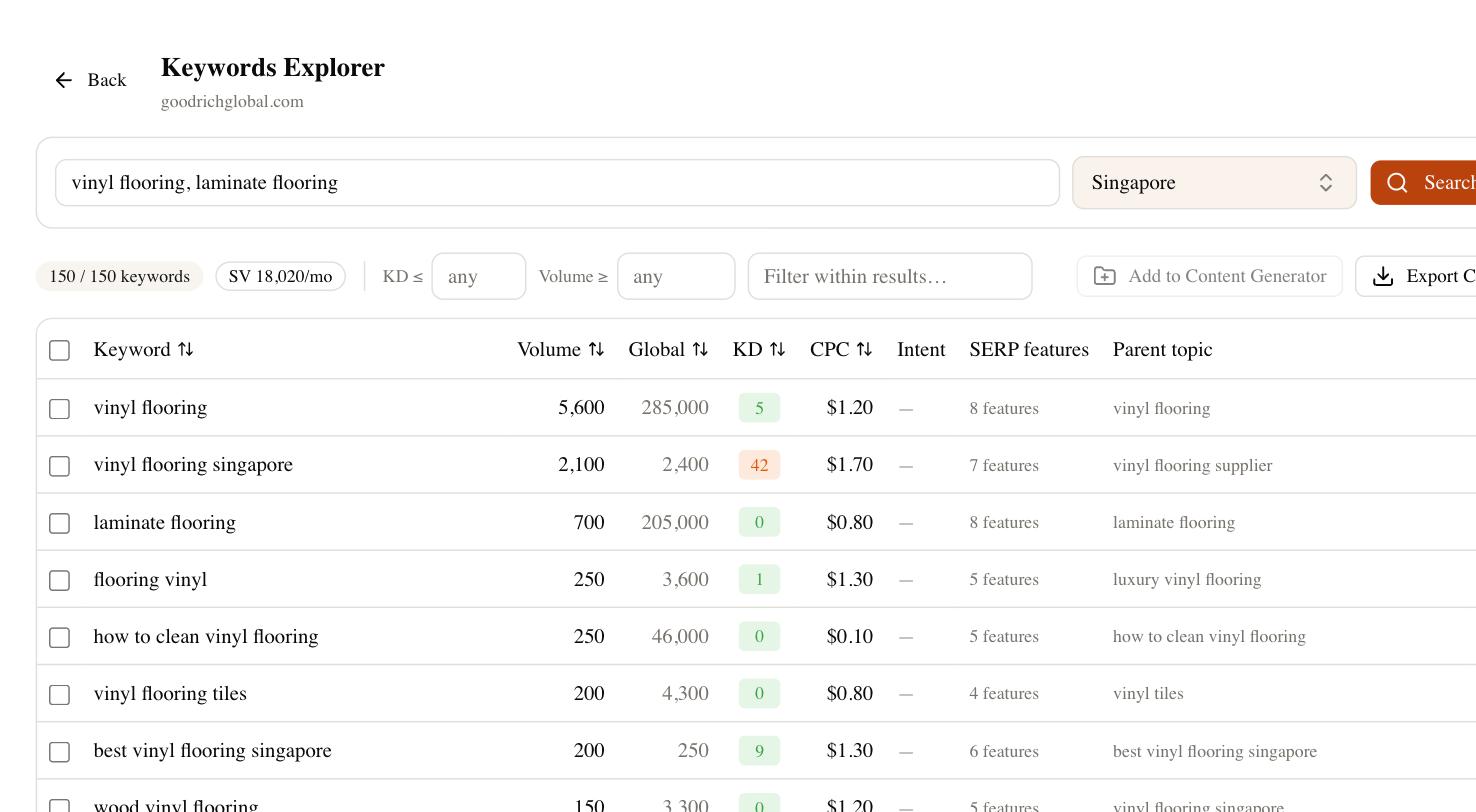
The honest framing is this: SpyFu and SEO Rocket aren’t really competing for the same job. If your entire need is cheap US competitor and PPC snapshots, SpyFu wins on price and does the job. If your week is a mix of research, content, rank tracking, client reporting, and now AI-search visibility, a single AI-driven workspace replaces the tool sprawl — and for consultants and agencies, the client-dashboard side means you can hand a report straight over without exporting a thing.
The honest verdict
SpyFu is a good tool that knows exactly what it is. It’s affordable, fast, and genuinely strong at competitor and PPC research with a historical depth few rivals match at the price. Its weaknesses are equally clear: US-centric data, thin backlinks, and no AI writing or AI-search tracking at all. None of that makes it a bad purchase — it makes it a specialist, and specialists are worth buying when your need matches the specialty.
So the recommendation splits cleanly. Need affordable US competitor intelligence and nothing more? SpyFu is one of the best-value picks available, and this review would tell you to buy it. Need one connected, international, AI-native workflow that covers content and AI visibility alongside the research? Look at a tool built for how SEO works now. Match the tool to the three things you actually did last week, not to a feature page, and the right answer usually picks itself.