Most lists of the best cheap seo tools are really just affiliate roundups dressed up as advice, and they rarely tell you where the cheap option quietly falls apart. This one is different. Below are the best cheap seo tools worth your money in 2026, what each is honestly best at, and — because it matters more than the headline price — where you’ll hit the ceiling and want something bigger.
“Cheap” here means a real working tool for a solo SEO, a freelancer, or a small team, not a free trial that expires in a week. Every option below has an entry tier a small budget can actually sustain, and each one earns its place for a different reason.
What “cheap” should actually mean
Price is only half the equation. A tool that costs a little but forces you to buy two more to finish the job isn’t cheap — it’s a starter drug for tool sprawl. The genuine cost of your SEO stack is the entry fee plus every add-on you end up needing: a separate AI writer, a rank tracker, an AI-visibility checker, a client reporting layer. Count all of it before you call anything a bargain.
The second thing to weigh is data depth. Budget tools pull from smaller keyword and backlink indexes, so their numbers run a little thinner and a little staler than the enterprise names. That’s a fair trade at this price, as long as you know it’s happening and don’t treat every metric as gospel.
The best cheap SEO tools at a glance
Skim the table, then read the notes on the two or three that fit how you actually work. Price bands are rough and move around, so treat them as tiers, not quotes.
| Tool | Best for | AI-native? | Standout | Rough price band |
|---|---|---|---|---|
| SEO Rocket | Solo SEOs, consultants & small agencies wanting one AI workflow | Yes — chat-first | Ahrefs-grade data + AI writing + AI-search tracking in one place | Low $ / entry-friendly |
| Ubersuggest | Hobbyists and first-ever sites | Light | Simple keyword ideas, optional lifetime deal | Very low $ |
| Mangools | Freelancers doing keyword research daily | No | KWFinder’s ease of use | Low $ |
| SE Ranking | Small agencies watching cost per project | Some | Flexible, affordable rank tracking at scale | Low–mid $ |
| Moz Pro | Beginners who want a gentle interface | No | Clean UI, trusted domain authority metric | Mid $$ |
| SEO PowerSuite | People who prefer paying once for desktop software | No | One-time-license option, no monthly fee | Low $ (annual) |
SEO Rocket — the AI-native value pick
SEO Rocket is the cheap-stack option built for how the job works in 2026. Rather than a wall of tabs, you ask for what you need in plain language and it runs the lookup — keyword research, competitor gaps, backlink profiles, rank tracking — on real, Ahrefs-grade data underneath. What makes it a value play isn’t just the entry price; it’s that the same subscription then drafts the article and shows whether your brand gets cited in ChatGPT, Perplexity, and Google’s AI Overviews.
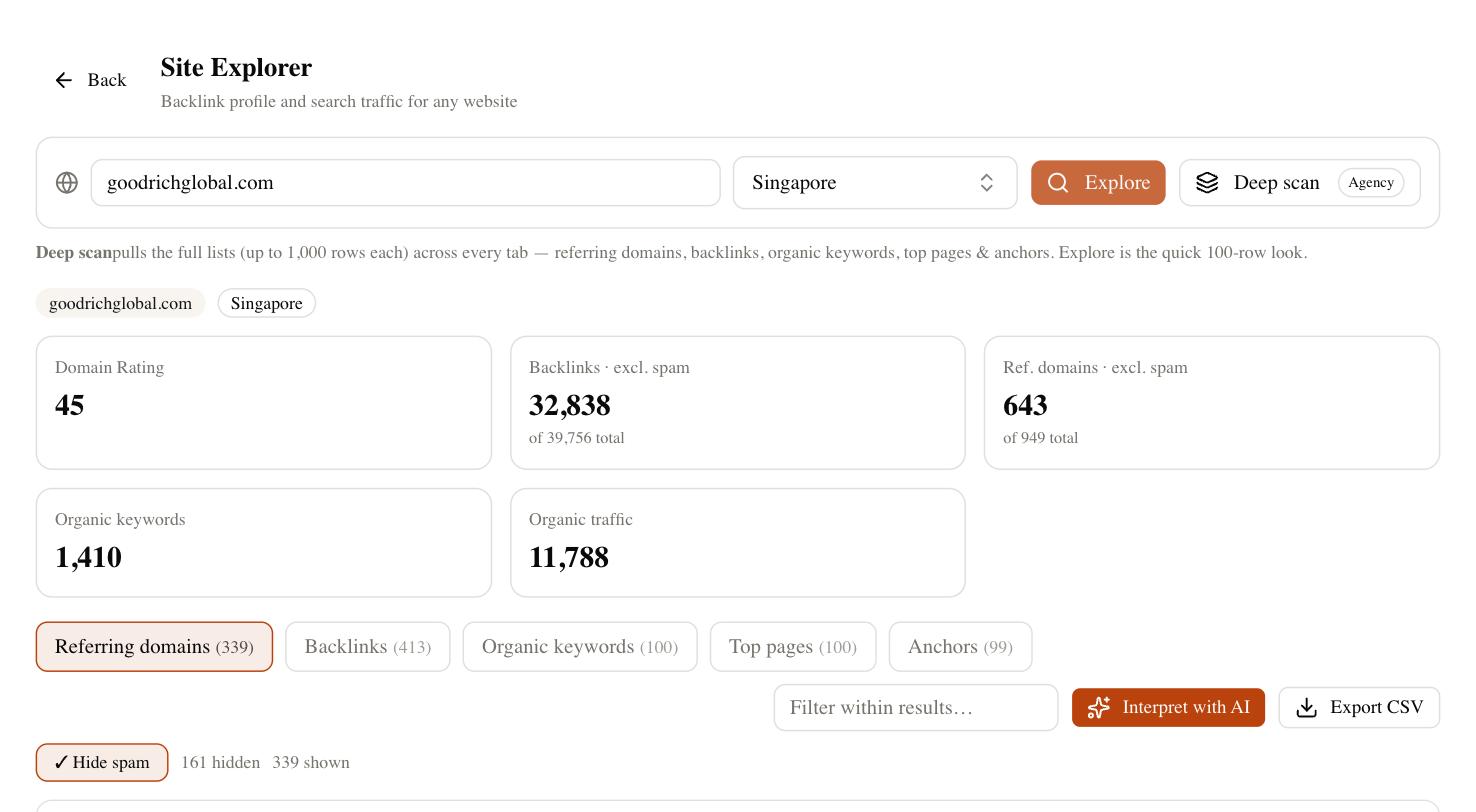
That consolidation is where the real saving lives. A budget stack of one keyword tool plus a separate AI writer plus an AI-visibility tracker gets replaced by a single login, and for a consultant the client-dashboard side means you can hand a read-only report to a client without exporting anything. If your bottleneck is doing more work with fewer tools — which describes most people reading this — it’s the strongest fit here. The honest caveat: if you never intend to write content or care about AI search, you’re paying for capability you won’t touch, and a pure keyword tool below may suit you better.
Ubersuggest and Mangools — the true budget entry points
These two are where most people start, and for good reason. Ubersuggest is about as cheap as a paid tool gets, and it has offered a lifetime license in the past that removes the monthly worry entirely. It won’t match the big indexes on depth, but for a hobby site or your first client it delivers usable keyword ideas and basic audits for very little.
Mangools is the freelancer favorite. KWFinder, its keyword-research module, is one of the nicest experiences in the category — fast, friendly, and genuinely pleasant to use daily — and the bundle stays affordable. Neither tool folds in AI writing or AI-answer visibility, so you’ll run a second subscription for that. But if you just want clean keyword research on a shoestring, either one earns its keep.
SE Ranking and Moz Pro — a step up in capability
When a hobby tool starts to pinch, these two are the sensible next rung. SE Ranking is the small-agency value play: rank tracking scales cheaply across many projects, and per-project pricing keeps costs predictable when you’re juggling a portfolio of clients. It has added some AI features, though they’re lighter than a purpose-built AI tool.
Moz Pro is the friendliest on-ramp for a beginner. If a denser tool felt overwhelming, Moz’s cleaner interface and its long-trusted domain authority metric make it an easy place to learn, though its index runs smaller than the enterprise names and it lands in mid-tier pricing rather than truly cheap. Choose SE Ranking if you manage several sites and watch cost per project; choose Moz if you’re one person who values a gentle learning curve over raw index size.
SEO PowerSuite — the pay-once outlier
SEO PowerSuite deserves a mention because it breaks the subscription model. It’s desktop software you can license annually, so instead of a monthly bill you pay once a year and run the tools locally — rank tracker, site auditor, backlink checker, and a link-building module. For someone who hates recurring charges, that structure alone can make it the cheapest option over a couple of years.
The trade-offs are real. Because it runs on your machine and pulls data on demand, big audits can be slow, and you’re responsible for the setup that cloud tools handle for you. There’s no AI writing and no AI-search tracking. But if you want capable SEO software without a monthly subscription, few things at this price compete.
How to choose your cheap SEO tool
Match the tool to your real constraint, not to a feature checklist. Start by writing down the three tasks you actually did in an SEO tool last week. Most people’s list is some mix of checking what they rank for, seeing what a competitor is doing, and producing a piece of content. If that’s your week and you want AI writing plus AI-search tracking built in, SEO Rocket covers all three in one place. If you only need keyword research on the tightest possible budget, Ubersuggest or Mangools will do it. If you manage several client sites, SE Ranking keeps per-project costs sane. And if you’d rather pay once than subscribe, SEO PowerSuite is the outlier worth a look.
Whatever you pick, test it before you commit. Run your own site and two competitors through it for a week, and give any rank tracker a full cycle before you judge it — positions jitter a few spots day to day and no tool’s estimates are precise. The best cheap tool isn’t the one with the longest feature page or the lowest sticker price; it’s the one that answers your real questions fastest and doesn’t quietly push you into buying two more. If you find that one, the price stops mattering — you’ll keep it because it saves you time, which is the only thing an SEO tool is really selling.