If you landed on this copy ai review hoping the tool will grow your search traffic, start with one fact: Copy.ai is a writing and go-to-market tool, not an SEO platform. It drafts fluent marketing copy quickly, but it does not tell you what to write about, whether a page ranks, or whether anyone links to you.
That framing matters because most people arrive at a copy ai review with the wrong expectation. Copy.ai started life in 2020 as a template-driven AI copywriter and has since repositioned itself as a broader “GTM AI” platform aimed at sales and marketing operations. It is good at what it does. The question is whether what it does is the job you actually need done.
What Copy AI actually is in 2026
Copy.ai began as one of the first consumer AI writing tools, built on early GPT models, with a library of templates for ad copy, product descriptions, email subject lines, and social captions. Over the last two years it shifted upmarket. The pitch now centers on go-to-market workflows: automating repetitive content and research tasks across sales and marketing rather than just spitting out a paragraph of ad copy.
In practice that means three things sit side by side. There is a chat interface, similar to ChatGPT, that you can point at your brand voice and reference material. There is a template gallery for quick, one-off copy. And there is a workflow builder that chains multiple AI steps together, so a single run can research an account, draft an outreach sequence, and format the output. Under the hood it routes to several large language models rather than a single one, which is sensible engineering but invisible to most users.
What Copy AI does well
Speed is the headline strength. For short-form marketing copy — a batch of ad variations, a product blurb, ten subject lines to A/B test — Copy.ai turns a blank page into usable drafts in seconds. If your bottleneck is volume of copy, it removes that bottleneck.
The workflow builder is genuinely useful for repeatable operations. Teams that run the same content process weekly — say, turning a list of URLs into summaries, or enriching a batch of leads with researched talking points — can template that process once and rerun it. Brand voice and a shared knowledge base keep output roughly on-message across a team, which is more than a raw chatbot gives you. For sales and lifecycle marketing especially, that operational layer is the real product, not the individual sentences.
Where Copy AI falls short for SEO
Here is the honest part of any copy ai review aimed at search people. Copy.ai writes; it does not do SEO research. There is no keyword database, no search-volume or difficulty data, no SERP analysis, no rank tracking, and no backlink index. It will happily draft a 1,500-word article, but it cannot tell you whether that topic has demand, what the page-one competition already covers, or whether your published piece ever moved.
That gap forces a stack. In a typical SEO workflow you still need a data tool for research, something to track positions, and increasingly a way to see whether ChatGPT or Perplexity cite you at all. Copy.ai plugs into the drafting slot in the middle and leaves the rest to you. The writing itself is competent but generic out of the box — without careful prompting and your own outline, long-form AI copy tends toward padding, and thin content loses rankings even when it reads smoothly.
Copy AI pricing, roughly
Copy.ai has moved its pricing around more than once as it repositioned, so treat any number as a band rather than a quote. There has historically been a free or trial entry point, though the generous free tier has narrowed over time as the company chased business customers. The self-serve paid tiers land in the low tens of dollars per seat per month at the entry level, climbing into the low-to-mid hundreds a month for team plans with higher usage limits and workflow seats. Enterprise is custom-quoted. Check the current page before you buy — this is one of the faster-moving parts of the product.
Copy AI versus an SEO-native workflow
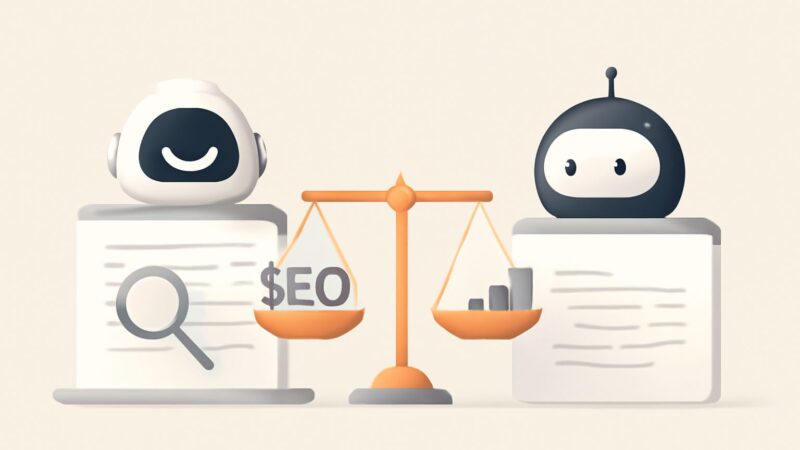
The clearest way to judge fit is to line the writing up against the surrounding SEO jobs it does not touch. SEO Rocket is an AI-native SEO tool, so it makes a fair yardstick: it pairs Ahrefs-grade research data with AI drafting and AI-search visibility tracking in one chat-first workflow, where Copy.ai is a writing layer you bolt onto other tools.
| Capability | Copy.ai | SEO Rocket |
|---|---|---|
| Short-form & GTM copy | Strong — its core | Focused on SEO content |
| Multi-step AI workflows | Yes, flexible builder | Chat-first, SEO-shaped |
| Keyword & competitor data | None | Ahrefs-grade, built in |
| Rank tracking | None | Yes |
| Backlink data | None | Yes |
| AI-search visibility | None | Brand Radar tracks citations |
| Best for | Sales & marketing copy at volume | Ranking and AI-answer visibility |
The point is not that one wins outright. If your daily work is outbound sequences and campaign copy, Copy.ai’s breadth across go-to-market tasks is the better buy, and no SEO tool will match it there. If your work is ranking pages and getting cited in AI answers, a copywriter without search data leaves the hardest half of the job undone.
Who Copy AI is right for
Copy.ai suits marketing and sales teams whose problem is copy volume and process, not search visibility. If you produce a lot of short-form assets, run repeatable content operations, and already own your keyword and analytics tools separately, it fits neatly and earns its seat. Solo founders who just need faster first drafts will also get value from the entry tier.
It is a weaker fit if SEO is your actual goal. Without demand data you are guessing at topics, and without rank or citation tracking you are writing blind. In that case a general AI writer is the wrong shape — you want a tool that researches, drafts, and measures in the same place, so the article you publish is aimed at a keyword that exists and you can see whether it worked.
The bottom line
Copy.ai is a capable, fast writing and go-to-market platform that has grown well beyond its copywriting roots. As a drafting engine for marketing and sales teams, it does its job. As an SEO solution, it is only ever one piece — the writing — and you will spend more on research and tracking tools around it. That is the fair verdict of this copy ai review: buy it for what it is, a strong content and GTM assistant, and pair it with real search data rather than expecting it to supply that data itself.
If you would rather not run three subscriptions, an SEO-native tool that folds research, drafting, and AI-visibility into one workflow will cover the SEO half more directly — and probably cost less than a copywriter plus a data tool plus a rank tracker bought separately. Whichever way you go, give any AI writer your own outline and a week of real rankings before you judge the output; smooth copy and ranking copy are not the same thing.