
SEO for Medium is a strange exercise, because you are optimizing a page you don’t own on a domain you don’t control. That trade-off is the whole story of SEO for Medium: you borrow one of the strongest domains on the web, but you give up almost every technical lever a normal site owner takes for granted. Understand exactly which levers you keep and which you lose, and you can make the platform work. Ignore that split and you’ll waste months writing into a black box.
This guide is specific to Medium — the real settings, the real constraints, and the handful of moves that genuinely move rankings there. No generic checklist with the platform name pasted on top.
Why Medium behaves differently from your own site
Medium is a walled publishing platform, not a website builder. Every story you publish lives on medium.com (or a publication under it), which means Google sees your work as one more page on a massive, high-authority domain. That’s the upside: a brand-new post can get crawled and indexed within hours, and it can rank for competitive terms far faster than the same words on a fresh domain of your own.
The downside is that authority accrues to Medium, not to you. Links people build to your article strengthen medium.com. If you ever leave, that equity does not come with you. So the platform is excellent for reach and terrible for compounding a domain you own — a tension you should decide about before you write a word.
There’s a subtler effect too. Because so many writers publish near-identical takes on the same topics, Medium’s own pages compete against each other in search. Ranking well isn’t just about beating other sites; it’s about being the version Google picks from inside Medium. That raises the bar on topic choice and depth, and it’s why thin, me-too posts sink here even faster than they would on a small independent blog.
The settings you actually control
Medium gives you a small but real set of on-page controls, tucked inside each story’s three-dot menu under “Settings” (formerly “More settings”). These are the knobs worth using every time:
- SEO title — override the headline that shows in search results. Your reader-facing title can be curiosity-driven; the SEO title can carry the exact keyword.
- SEO description — write your own meta description instead of letting Medium truncate your first sentence. Keep it inside roughly 155 characters.
- Custom subdomain of the slug — you cannot rewrite the URL, but the slug is generated from your title at first publish, so set a clean, keyword-bearing title before you hit publish the first time.
- Featured image and social preview — controls the Open Graph card, which affects click-through when your link is shared.
- Tags (up to five) — these drive Medium’s internal distribution, not Google. Treat them as topic signals for the platform, not keywords for search engines.
That’s the full toolkit. Notice what’s missing: headings inside the editor are limited to two levels, and Medium decides how they render. You get a clean semantic structure by default, but you don’t get to hand-tune it.
One habit pays off more than any single field: fill in the SEO title and description on every story, without exception. The defaults pull from your headline and opening line, which are written for a human scrolling a feed, not for someone scanning a results page. Two minutes of deliberate title-and-description work per post is the highest-return on-page task Medium actually lets you do.
Where Medium ties your hands
Being honest about the limitations is the point of this guide. Here is what you genuinely cannot do on Medium, and what it means for your search strategy.
| SEO lever | On Medium | What it means for you |
|---|---|---|
| URL / slug editing | Auto-generated from the first-publish title, with a random hash appended | Get the title right before publishing; you can’t clean it up later |
| Custom domain | Deprecated for new publications | Everything sits on medium.com — no domain equity for you |
| Canonical tag | Only settable via Medium’s Import tool | Import from your own URL to protect the original (see below) |
| Structured data / schema | Medium’s markup only | No FAQ, HowTo, or Product rich results you control |
| Redirects | None available | A deleted story 404s; you can’t 301 it anywhere |
| Page speed / Core Web Vitals | Fixed by the platform | Generally fast — one thing you don’t have to fix |
| Internal linking at scale | Manual, per story | No siloing or programmatic linking; link by hand |
None of these are dealbreakers on their own. Stacked together, they explain why Medium suits distribution and thought leadership more than it suits building a rankable asset you own.
The highest-leverage move: publish on your site first, then import
If you take one thing from this guide, take this. Medium’s Import tool (“Stories” menu, then “Import a story”) fetches an existing URL and sets the canonical tag back to that original. Publish on your own domain first, wait for Google to index it, then import to Medium. Now your site gets the ranking credit while Medium becomes a syndication channel that sends referral traffic and new readers.
Do it the other way around — write on Medium and copy to your site later — and Medium usually keeps the canonical, so your own page competes against a higher-authority duplicate and loses. The sequence is the entire game. This one workflow decision separates people who use Medium to grow their own site from people who quietly build Medium’s.
A practical note on timing: give Google a few days to crawl and index the original before you import, so the canonical points at a page the search engine already knows. If you import within minutes of publishing your own version, the two can get discovered together and the signal is muddier. Publish, confirm the original is indexed, then syndicate — in that order, every time.
Platform-specific mistakes people make
Most Medium SEO failures aren’t about writing quality. They’re about misreading how the platform works, and the same few errors show up again and again.
- Treating tags like keywords. Tags feed Medium’s recommendation engine, not Google. Stuffing five broad tags does nothing for search.
- Publishing the same piece on your site and Medium with no canonical. You’ve created a duplicate that outranks your original.
- Changing the title after publishing to chase a keyword. The slug is already locked; you get a mismatched URL and no benefit.
- Chasing claps instead of intent. A post that trends inside Medium can be invisible in search if nobody is actually querying the topic.
- Ignoring the SEO title and description fields entirely. The defaults are rarely what you’d choose, and you’re leaving free control on the table.
Notice that none of these are fixed by writing harder. They’re fixed by understanding sequence and settings. That’s the recurring theme of the platform: the words matter, but the workflow around them decides whether search ever sees your work.
Finding keywords worth writing about on Medium
Because you can’t out-engineer the platform, topic selection carries more weight here than anywhere else. Medium’s domain strength means you can realistically target medium-competition terms a new site couldn’t touch — but only if real search demand exists behind them. That’s a research question, not a writing one.
This is where SEO Rocket fits. Ask it in plain language for keyword ideas around your topic and it returns real, Ahrefs-grade search volume and difficulty, so you can aim your Medium posts at terms people actually search rather than ones that merely sound good.
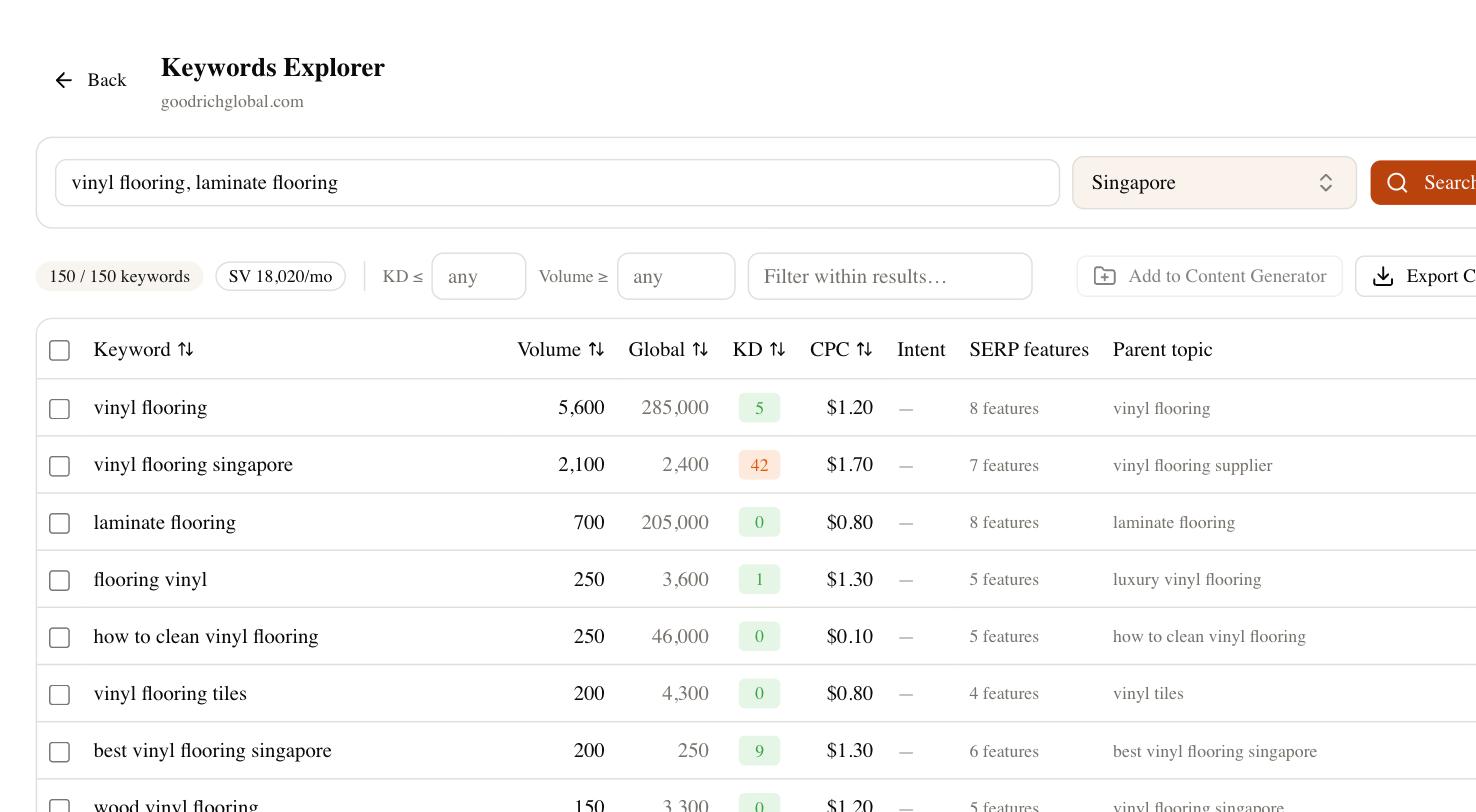
From there, SEO Rocket’s competitor gap and rank tracking tell you which of those terms your rivals already own and whether your published Medium posts are climbing week to week. Because the technical side of Medium is fixed, the leverage is almost entirely in picking winnable topics — and that’s the part a good research tool actually changes.
Should you build on Medium at all?
Here’s the honest answer. Medium is a strong channel and a weak foundation. Use it to reach an existing audience, to rank quickly for a timely topic, or to syndicate work that already lives on your own site — with the canonical import — and it earns its place. Build your entire content strategy on it, and you’re pouring years of effort into an asset you can never take with you.
The winning setup for most people is both: your own domain as the home base where equity compounds, and Medium as a distribution arm pointed back at it. Do the research once, publish where you own the outcome, and let the platform amplify it rather than replace it.