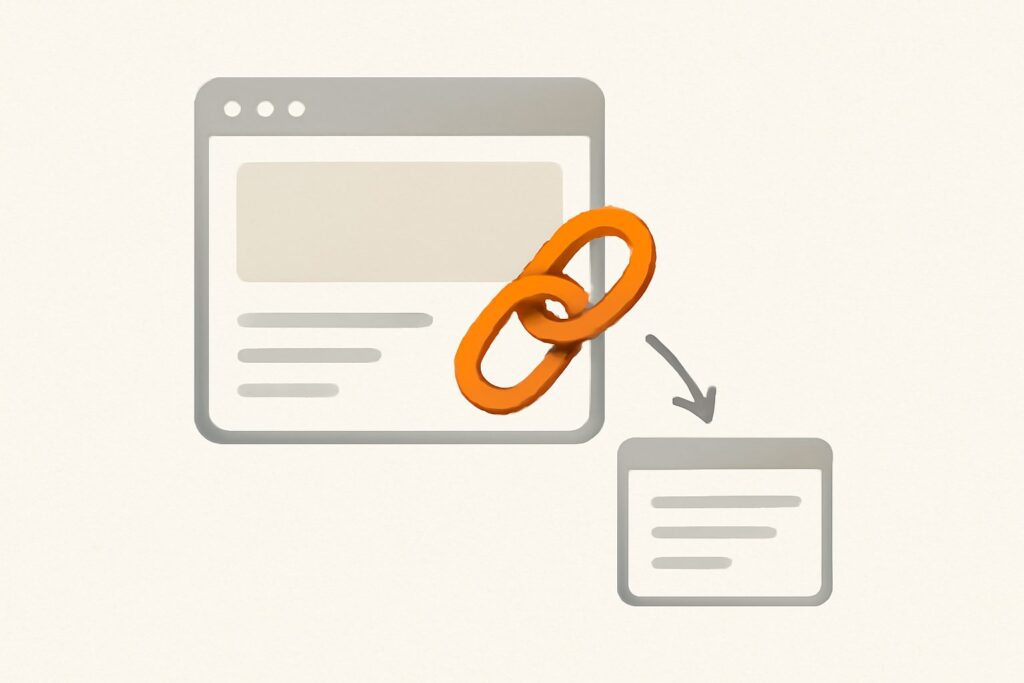
A backlink is a link from one website to a page on another website — when Site A publishes a clickable link that points to Site B, Site B has earned a backlink. If you just Googled what is a backlink, that one sentence is the whole idea: a backlink is a public vote of confidence, one site telling its readers that another site is worth visiting.
Search engines figured out how useful that signal was a long time ago. If many trustworthy sites link to a page, that page is probably worth reading — so links between sites became one of the strongest signals Google uses to decide what to rank. That is why the SEO world talks about backlinks constantly, and why a word that sounds technical is really just describing a hyperlink pointed at you.
Why backlinks matter so much
Think of the early web as a citation network. A page that lots of respected sources cite tends to be more authoritative than one nobody references, exactly the way a research paper cited hundreds of times carries more weight than one cited never. Google’s original ranking breakthrough was treating links this way, and while the algorithm has grown vastly more sophisticated, that core instinct never left.
In practice, backlinks influence two things. The first is authority: sites with strong, relevant link profiles tend to rank more easily across their whole domain, so a new page on an established site can outrank a better page on an unknown one. The second is discovery — search crawlers follow links to find pages, so an unlinked page can sit undiscovered while a linked one gets crawled and indexed faster. Neither effect is a guarantee, but both are real, and both explain why link building remains a core part of serious SEO.
It helps to picture what a backlink is not. It is not a link you place on your own site pointing somewhere else — that is an outbound link, and it does nothing for your rankings. It is not a mention of your brand with no clickable link, though those can be valuable in other ways. A backlink specifically means someone else’s page carries a live hyperlink to yours. The moment you internalize that direction — links coming toward you, chosen by other people — most of the confusion around the term disappears.
Not all backlinks are equal
Here is the part most beginners miss: a backlink’s value depends far more on quality than on quantity. One link from a genuinely authoritative, topically relevant site can outweigh hundreds of links from spammy directories or forums nobody reads. Google is actively trying to ignore or discount low-quality links, so chasing raw numbers is a fast way to waste effort.
A few things separate a strong link from a weak one:
- Authority of the linking site — a link from a well-known publication in your field carries more weight than one from a brand-new blog.
- Relevance — a link from a site about your topic signals more than an unrelated one, even if the unrelated site is larger.
- Editorial intent — a link a writer chose to include because your page is genuinely useful beats a link you paid for or dropped in a comment.
- Placement — a link inside the main content of a page tends to count for more than one buried in a footer or sidebar.
Most SEO tools condense a domain’s overall link strength into a single score. In Ahrefs it is Domain Rating, and other tools use similar 0–100 authority metrics. These numbers are estimates, not facts from Google, so treat them as directional. Still, they give you a fast read on whether a linking site is a heavyweight or a lightweight.
How to read a domain authority score
Different tools calibrate their scores differently, but the rough bands below hold across most of them. Use this as a mental map, not a precise cutoff.
| Score range | Rough interpretation |
|---|---|
| 0–20 | New or very small site; a link here counts for little on its own |
| 21–40 | Established small site or growing blog; useful in volume and relevance |
| 41–60 | Solid, well-linked site; a genuinely valuable backlink to earn |
| 61–80 | Strong authority — recognized brands and busy publications |
| 81–100 | Major sites; a link here is rare and disproportionately powerful |
Types of backlinks you’ll hear about
Once you start reading about links you will run into a lot of jargon. Most of it collapses into a few simple distinctions worth knowing.
The biggest one is dofollow versus nofollow. By default a link passes authority to the page it points at — that is a dofollow link. A nofollow link carries a small piece of code that tells search engines not to pass that authority, which is why links from social media, most comment sections, and sponsored placements are typically nofollow. Nofollow links are not worthless — they still send traffic and can lead to natural links later — but they are not the authority signal a dofollow editorial link is.
You will also hear about editorial links (earned because someone chose to cite you), guest post links (from an article you contributed elsewhere), and anchor text — the visible, clickable words of the link. Anchor text gives search engines a hint about what the target page is about, which is why a link reading “beginner SEO guide” tells Google more than one reading “click here.”
Do not overthink these categories at the start. The distinction that actually changes your decisions is quality versus junk, and that judgment comes from looking at the linking site — is it real, is it relevant, would a human reader trust it — far more than from memorizing labels. The jargon is useful shorthand once you are doing outreach, but it should never distract you from the simpler question of whether a link comes from somewhere that genuinely matters in your space.
Common misconceptions about backlinks
A lot of bad advice circulates about links, and it costs beginners real time. A few myths worth killing early:
- “More links always means better rankings.” Volume without quality does little, and low-quality link schemes can actively hurt you. Ten relevant, authoritative links beat a thousand junk ones.
- “You can just buy backlinks.” Paid links that pass authority violate Google’s guidelines and are a common reason sites get penalized. Sometimes they work briefly; the downside risk rarely justifies it.
- “Backlinks are all you need.” Links are necessary but not sufficient. A thin or unhelpful page will not rank on links alone, and a great page can struggle without any.
- “Links work instantly.” Google has to crawl the linking page, process the link, and reassess your page. Movement often takes weeks, and daily rank jitter of a few positions is normal noise, not a result.
How to see your own backlinks
You cannot judge your link profile by guessing — you need to look at it. A backlink tool crawls the web, records which pages link to yours, and shows you the referring domains, their authority scores, the anchor text used, and whether each link is dofollow. That view tells you who already vouches for you and where the obvious gaps are.

SEO Rocket runs this on real, Ahrefs-grade link data, so instead of clicking through a dense interface you can ask for your backlink profile in plain language and get the referring domains, their authority, and your competitors’ links back in one view. The useful move early on is competitive: pull the backlinks of a site already ranking for your target terms and look for links they have that you could realistically earn too. That gives you a concrete target list instead of a vague goal to “get more links.”
What to do with all this
Now that you know what a backlink is, resist the urge to go chase hundreds of them. The honest path is slower and duller than the shortcuts, and it works: publish pages genuinely worth citing, then earn links from relevant, credible sites through outreach, original data, useful tools, or being quotable in your field. A handful of strong, relevant links compounds far better than a pile of weak ones.
Backlinks are one of the two or three signals that most move rankings, but they sit alongside good content and a technically sound site, not above them. Treat a backlink for what it is — a hard-earned vote of confidence — and build the kind of pages that deserve one. Do that consistently and the links, and the rankings, tend to follow.