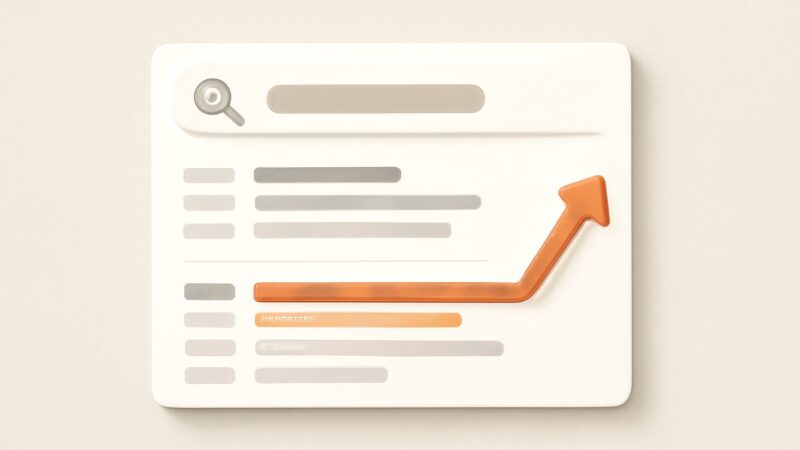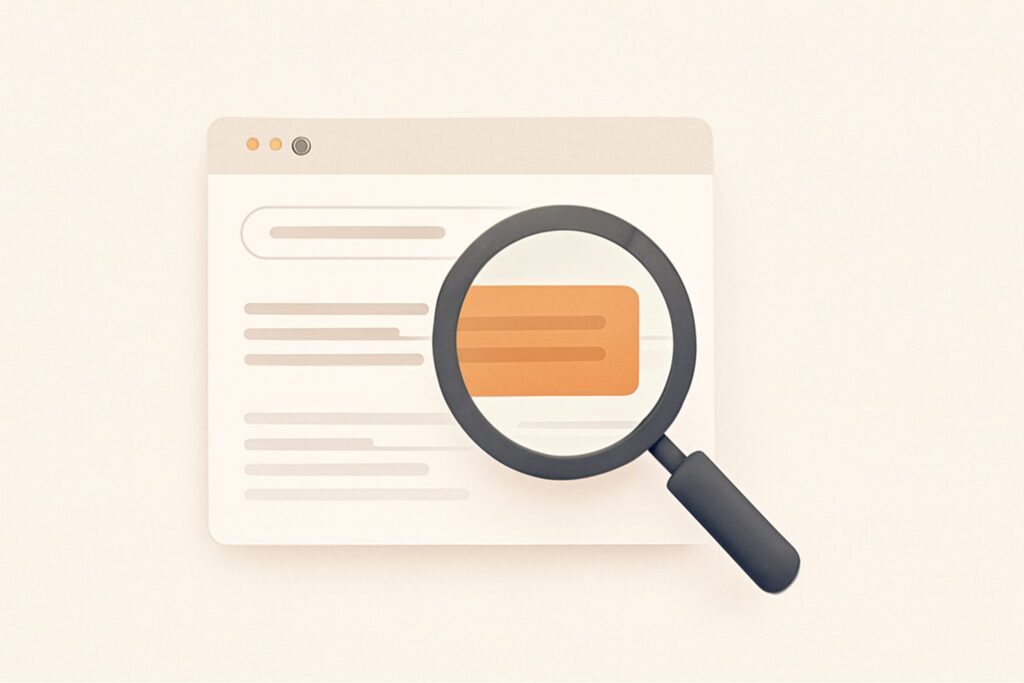
If you just Googled a question and saw a boxed answer sitting above the normal blue links, that’s the thing you’re here to name. A featured snippet is a short answer that Google pulls from a web page and displays in a box at the very top of the results, before the regular listings. When people ask what is a featured snippet, that box — sometimes called “position zero” — is exactly what they mean.
Google builds the snippet by lifting a paragraph, list, or small table straight out of a page it already ranks, then crediting that page with a title and a link underneath. You didn’t submit it, and you can’t buy it. Google decided, algorithmically, that a chunk of someone’s page was the cleanest answer to the query and promoted it to the top of the page.
What a featured snippet actually looks like
Picture a search like “how long to boil an egg.” Instead of making you click through, Google shows a bordered box with the answer — maybe a sentence, maybe a numbered list of steps — followed by the source page’s title and URL. That box is the snippet. It usually appears for questions and “how to” queries, where there’s a genuine short answer to give, rather than for broad commercial terms where there isn’t a single correct response.
The key detail that trips people up is that the content isn’t written by Google. It’s your words, or a competitor’s words, quoted verbatim. That’s why the wording, formatting, and structure of the page underneath matter so much: Google can only feature what’s already sitting on the page in a snippet-friendly shape.
Why featured snippets matter
The obvious reason is visibility. A snippet sits above every organic result, so the page that wins it gets the most prominent spot on the page without paying for an ad. For informational queries, that placement can pull a meaningful share of the clicks — especially on mobile, where the box can fill most of the first screen before anything else loads.
The less obvious reason is authority. Being the source Google chooses to answer a question is a quiet endorsement. It signals to searchers that your page is the trusted reference, which helps brand recall even when someone reads the answer and doesn’t click. Over time that repeated exposure at the top of results builds a kind of familiarity that ordinary rankings rarely earn. And increasingly, the same clean, well-structured content that wins a classic snippet is the content that gets pulled into voice answers and AI-generated summaries, so the work compounds instead of expiring.
The main types of featured snippets
Not every snippet looks the same, and the format Google picks depends on the shape of the answer. Knowing the types helps you structure a page so it can qualify for the one that fits your query.
| Type | What it shows | Best fit for |
|---|---|---|
| Paragraph | A few sentences of text answering the question | Definitions, “what is,” “why” and “who” queries |
| Numbered list | An ordered set of steps | Recipes, “how to,” processes with a sequence |
| Bulleted list | An unordered set of items | “Best of,” ingredients, checklists, non-ranked lists |
| Table | A small grid of data | Prices, comparisons, specs, schedules |
Paragraph snippets are the most common by a wide margin, which is why a crisp two-to-three sentence answer near the top of a page is such a reliable target. List and table snippets follow directly from formatting: if the answer is naturally a sequence of steps or a set of numbers, use the matching HTML and Google can lift it cleanly.
How Google decides what to feature
There’s no submission form and no on/off switch. Google selects a snippet from pages that already rank on the first page for a query, then judges which passage answers the question most directly and concisely. In practice the winning page is rarely the number-one result — Google often promotes a lower-ranked page whose wording happens to match the question better.
That matters because it means the door is open even if you’re sitting at position four or five. You don’t have to beat everyone on links and authority to win the box; you have to phrase the answer more cleanly than the pages above you. Structure and clarity do a lot of the lifting here, which is unusual in SEO and worth exploiting. It also means snippets change hands. Google re-evaluates constantly, so a box you hold today can move to a rival who rewords the answer more tightly tomorrow, and one you lost can come back when you tighten yours.
Common misconceptions
A few myths follow this topic around, and clearing them up saves a lot of wasted effort.
- “You can pay for it.” You can’t. Snippets are organic and algorithmic. If a box is labeled “Sponsored” or “Ad,” it isn’t a featured snippet.
- “It’s the same as the People Also Ask box.” No. The PAA is the expandable list of related questions further down. A snippet is the single answer box at the very top.
- “It always sends more traffic.” Not always. If the box fully answers the question, some searchers read it and move on — a “zero-click” result. For deeper queries it drives strong clicks; for trivia it may not.
- “Ranking number one guarantees it.” It doesn’t. Google frequently features a page ranked below the top spot because its wording is a tighter match.
The zero-click point deserves an honest note. A snippet is a genuine win for visibility and authority, but for some questions it satisfies the searcher completely, and that’s a trade-off you accept. The queries worth chasing are the ones where the snippet earns attention and the click still happens because the reader wants more than the summary.
How to earn one
You start by ranking on page one for the query — Google only pulls snippets from pages already there — and then you make the answer easy to lift. Put a direct, self-contained answer high on the page, ideally right under a heading that matches the question a searcher would type. Keep that answer tight: a couple of clean sentences for a paragraph snippet, or properly marked-up list items for a steps query.
Match the format to the intent. If the query is a process, use an ordered list; if it’s a comparison, a small table; if it’s a definition, lead with one plain sentence. Answer the question first, then expand below for the readers and the clicks. It also helps to target the specific question phrasings your audience actually uses, which is where keyword research and competitor-gap data earn their keep — they show you the exact wording that already triggers a snippet so you can answer it better than the current holder.
How to think about snippets today
Search is shifting under everyone’s feet. Google’s AI Overviews and answer engines like ChatGPT and Perplexity increasingly summarize results the same way a snippet does, drawing on clean, well-structured pages to build their responses. The habits that win a classic featured snippet — a direct answer, sensible headings, list and table markup where it fits — are the same habits that get your page cited by an AI answer.
So treat the snippet less as a trophy and more as a test of whether your page answers a question cleanly. If it’s built well enough for Google to quote, it’s built well enough for the newer surfaces too. Track which of your pages hold snippets, watch for competitors stealing them back — positions shift day to day — and keep the answers sharp. That’s the durable version of the work, whichever box your buyers are reading it in.