If you run a business that serves a city, a neighborhood, or a service radius, learning how to do local SEO is the single highest-leverage marketing skill you can pick up. It’s the reason one plumber shows up in the map pack when someone searches “emergency plumber near me” and three others down the road never get the call. The good news: most of the work is concrete, repeatable, and something you can start today without a big budget.
This guide walks through how to do local SEO as an ordered checklist — not theory, but the actual steps in the order that matters. I’ll be honest about what each one buys you, how long it takes to show results, and where the ceiling is, because local SEO rewards patience and punishes shortcuts.
What local SEO actually is (and what it can’t do)
Local SEO is the practice of making your business visible to people searching nearby with commercial intent. It splits into two surfaces: the “map pack” — those three business listings with a map that sit above the regular results — and the standard organic links below. The map pack is driven mostly by your Google Business Profile, proximity to the searcher, and reviews. The organic links are driven by the same on-page and link signals as any other SEO.
Here’s the honest limit. You cannot out-optimize physical distance for every search. If someone is standing two blocks from a competitor and searches “coffee near me,” Google will often favor the closer shop no matter how good your listing is. What you can do is win the wider radius, the higher-intent searches (“best accountant in Denver”), and every query where your relevance and reputation beat a lazy rival. That’s a lot of searches.
The local SEO checklist, in order
Do these in sequence. Each step compounds on the last, and skipping ahead to link building before your foundations are set is how people waste months.
- Claim and complete your Google Business Profile — the highest-impact single asset in local SEO.
- Fix your NAP consistency — identical name, address, and phone number everywhere online.
- Do local keyword research — find the terms your customers actually type.
- Build dedicated location and service pages — one strong page per service, per city.
- Earn citations and local links — directories, chambers of commerce, local press.
- Systematically collect reviews — the strongest ongoing map-pack signal you control.
- Track your rankings by location — so you know what’s working and what isn’t.
Start with your Google Business Profile
Nothing else moves the needle faster. Claim your profile, verify it, and then fill in every field Google offers — categories, hours, service areas, attributes, products, and a genuine description. Your primary category matters enormously; picking “restaurant” when you’re really a “pizza restaurant” quietly caps how often you appear for the searches you want.
Add real photos, not stock images, and keep adding them. Post updates weekly the way you’d post on social media. Answer the questions people leave, and turn on messaging if you can respond quickly. A profile that looks active and complete outranks a half-finished one from a bigger competitor almost every time, and it costs nothing but attention.
Get your NAP and citations consistent
NAP stands for name, address, and phone number. Google cross-references these across the web to confirm your business is real and exactly where you say it is. If your address is written three different ways across your site, Yelp, Facebook, and an old directory, you’re sending mixed signals that dilute your authority.
Pick one exact format and use it everywhere. Then build citations — listings on directories that carry your NAP. Start with the obvious ones (Google, Bing Places, Apple Maps, Yelp, Facebook), add your industry’s trade directories, and include local sources like your chamber of commerce. You don’t need hundreds; you need the important ones correct. Consistency beats volume here, and cleaning up wrong old listings matters as much as adding new ones.
Research local keywords and build pages for them
Guessing what people search is a slow way to fail. Real local keyword research shows you the modifiers your market uses — “near me,” “in [city],” “[service] cost,” “24 hour,” “cheap,” “best” — and the search volume behind each. This is where a data tool earns its keep, because guessing at a whiteboard misses the long-tail phrases that convert.
SEO Rocket handles this in plain language: you ask its keyword research to pull local terms for your service and city, set the market so you’re seeing the right country’s index rather than a mismatched one, and it returns real volumes and difficulty from Ahrefs-grade data. From there, build one focused page per service and location. A plumber covering three suburbs needs three service-area pages, each written for a real person in that area — not one thin page stuffed with city names, which Google has been ignoring for years.
Earn reviews and local links
Reviews are the closest thing local SEO has to a growth flywheel. They influence the map pack directly, they build trust that lifts click-through, and they never stop mattering. Ask every happy customer, make it a one-tap link, and reply to every review — good and bad — like a human. A steady trickle of recent reviews beats a pile of old ones, so build the ask into your normal workflow rather than running occasional campaigns.
Local links are the other half. A backlink from the local newspaper, a sponsored community event, a supplier’s partner page, or a genuinely useful local resource carries real weight and is far more attainable than the national links most SEO advice chases. Sponsor a little-league team, offer a scholarship, get quoted by a local reporter — each one is a link a national competitor can’t easily replicate in your town.
Track whether any of it is working
Local rankings are personalized and shift with the searcher’s exact location, so you can’t judge progress by checking from your own phone — you already appear higher to yourself. You need location-aware rank tracking that checks positions from the actual city or postcode you’re targeting, then watch the trend over weeks rather than reacting to daily jitter of a few spots.
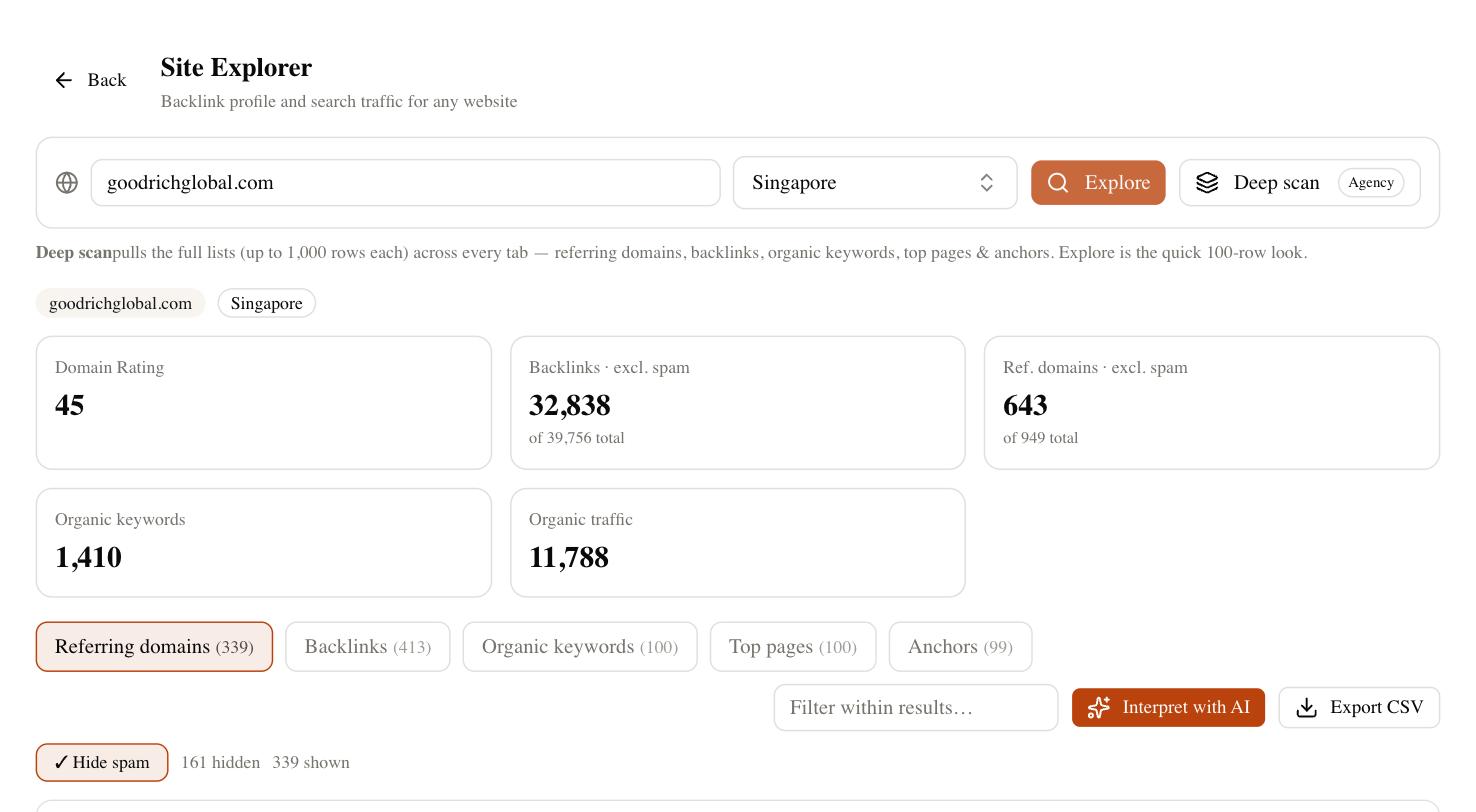
This is where SEO Rocket’s rank tracking is genuinely useful: you set the target market and location, add your local keywords, and it shows where you actually rank in that geography — including the ranking URL, position, and estimated traffic — instead of the flattering view your own logged-in browser gives you. Pair it with the built-in site audit to catch the technical basics (crawlability, page speed, missing titles) that quietly hold local pages back, and you have a full loop: research, publish, measure, fix.
How long it takes, and where to start today
Be realistic about timelines. Google Business Profile changes can show up in days to a few weeks. Review growth and citation cleanup compound over one to three months. Real organic movement on competitive location pages usually takes three to six months, sometimes longer in crowded cities — anyone promising page one in two weeks is selling you something. The upside is that once you’re established, local rankings tend to be stickier than national ones, because distance and reviews are hard for newcomers to fake.
If you only do one thing this week, complete your Google Business Profile properly and ask your last five customers for a review. That alone often moves the map pack before you’ve written a single page. Then work down the checklist in order, measure with location-aware tracking, and give it a full quarter before you judge the results. Knowing how to do local SEO is really just doing these steps consistently while everyone else does them halfway — which, more often than not, is exactly why the customer calls you instead of them.