If you’ve typed is SEO dead in the AI era into a search box, you already suspect the answer is more complicated than the headlines suggest. It isn’t dead — but the era of ranking thin pages on keyword volume alone is ending, and pretending otherwise will cost you traffic.
The phrase gets recycled every time the industry shifts. SEO was “dead” when Google rolled out Panda, dead again when voice search arrived, dead when featured snippets started answering queries right on the results page. Each time, the tactic that actually died was a shortcut, and the discipline underneath survived. Generative AI is a bigger shift than any of those, so the question deserves a real answer instead of a hot take.
What people actually mean when they ask
The question usually hides three separate worries. The first is traffic: will AI Overviews and chatbots answer queries so completely that nobody clicks through to your site? The second is effort: is the content, the links, and the technical work you’ve already done about to become worthless? The third is strategy: if buyers start their research inside ChatGPT instead of Google, does the whole playbook need rewriting? Each of those has a different answer, and lumping them together is exactly what produces the lazy “SEO is dead” conclusion.
What AI search actually changed
It helps to understand the plumbing before you panic. Large language models don’t crawl and rank pages the way a classic search engine does — they generate answers from patterns in their training data and, increasingly, from live retrieval that pulls in current web pages. Google’s AI Overviews sit on top of the same index that powers normal results; they summarize pages that already rank. Perplexity and ChatGPT’s search mode cite sources they fetch in real time. In every case, the model is reading web content that was crawled, indexed, and judged useful. That machinery hasn’t disappeared. It’s been wrapped in a new interface.
What did change is the shape of the result. A single AI answer can satisfy a question that used to send a reader to three different articles, so some informational queries will bleed clicks — that part is real. But the pages an AI system quotes are the same pages that earn trust the old-fashioned way: clear, accurate, well-structured, and backed by a credible source. The mechanism rewards the same qualities you were already chasing. It just routes attention differently.
What AI didn’t kill
Plenty of SEO is untouched, or even more valuable now. People still open Google for most commercial and local searches — comparing products, finding a service nearby, checking a brand before they buy. Those queries carry intent that an AI summary rarely satisfies on its own, because the searcher wants options, prices, and proof, not a tidy paragraph. Ranking for them still drives revenue, and that isn’t going anywhere.
Technical fundamentals matter more, not less. If an AI system can’t crawl your page, parse its structure, or trust its source, you won’t be cited in an answer any more than you’d rank in a list. Fast, accessible, well-marked-up pages are now the entry ticket to two audiences instead of one. And the thing every model is hungry for — genuinely useful, original content from a recognizable source — is exactly what durable SEO always rewarded.
Where the real shift is
The meaningful change isn’t that SEO died; it’s that a second surface opened up right next to it. Your buyers now form impressions inside AI answers, and a page that ranks first on Google can be completely absent from what ChatGPT tells someone about your category. That gap is invisible to traditional rank tracking. You can hold your positions, watch your reported rankings stay green, and still lose the deals that started with “which tools do you recommend for X” typed into a chatbot.
This is the part most teams aren’t measuring yet. Being cited in AI answers — showing up when a model names vendors, summarizes options, or suggests a next step — is becoming its own channel. It behaves differently from blue-link ranking, it’s harder to see, and right now it’s far less competitive precisely because most sites aren’t optimizing for it. The brands that get named early tend to keep getting named, because models lean on the sources they already associate with a topic. Early presence compounds, which makes this a bad channel to wait on.
What optimizing for AI search actually means
There’s no secret schema tag that forces a model to quote you. Optimizing for AI answers is mostly good SEO done with more discipline, plus a few habits that specifically help retrieval systems parse and trust your content.
- Answer the question directly. Lead with a clear, self-contained answer near the top of the page, then expand. Retrieval systems lift concise, factual passages.
- Be a citable source. Original data, first-hand experience, and specific detail get quoted; rephrased consensus does not.
- Keep structure clean. Descriptive headings, logical sections, and valid markup make your content easy to parse and excerpt.
- Build entity recognition. Consistent naming, an established brand presence, and mentions across trusted sites help models associate you with your category.
- Cover the topic fully. Depth and accuracy beat keyword density — models reward content that resolves the query, not content that repeats it.
None of that is exotic. It’s the same craft, aimed at a reader who happens to be a model summarizing your work for a human on the other side.
Measuring the search that’s actually happening
You can’t optimize a channel you can’t see, and this is where the tooling gap bites hardest. Traditional SEO platforms tell you where you rank on Google. They say nothing about whether ChatGPT, Perplexity, or Google’s AI Overviews mention you when someone asks about your space.
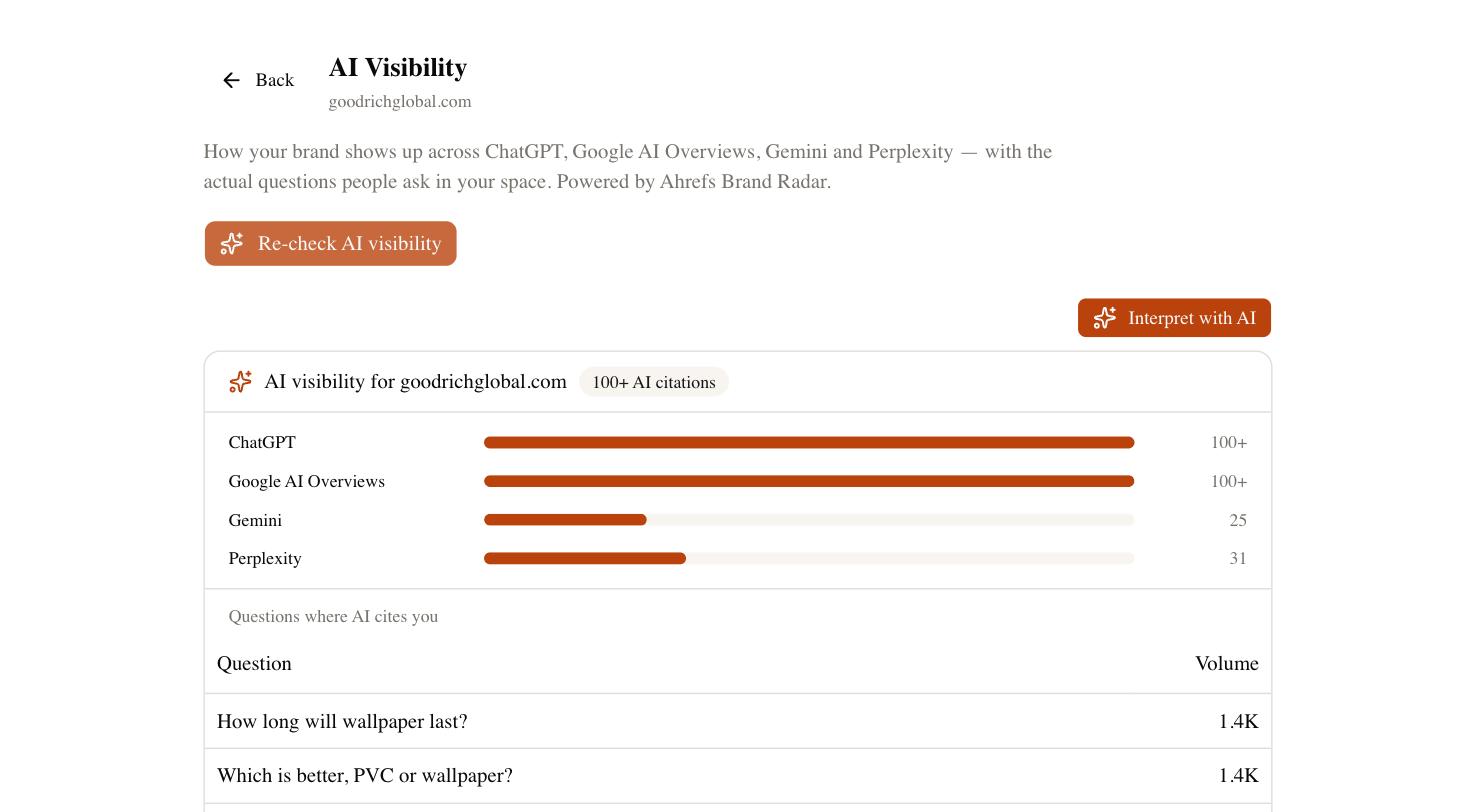
SEO Rocket’s AI-visibility tracking — Brand Radar — is built for exactly this. It watches whether and where your brand gets cited across those AI surfaces, alongside the Ahrefs-grade keyword, rank, and competitor data you’d expect, so you’re working from one picture instead of guessing. That matters because the two channels feed each other: the content that earns citations is usually the content worth ranking, and seeing both together lets you invest where attention is actually moving rather than where it used to be.
So, is SEO dead in the AI era?
No — but the comfortable version of it is fading, and the teams that treat AI search as a threat to ignore will quietly lose ground to the ones treating it as a channel to win. The work isn’t to abandon what you know. It’s to point the same skills at a bigger surface, and to start measuring the half of the game that traditional tools still leave dark.
If you want a concrete plan for this quarter, keep it short:
- Audit your best pages for direct, citable answers, and tighten the ones that bury the point three scrolls down.
- Fix the technical basics that block crawling and parsing before you touch anything else.
- Start tracking your presence in AI answers, not just your Google rankings, so you have a baseline to improve against.
- Double down on original, first-hand content in the topics you most want to own.
Do that, and the question answers itself. SEO isn’t dying — it’s expanding into a place most of your competitors haven’t looked yet. The traffic is still there for whoever does the honest work of being the most useful, most trustworthy answer, wherever the question gets asked.