
The pillar and cluster model is a way of organizing your content so a search engine can tell, at a glance, that you cover a whole subject rather than one stray page of it. You build a single broad page — the pillar — and surround it with narrower pages, the cluster, each answering one specific question and each linking back to the pillar. Done right, the pillar and cluster model turns a pile of unrelated posts into a structure that reads like expertise.
It is not a growth hack, and it will not rescue thin writing. What it does is give good content a shape that both readers and crawlers can navigate. This guide explains what the model is, walks through a concrete example, shows you how to build one step by step, and is honest about the parts that get oversold.
What the model actually is
Think of it as a hub and spokes. The pillar page sits in the middle and covers a broad topic at a moderate depth — enough to orient someone, not so much that there is nothing left to say elsewhere. The cluster pages are the spokes: each one goes deep on a single subtopic the pillar only mentioned in passing.
The glue is internal linking. Every cluster page links up to the pillar, and the pillar links down to each cluster page. That reciprocal linking is what tells a search engine these pages belong together and that the pillar is the most important of the set. Without the links, you just have a folder of posts that happen to share a theme.
Pillar versus cluster, plainly
- Pillar page — broad, longer, targets a high-level term with real search demand and buying or research intent. It answers “what is this whole subject about?”
- Cluster page — narrow, focused, targets a specific long-tail query. It answers one question so completely that the reader has no follow-up.
Why it works
Search engines reward topical depth. When your site answers the head term and the two dozen questions that orbit it, you look like a source that has actually done the work, and that authority tends to lift the whole group rather than one page in isolation. A strong cluster page can pass relevance and link value to the pillar, and a well-linked pillar helps new cluster pages get discovered and understood faster.
There is a human reason too, and it matters more than people admit. A reader who lands on one deep answer and finds a clear path to the broader guide — and to the next question they were about to ask — stays longer and trusts you more. Structure that helps a person navigate is the same structure a crawler reads well. You are not choosing between the two.
A concrete example
Say you sell project-management software. Your pillar targets a broad term like “project management” or “project management guide” — high volume, high competition, the kind of page you would not expect to rank overnight. On its own it would struggle, because thousands of sites target the same phrase.
Around it you build cluster pages, each aimed at a specific query a real buyer types:
- “how to write a project charter”
- “gantt chart vs kanban board”
- “project management methodologies compared”
- “how to run a project kickoff meeting”
- “project risk assessment template”
Each of those is easier to rank for than the head term, and each attracts someone with a concrete problem. The charter article links up to the pillar guide; the pillar guide links down to the charter article and the other four. As the cluster earns its own rankings and the occasional backlink, that signal concentrates on the pillar, and the broad page slowly becomes competitive for the term you never could have won cold. You climb the easy queries first and let them do the heavy lifting for the hard one.
How to build one, step by step
The order matters. Most people start by writing the pillar, which is backwards — you cannot map spokes before you know where the hub sits.
1. Pick the pillar topic
Choose a subject broad enough to support ten or more subtopics but specific enough that you can genuinely be an authority on it. “Marketing” is too broad; “email marketing for e-commerce” is a topic you can own.
2. Find the subtopics from real demand
Do not brainstorm subtopics from your armchair. Pull the actual questions people search — the long-tail queries, the “people also ask” phrasing, the terms competitors already rank for. The gap between what your competitors cover and what you cover is where the fastest wins hide.
3. Map before you write
List the pillar and every cluster page in one place, note the target query for each, and mark which pages link to which. A ten-row spreadsheet now saves a tangled mess of orphan pages later.
4. Write the cluster pages, then the pillar
Write the deep, specific pages first — they are easier and they give the pillar something substantial to point at. Then write the pillar as a genuine overview that sends readers to the detail, not a padded page that repeats it.
5. Wire the internal links deliberately
Every cluster links to the pillar with descriptive anchor text; the pillar links to every cluster. Relevant cluster pages can cross-link to each other where it genuinely helps the reader, but do not force links that make no sense.
Where SEO Rocket fits
The hardest part of this model is not the writing — it is knowing which subtopics are worth a page. Guessing produces clusters full of terms nobody searches. SEO Rocket handles that research end in plain language: ask it what a competitor ranks for that you do not, and it runs the lookup on real, Ahrefs-grade data and hands you the exact gap to fill.
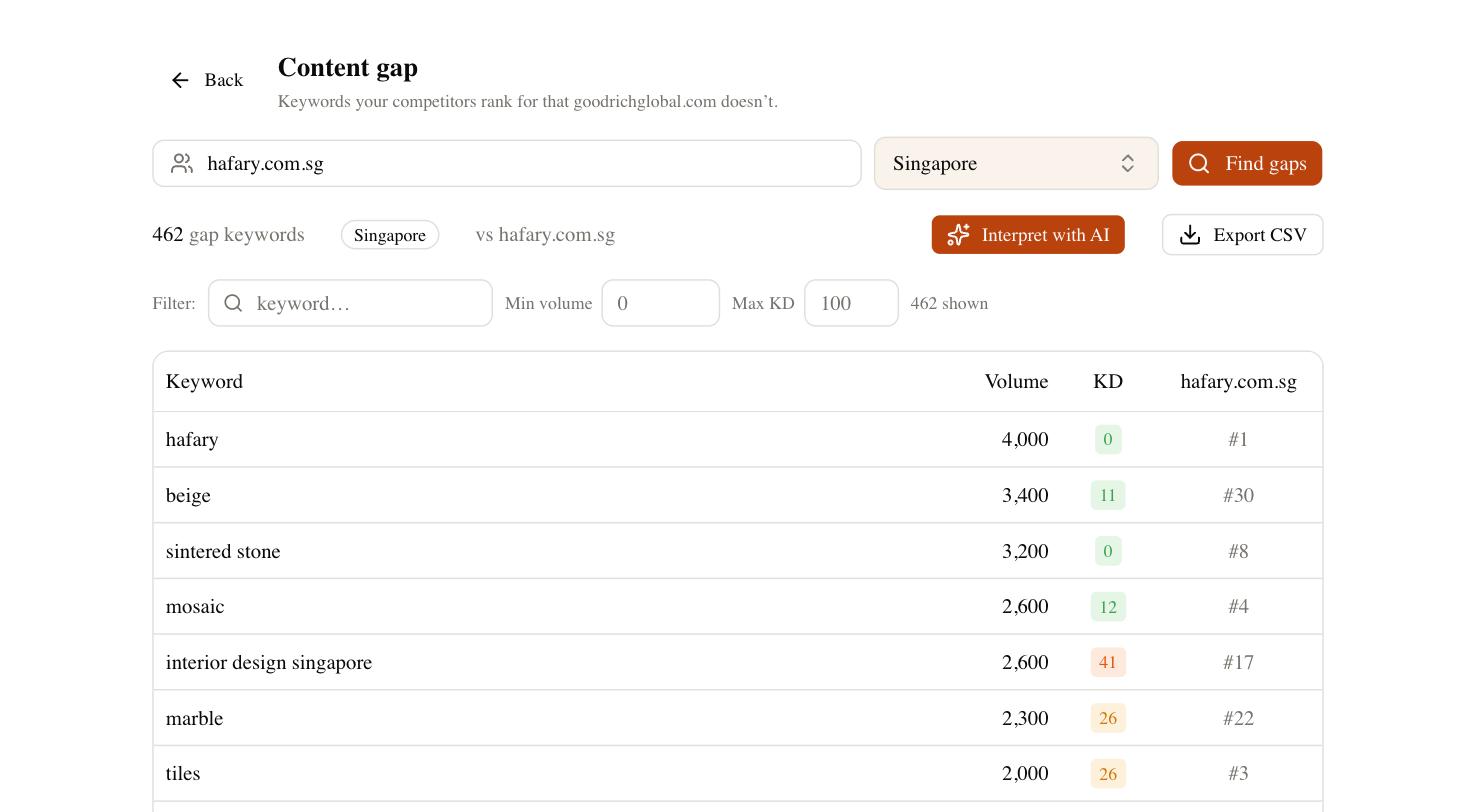
From there the same workflow drafts the pages. You can point it at a validated subtopic, have it write the cluster article, and keep the pillar and its spokes moving without switching between a research tool, a writing tool, and a rank tracker. When the cluster is live, rank tracking shows you which spokes are catching first, so you know where to add depth and which pages are ready to send more internal links toward the pillar.
What matters and what does not
Be honest with yourself about the parts that carry weight. The internal linking is not optional decoration — it is the mechanism, and a cluster without reciprocal links is just a content folder. Search intent match matters more than word count; a 700-word page that fully answers the query beats a padded 2,500-word one. And the subtopics have to reflect real demand, or you are ranking for phrases with no audience.
Some things matter far less than the model’s louder advocates claim. There is no magic word count for a pillar page, and no required number of cluster pages — five strong spokes beat twenty thin ones. The pillar does not have to be one enormous “ultimate guide”; a clear, well-linked overview does the job. And the model does not work instantly. Topical authority builds over a ranking cycle or more, positions jitter a few spots day to day while it settles, and no structure rescues content that does not answer the question. The pillar and cluster approach organizes good work. It does not replace it.
Getting started this week
Pick one topic you already write about and audit what you have. You probably own three or four cluster pages already, scattered and unlinked. Choose the broad page they should point to, wire the internal links, and fill the two or three obvious gaps a competitor already covers. That single afternoon of structure often does more for a topic than the next three new posts would have, because it makes the work you already published legible to both readers and search engines. Build the map first, link deliberately, and let the easy queries carry the hard one.